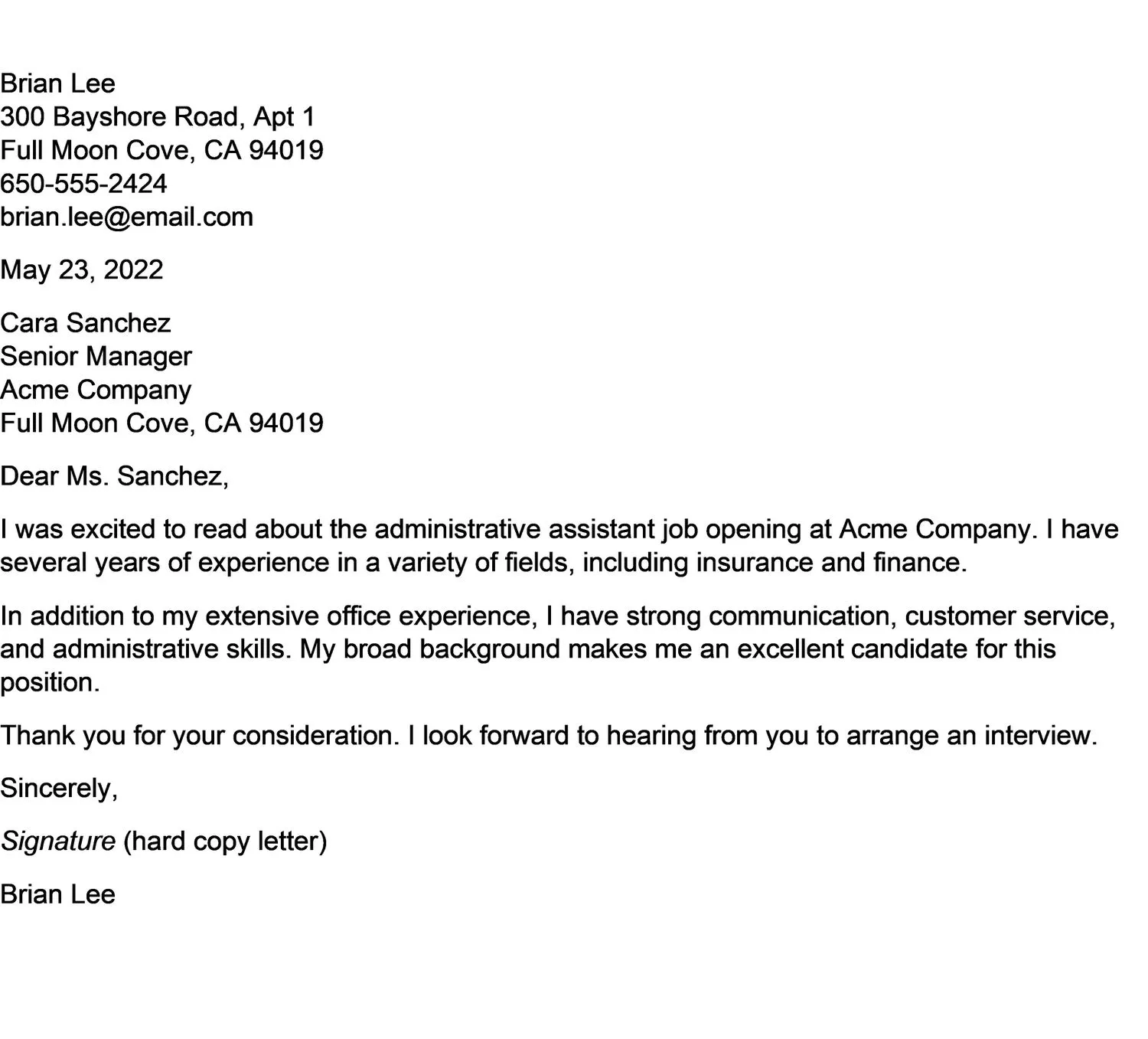
Understanding the Importance of a Cover Letter
In the competitive world of job applications, a cover letter serves as your initial introduction to a potential employer, often playing a pivotal role in determining whether your application receives further consideration. Unlike a resume, which provides a static overview of your skills and experience, a cover letter allows you to showcase your personality, express your enthusiasm for the role, and demonstrate how your qualifications align with the specific requirements of the position. It’s a chance to make a strong first impression, highlighting your unique value proposition and setting you apart from other applicants. A well-crafted cover letter can significantly increase your chances of landing an interview and ultimately securing the administrative assistant position you desire. Remember, it is your personal sales pitch!
Why a Cover Letter is Crucial for Admin Roles
For administrative assistant positions, a cover letter is particularly crucial. These roles often require a blend of soft and hard skills, and a cover letter gives you the space to demonstrate both. It allows you to explain how your organizational abilities, communication skills, and attention to detail make you a perfect fit for the specific administrative needs of the company. The cover letter can be used to exhibit your ability to handle multiple tasks, manage schedules, and interact professionally with clients and colleagues. By directly addressing the employer’s needs and expressing your understanding of the role, you show that you’ve taken the time to research the company and tailor your application accordingly, which is a key factor in their decision-making process. A great cover letter will definitely separate you from the mass of applicants.
Highlighting Relevant Skills and Experience

When crafting your cover letter, carefully select and highlight the skills and experiences most relevant to the administrative assistant position. Go through the job description and identify the core requirements, and then pinpoint specific examples from your past that illustrate your capabilities. This may involve showcasing your proficiency with software such as Microsoft Office Suite, your experience managing calendars and appointments, or your skills in handling phone calls and emails. The goal is to provide concrete evidence that supports your claims, making it clear that you have the necessary qualifications to excel in the role. Always remember that the employers are seeking individuals with the skills to carry out the responsibilities related to the position.
Showcasing Administrative Skills
Administrative skills are at the heart of any successful administrative assistant. Focus on showcasing your organizational prowess, ability to multitask, and your familiarity with administrative procedures. Provide examples of how you have managed office supplies, coordinated meetings, or prepared reports in previous roles. If you have experience in managing databases, handling confidential information, or creating and maintaining filing systems, be sure to highlight these skills as well. Emphasize your ability to anticipate needs, solve problems, and work independently while maintaining a high level of accuracy and attention to detail. These skills are the foundation for everything they do, and employers always value employees who are skilled in this area.
Demonstrating Communication Skills
Excellent communication skills are essential for administrative assistants. Demonstrate your ability to communicate clearly and effectively, both verbally and in writing. Provide examples of how you have interacted with clients, colleagues, and superiors in a professional and courteous manner. Highlight your experience in drafting emails, preparing correspondence, and taking minutes during meetings. If you have experience with customer service or conflict resolution, include those examples as well. Remember that, in many administrative roles, you are the first point of contact for the company, and your communication skills will set the tone for all interactions. The more effective your communications, the better your chances of being hired.
Emphasizing Organizational Abilities

Organizational skills are crucial for administrative assistants. Provide examples of how you have successfully managed multiple tasks, prioritized deadlines, and maintained a well-organized workspace. If you have experience with calendar management, travel arrangements, or event planning, highlight those skills as well. You might discuss how you created and implemented systems for organizing files, managing schedules, or tracking projects. Show your ability to work efficiently and methodically, ensuring that tasks are completed accurately and on time. Remember to use this section to demonstrate how you have the ability to handle multiple tasks and keep things under control at all times. It’s also great to mention experience in time management.
Tailoring Your Cover Letter to the Job Description
Generic cover letters are easily spotted and often discarded. To maximize your chances of success, tailor your cover letter to each specific job description. This requires careful analysis of the job requirements and a clear understanding of what the employer is seeking. By demonstrating that you have taken the time to understand the role and the company, you increase your chances of getting noticed. Never use the same cover letter for multiple jobs. The more personalized the letter is, the higher your chances are of getting a response.
Analyzing the Job Requirements
Carefully read and analyze the job description. Identify the key skills, qualifications, and experiences the employer is looking for. Make a list of these requirements and then review your own experience to see where you match up. Note any specific software, systems, or procedures mentioned in the job description. This exercise will help you identify the most relevant information to include in your cover letter and will ensure that you address the employer’s specific needs.
Matching Skills and Experience

Once you have identified the key requirements, match your skills and experience to them. Provide specific examples of how your past experiences align with the job description. If the job requires proficiency in Microsoft Excel, provide an example of how you used Excel to create reports or manage data. If the job requires strong communication skills, provide an example of how you effectively communicated with clients or colleagues. The more closely you can align your skills and experience with the job requirements, the better your chances of being selected for an interview.
Formatting and Structure for Impact
The formatting and structure of your cover letter play a vital role in how it is received. A well-formatted letter is easy to read and demonstrates professionalism. Always use a professional font like Times New Roman or Arial and ensure your letter is free of grammatical errors and typos. Maintain a consistent and clean layout throughout your cover letter, using clear headings and concise paragraphs to organize your thoughts effectively. A well-structured cover letter is more likely to capture the reader’s attention and make a positive impression. Always remember that you are presenting a professional letter.
Creating a Professional Header
Start your cover letter with a professional header that includes your contact information, the date, and the employer’s contact information. Make sure your contact information is accurate and up-to-date, and always include your name, phone number, email address, and LinkedIn profile URL if you have one. Address the letter to the hiring manager or the specific person mentioned in the job description. If you cannot find a name, use a professional salutation such as “Dear Hiring Manager.”
Crafting a Compelling Opening

Your opening paragraph is crucial for grabbing the reader’s attention. Start with a strong statement that highlights your interest in the position and the company. Mention where you found the job posting and briefly explain why you are excited about the opportunity. If you have a connection to the company or the industry, include that information as well. State your intention to apply for the position, and always be clear on the position you are applying for. The goal of the first paragraph is to grab their attention and to make them want to learn more about you.
Structuring the Body Paragraphs
The body of your cover letter should contain a few well-structured paragraphs that detail your skills, experience, and qualifications. Use the body to expand on your key achievements and demonstrate how they align with the job requirements. Provide specific examples and quantifiable results whenever possible to show the impact of your work. Focus on the most relevant information and keep the paragraphs concise and easy to read. Use different paragraphs to highlight the skills and experience that are relevant for the role. The more relevant information you add, the better your chances are of getting a response.
Writing a Strong Closing
Your closing paragraph should reiterate your interest in the position and thank the employer for their time and consideration. Reiterate your enthusiasm and express your confidence in your ability to contribute to the company. Include a call to action, such as expressing your willingness to discuss your qualifications further in an interview. Always end with a professional closing, such as “Sincerely” or “Best regards,” followed by your name.
Proofreading and Editing Your Cover Letter

Proofreading and editing your cover letter is a critical step that is often overlooked. Before submitting your cover letter, carefully proofread it for any errors in grammar, spelling, and punctuation. Check for awkward phrasing or unclear sentences. Read your cover letter aloud to catch any errors that you might have missed while reading it silently. Consider having a friend or colleague review your cover letter as well, as a fresh pair of eyes can often catch mistakes that you might miss. Proofreading your cover letter is as important as writing it, because you want to avoid grammatical errors or typos. Make it as professional as possible.
Common Mistakes to Avoid
There are several common mistakes to avoid when writing a cover letter. Avoid generic cover letters that are not tailored to the specific job description. Do not use overly long paragraphs or convoluted language, and ensure your letter is concise and easy to read. Avoid exaggerating your skills or experience and avoid making any negative comments about previous employers or colleagues. Never submit a cover letter with typos or grammatical errors. By avoiding these common mistakes, you can significantly improve your chances of making a positive impression.
Using Action Verbs and Keywords
Incorporate action verbs and keywords throughout your cover letter to make it more impactful and to highlight your skills and experience effectively. Action verbs, such as “managed,” “organized,” “coordinated,” and “implemented,” can help you showcase your accomplishments and responsibilities in a dynamic way. Keywords are the terms used in the job description, which employers use to search for resumes. By using these keywords throughout your cover letter, you increase the likelihood that your application will be noticed by recruiters. Remember to vary the verbs and keywords and to use them naturally within your sentences.
Showcasing Achievements

Instead of simply listing your responsibilities, focus on showcasing your achievements. Use the STAR method (Situation, Task, Action, Result) to provide context, describe the task, outline the actions you took, and highlight the results you achieved. For example, instead of saying “Managed office supplies,” you might say “Streamlined the office supply ordering process, resulting in a 15% reduction in costs and improved efficiency.” By showcasing your accomplishments, you demonstrate the value you can bring to the company and make a stronger case for your candidacy.
Quantifying Accomplishments
Whenever possible, quantify your accomplishments to make them more impactful. Use numbers, percentages, and specific data to demonstrate the results of your work. For example, instead of saying “Improved customer satisfaction,” you might say “Increased customer satisfaction scores by 20% through improved communication and efficient problem-solving.” Quantifying your accomplishments adds credibility to your claims and makes it easier for employers to assess the impact of your work. Numbers will add value to your application. It’s always best to add them whenever you can.
Key Takeaways for a Winning Cover Letter
To recap, writing a winning cover letter for an administrative assistant position requires careful attention to detail, strong writing skills, and a thorough understanding of the job requirements. Tailor your letter to each specific job, highlight relevant skills and experiences, and showcase your achievements. Always proofread and edit your cover letter for any errors. By following these proven tips, you can significantly increase your chances of landing an interview and securing the administrative assistant position you desire. Remember that your cover letter is your opportunity to market yourself and showcase why you are the best candidate for the job. Always put in the extra effort to get the job.