Crafting a Compelling Banking Cover Letter
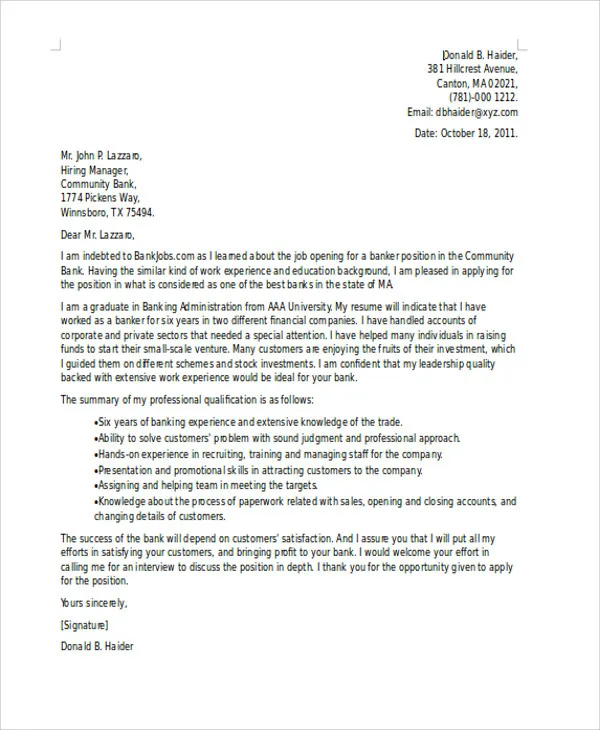
A well-crafted cover letter is your first opportunity to make a strong impression on a potential employer in the banking industry. It’s your chance to showcase your skills, experience, and enthusiasm, setting you apart from other applicants. This guide will walk you through the essential components and best practices for creating a cover letter that gets you noticed. From understanding the banking landscape to highlighting your achievements and avoiding common pitfalls, you’ll gain the knowledge needed to make your application stand out. Remember, your cover letter is more than just a formality; it’s a marketing tool to sell your value and secure an interview. Use this guide as your roadmap to success.
Understanding the Banking Industry
Before you start writing, take some time to understand the banking industry. Banking is a diverse sector, including retail banking, investment banking, commercial banking, and more. Each area requires different skill sets and experiences. Research the specific roles you are applying for and the types of banks you are targeting. Are you interested in working for a large, established bank, a smaller community bank, or a fintech startup? Each environment has a different culture and priorities. Understanding the industry will help you tailor your cover letter to resonate with the hiring manager, demonstrating your knowledge and genuine interest in the role and the company. Consider the bank’s recent performance, its mission, and its values to show you’ve done your homework.
Key Skills for Banking Professionals

Identify the key skills most valued in banking. These typically include strong analytical abilities, excellent communication skills, attention to detail, and a solid understanding of financial principles. Other important skills may include customer service, sales and negotiation, risk management, and compliance. Tailor your cover letter to highlight the skills most relevant to the specific job you are applying for. Use the job description to identify the keywords the employer is looking for and incorporate them into your cover letter. For example, if the job requires strong data analysis skills, provide specific examples of your experience in analyzing financial data and using relevant software. The more you can demonstrate that you possess the required skills, the better your chances of getting an interview.
Researching the Target Bank
Thoroughly research the bank or financial institution you are applying to. Visit their website, read their annual reports, and follow their social media presence. Learn about their mission, values, and recent achievements. This research will help you tailor your cover letter to the bank’s specific needs and demonstrate your genuine interest in the organization. Knowing about their products, services, and target market can also help you to align your skills and experience with their requirements. For example, if the bank emphasizes customer service, highlight your experience in building strong client relationships. By showing that you understand the bank’s culture and goals, you’ll increase your chances of impressing the hiring manager and securing an interview.
Essential Components of a Banking Cover Letter
A strong banking cover letter follows a clear structure that allows you to convey your qualifications effectively. From the header to the closing, each part plays a crucial role in presenting you as the ideal candidate. Attention to detail is key in the banking industry, and your cover letter should reflect that. Ensure a professional tone and a well-organized layout. This section will dissect each component, providing guidelines and tips to help you make each part of your cover letter persuasive and compelling. By mastering these components, you will significantly improve your chances of securing an interview and landing your dream job in banking.
Header and Contact Information
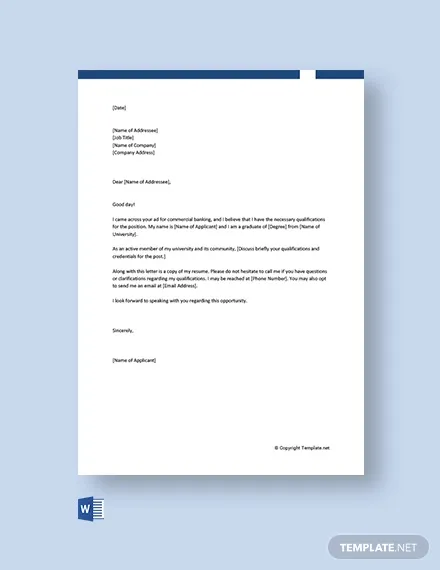
Start with a professional header that includes your full name, address, phone number, and email address. Ensure your email address is professional; avoid using nicknames or informal language. Then, add the date and the hiring manager’s name and title, if known. If the name is not available, address the letter to the hiring manager or the appropriate department. Use the bank’s official address as well. The header sets the tone for the rest of your letter, so ensure it is neat, accurate, and easy to read. The objective is to facilitate easy contact from the employer, so precision here is very important.
Salutation Best Practices
The salutation sets the first impression. Aim for a personalized greeting, such as “Dear Mr./Ms. [Last Name].” If you don’t know the hiring manager’s name, use a professional alternative like “Dear Hiring Manager” or “Dear [Department Name] Team.” Avoid generic greetings like “To Whom It May Concern,” as they indicate you haven’t put in the effort to research the recipient. Always double-check the spelling of the name and title. The goal is to show you’ve taken the time to address the letter specifically to the person who will be reading it. This shows respect and an understanding of the banking industry’s emphasis on accuracy and professionalism.
Opening Paragraph
Your opening paragraph should immediately grab the reader’s attention. State the position you are applying for and how you learned about the opportunity. Briefly mention your key qualifications and express your enthusiasm for the role and the company. Make sure your tone is positive and assertive. You can start with a strong statement about why you’re a good fit, or by mentioning a shared value. It’s important to clearly state your intent and create a compelling reason for the hiring manager to continue reading. Aim to hook the reader early on; this sets the stage for the rest of your cover letter and encourages them to learn more about your skills and experience. Think of it as your personal elevator pitch.
Highlighting Relevant Experience and Skills

The main body of your cover letter is where you detail your qualifications. Focus on the skills and experience that are most relevant to the job description. Provide specific examples of your achievements and how you have demonstrated the required skills in previous roles. Use the STAR method (Situation, Task, Action, Result) to illustrate how you handled challenges and achieved positive outcomes. Quantify your accomplishments whenever possible (e.g., “Increased sales by 15% in one quarter”). Tailor each example to the specific requirements outlined in the job posting. Your goal is to show that you have the skills and experience to excel in the role and contribute to the bank’s success.
Quantifying Achievements with Numbers
Numbers add credibility to your claims, demonstrating the impact of your work. Whenever possible, quantify your achievements using metrics such as percentages, dollars, or time frames. Instead of saying “Improved customer satisfaction,” say “Increased customer satisfaction scores by 20% within six months.” Similarly, instead of “Managed a team,” say “Managed a team of 10 employees, resulting in a 10% reduction in operational costs.” Quantifying your achievements provides tangible evidence of your skills and abilities. This approach helps employers quickly assess your value and contributions. It shows you understand the importance of measurable results in a banking environment.
Tailoring the Cover Letter to the Job Description
Customize your cover letter to align with the specific requirements of each job. Carefully review the job description and identify the key skills and qualifications the employer is seeking. Then, highlight your relevant experience and skills in your cover letter, ensuring your examples and achievements directly address their needs. Use the same keywords and phrases from the job description to show that you understand the role and are a good fit. Avoid sending generic cover letters. Showing you’ve taken the time to understand the specific role will significantly increase your chances of getting an interview. Tailoring your letter shows you’re serious about the opportunity and have the necessary expertise.
Expressing Enthusiasm and Fit

Express your enthusiasm for the position and the bank. Explain why you are interested in working for that specific institution. Mention something you admire about the bank, like its values, culture, or recent accomplishments. Explain how your career goals align with the role and the bank’s mission. Expressing genuine interest shows you’re not just looking for any job but are truly passionate about working in banking. A sincere expression of interest will help the hiring manager connect with you on a personal level. This passion may give you an edge over candidates who simply fulfill the basic requirements.
Closing the Cover Letter
In your closing paragraph, summarize your key qualifications and reiterate your interest in the position. Thank the hiring manager for their time and consideration. Reiterate your enthusiasm for the opportunity to contribute to the bank’s success. Keep the tone professional and positive. Make sure your final statement leaves a lasting impression. This closing paragraph provides a final opportunity to reinforce your value and reinforces your intent to be a part of the company. It should leave the hiring manager with a sense of confidence in your abilities.
Call to Action and Next Steps
End your cover letter with a clear call to action. Indicate your availability for an interview and how the hiring manager should contact you. Provide your phone number and email address again for convenience. Express your willingness to discuss your qualifications further. Be confident and proactive. Make it easy for the hiring manager to take the next step. A strong call to action encourages a timely response and positions you as a highly motivated candidate ready to move forward in the hiring process. Include a professional closing such as “Sincerely” or “Best regards,” followed by your full name.
Formatting and Proofreading

The appearance of your cover letter is as important as the content. Poor formatting and errors create a negative impression and could lead to immediate rejection. Ensure your cover letter is easy to read, well-organized, and free of errors. The attention to detail in your letter reflects your professionalism and your commitment to the banking industry. This section provides guidelines for choosing the right format, font, and layout and emphasizes the importance of thorough proofreading. Properly formatted and proofread cover letters are essential for making a positive first impression.
Choosing the Right Font and Format
Use a clean and professional font, such as Times New Roman, Arial, or Calibri. Keep the font size between 10 and 12 points for readability. Use standard margins (1 inch on all sides) and single-space the body of the letter. Use a professional format with a clear header and consistent spacing. Divide your cover letter into distinct paragraphs to organize your thoughts and make it easy for the reader to follow. Use bullet points to highlight skills or achievements. A well-formatted letter shows that you pay attention to detail and are capable of producing polished professional work.
Proofreading for Errors
Proofreading is a critical step. Carefully review your cover letter for any grammatical errors, spelling mistakes, and typos. Use a grammar checker and spell checker, but don’t rely solely on these tools. Read the cover letter aloud to catch any awkward phrasing or inconsistencies. Have someone else review your letter to get a fresh perspective. Mistakes in your cover letter indicate carelessness and a lack of attention to detail, crucial skills in the banking industry. Proofreading is a final, crucial step to ensure your letter makes a positive impression.
Cover Letter Examples for Different Banking Roles

Understanding the specific requirements for different banking roles can help you tailor your cover letter more effectively. Different positions require varied sets of skills, qualifications, and experiences. The following cover letter examples provide a glimpse into how to adapt your cover letter to a specific role. Each example will emphasize the key elements needed to make you a top candidate, giving you a strong foundation to start with. Use these examples to craft compelling cover letters that impress the hiring manager and increase your chances of getting an interview.
Bank Teller Cover Letter Example
When applying for a bank teller position, your cover letter should emphasize your customer service skills, communication abilities, and attention to detail. Highlight your experience in handling cash transactions, resolving customer issues, and maintaining confidentiality. Showcase your skills in communication, problem-solving, and multitasking. Provide examples of how you have provided excellent customer service and have a positive attitude in a fast-paced environment. Show you understand the importance of compliance, accuracy, and efficiency in these roles. Mention your experience with banking software and any relevant certifications. These details will show the hiring manager that you can handle the day-to-day operations of a bank teller role.
Loan Officer Cover Letter Example
A loan officer cover letter should demonstrate your knowledge of lending practices, credit analysis skills, and sales abilities. Highlight your experience in evaluating loan applications, assessing risk, and managing client relationships. Emphasize your ability to meet and exceed sales targets. Include your knowledge of relevant regulations, such as the Equal Credit Opportunity Act. Be sure to focus on your analytical abilities, negotiation skills, and ability to build trust with clients. Showcase examples of how you have closed loans, managed portfolios, and assisted clients through the loan process. Include any specialized knowledge in areas like commercial or residential lending.
Financial Analyst Cover Letter Example
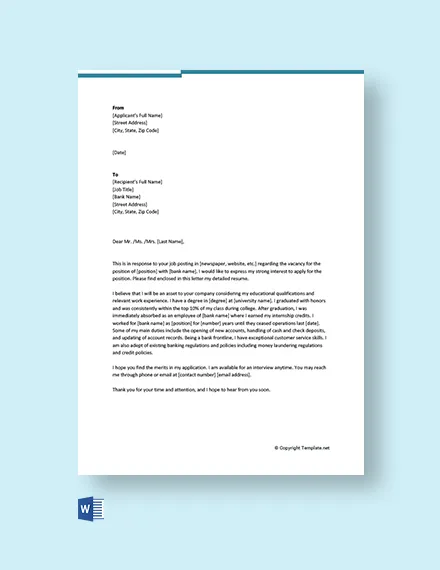
When applying for a financial analyst position, focus on your analytical skills, financial modeling experience, and ability to interpret financial data. Highlight your experience in forecasting, budgeting, and preparing financial reports. Demonstrate your knowledge of financial principles and accounting standards. Emphasize your experience in using financial software such as Excel and any other financial analysis tools. Showcase your ability to identify trends, conduct market research, and provide insights that contribute to decision-making. Indicate your certifications, such as a CFA or CPA. Your cover letter should showcase your analytical approach and your understanding of financial markets.
Common Mistakes to Avoid in Banking Cover Letters
Avoiding common mistakes can dramatically increase your chances of success. Even small errors can create a negative impression and hinder your chances of being hired. Being aware of these common pitfalls will help you prevent making them in your own cover letters. By avoiding these mistakes, you will ensure that your cover letter showcases your capabilities and gives you a competitive advantage in the job market.
Generic Cover Letters
Avoid sending generic cover letters. Tailor each letter to the specific job and bank. Using the same template for every application shows a lack of interest and preparation. Always customize your letter with the specific job requirements and the bank’s culture. Address the hiring manager by name and show that you have researched the company. Generic cover letters do not reflect the unique opportunity offered by the specific role. Customizing your cover letter demonstrates your sincere interest and commitment to the position, which will increase your chances of getting noticed.
Typos and Grammatical Errors
Always proofread your cover letter carefully. Typos and grammatical errors can damage your credibility and professionalism. Such mistakes show a lack of attention to detail, an essential quality in the banking industry. Use spell-check and grammar-check tools, but don’t rely on them entirely. Read the cover letter aloud to catch any errors. Have someone else review it for a second opinion. A polished, error-free cover letter is a key to creating a positive impression and demonstrating your competence.
Lack of Specificity
Avoid vague statements. Instead of saying “I have experience in customer service,” provide specific examples of how you have provided excellent customer service. Quantify your achievements whenever possible. Give details about your past accomplishments; for example, “Increased customer satisfaction scores by 15%.” Your cover letter should showcase concrete evidence of your skills and abilities. Specificity convinces the hiring manager that you can deliver results. Vague statements make it difficult for the hiring manager to understand your potential.
Overly Formal or Informal Tone
Strike a balance between professional and engaging. Avoid being overly formal, as this might make you sound stiff and unapproachable. But avoid using informal language, slang, or emojis. Maintain a professional tone that is appropriate for a business setting. Use clear, concise language that showcases your communication skills. Your goal is to strike the right balance to show that you are professional, respectful, and easy to communicate with.
Finalizing and Submitting Your Cover Letter
Before submitting your cover letter, take a few final steps to ensure everything is in perfect order. Proper saving and formatting, as well as knowledge of the submission process, will make the final presentation seamless. These final details ensure that your cover letter is in the best possible form, increasing your chances of securing an interview and landing a job in banking. These are the final steps that lead to a successful application and potential employment.
Saving Your Cover Letter
Save your cover letter with a professional filename. Use a clear and descriptive filename, such as “Your Name_Cover Letter_Job Title.” This helps the hiring manager easily identify your application. Use a PDF format if possible, as this preserves your formatting and ensures your cover letter will look the same on any device. Saving and formatting the document ensures that your application looks professional. The name makes it easier for the hiring manager to recognize your application among many others.
Submitting Your Cover Letter Online
Follow the application instructions precisely. Carefully review the application process and the required documents. Upload your cover letter and resume in the requested formats, and check all fields and attachments. If submitting online, double-check to ensure that everything is correct. Follow the instructions step by step. Verify that all required documents have been successfully uploaded and submitted. Confirm receipt of your application. Attention to detail and adherence to instructions show your professionalism and your ability to follow directions, both of which are crucial in banking.