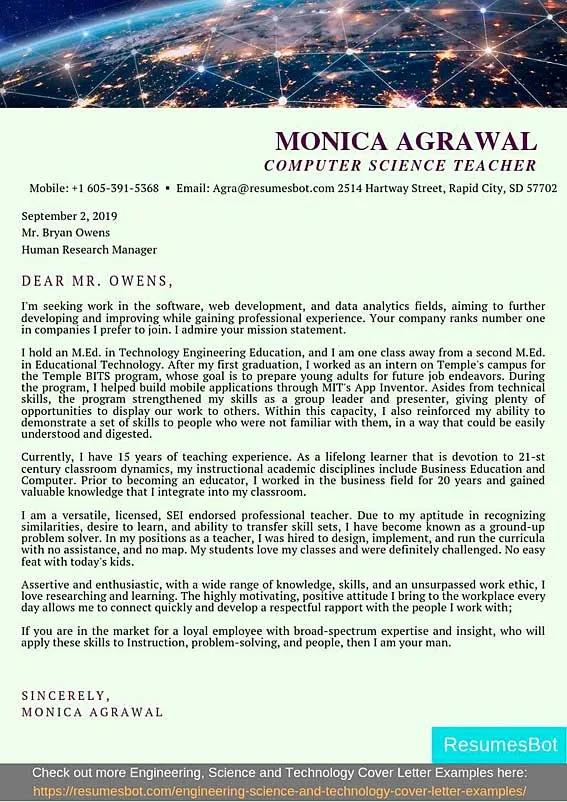
Understanding the Importance of a Cover Letter for CS Internships
In the competitive world of computer science, securing an internship is a crucial step towards a successful career. While your resume showcases your skills and experience, a well-crafted cover letter provides the opportunity to make a strong first impression and distinguish yourself from other applicants. It allows you to express your passion for the field, highlight relevant experiences, and demonstrate your understanding of the specific company and role. A cover letter is not just a formality, it is a powerful tool to demonstrate your enthusiasm and suitability for the internship. It provides the context that the resume sometimes lacks.
Why a Cover Letter is Crucial
A cover letter serves multiple purposes. It introduces you to the hiring manager, expresses your interest in the specific internship, and allows you to elaborate on your qualifications. Unlike a resume, which is a static document, a cover letter allows you to tailor your application to each specific position. It’s your chance to explain why you’re a perfect fit, going beyond a simple list of skills to showcase your personality, motivation, and genuine interest in the company’s work. This level of personalization demonstrates initiative and a proactive approach, setting you apart from candidates who may rely solely on their resume.
Showcasing Your Passion and Interest in the Field

One of the most important functions of a cover letter is to demonstrate your passion for computer science and your specific interest in the internship. Use the cover letter to convey your enthusiasm for the field. What excites you about programming, software development, data science, or cybersecurity? Explain why you’re drawn to the company and the specific role. Showing genuine interest makes you more memorable and shows the hiring manager that you’re not just looking for any internship but are genuinely excited about the opportunity at their company. This can be achieved by mentioning specific projects, technologies, or company initiatives that resonate with you.
Highlighting Relevant Skills and Experiences
While your resume lists your skills and experiences, your cover letter allows you to elaborate on them. Instead of simply listing your skills, explain how you’ve used them in the past and how they relate to the internship. Provide examples of projects you’ve worked on, problems you’ve solved, and the results you achieved. This adds context to your resume and helps the hiring manager understand the practical application of your skills. If you have relevant coursework, projects, or extracurricular activities, be sure to highlight them, emphasizing skills like problem-solving, teamwork, and communication.
Key Components of a Computer Science Internship Cover Letter
Your Contact Information

Start your cover letter with your contact information: your name, phone number, email address, and optionally, your LinkedIn profile URL. This should be at the top of the letter, either left-aligned or centered. Make sure the email address is professional, and that your voicemail greeting is clear. It allows the recruiter to easily reach you for further communication. This information is crucial for the recruiter to contact you if they are interested in offering you an interview.
The Employer’s Information
Include the date, the hiring manager’s name (if you know it), their title, and the company’s address. Addressing the letter to a specific person, rather than using a generic salutation like “To Whom It May Concern,” shows that you’ve done your research and are genuinely interested in the role. This demonstrates initiative and attention to detail.
A Compelling Opening Paragraph
Your opening paragraph is your chance to grab the reader’s attention. State the position you’re applying for and where you found the listing. Briefly mention your interest in the company and the field. A strong opening paragraph should immediately communicate your enthusiasm and make the reader want to learn more. Keep it concise and focused, highlighting your most relevant qualifications or experience. Avoid generic opening statements; instead, personalize it to reflect your understanding of the company and the internship.
Body Paragraphs Highlighting Skills and Experience

The body paragraphs are the core of your cover letter. This is where you elaborate on your skills and experiences, providing specific examples that demonstrate your abilities. Tailor these paragraphs to the requirements of the internship. Highlight relevant coursework, projects, and accomplishments that align with the job description. Use action verbs to describe your contributions and quantify your achievements whenever possible. This section should clearly show why you are a good fit for the role.
Quantifiable Achievements
Whenever possible, quantify your achievements to demonstrate the impact of your work. Instead of saying “I improved website performance,” say “I improved website loading speed by 20% by optimizing images and code.” Use numbers and metrics to showcase your accomplishments. Quantifiable achievements provide concrete evidence of your skills and abilities, making your cover letter more impactful and memorable. This evidence gives the hiring manager a clear sense of your potential contribution.
Demonstrating Knowledge of the Company
Show that you’ve researched the company by mentioning specific projects, products, or initiatives that interest you. This demonstrates your genuine interest and helps you stand out from other applicants. Mentioning something specific about the company’s mission, values, or recent achievements shows you’ve taken the time to learn about them. This also allows you to explain why you want to work there specifically. This will create a sense of connection and increase your chances of being selected for an interview.
The Closing Paragraph

Your closing paragraph should reiterate your interest in the internship and summarize your key qualifications. Express your confidence in your ability to contribute to the company. Thank the hiring manager for their time and consideration. This is your final chance to make a positive impression, so keep it concise and enthusiastic. The closing should be a brief recap of why you are a good fit for the role.
Call to Action
Include a clear call to action. Express your eagerness to discuss your qualifications further and provide your contact information again. You can end with a simple “I look forward to hearing from you” or “Thank you for your time and consideration.” Make sure the call to action is direct and professional. This leaves the hiring manager with a clear understanding of your next steps.
Formatting Your Cover Letter for Maximum Impact
Font and Font Size

Choose a professional and easy-to-read font, such as Times New Roman, Arial, or Calibri. Keep the font size between 10 and 12 points. A clean and readable font ensures that your cover letter is easy to scan and helps the hiring manager quickly grasp your key points. Avoid using overly ornate or distracting fonts that could detract from your message. Also, make sure the font size is consistent throughout your letter.
Margins and Spacing
Use standard one-inch margins on all sides of your cover letter. Use single spacing within paragraphs and double spacing between paragraphs. Proper formatting enhances readability and creates a professional appearance. Ensure that the document is well-organized and visually appealing. Consistent spacing improves the overall presentation and makes it easier for the hiring manager to read your letter.
Proofreading and Editing
Proofread your cover letter carefully for any grammatical errors, typos, or spelling mistakes. Have a friend or career counselor review your cover letter as well. Errors can create a negative impression, so it’s essential to ensure your letter is error-free. Double-check all company names, contact information, and dates. A polished cover letter reflects attention to detail and professionalism.
Common Mistakes to Avoid in Your Cover Letter

Generic Language
Avoid using generic or overly general language that could apply to any job. Tailor your cover letter to each specific internship and company. Generic cover letters lack impact and make it seem like you are sending out the same application to multiple opportunities. Use specific details and examples that are relevant to the specific internship you are applying for. Demonstrate that you have taken the time to learn about the role and the company.
Typos and Grammatical Errors
Typos and grammatical errors can undermine your credibility. Always proofread your cover letter carefully and have someone else review it before submitting. Errors signal carelessness and a lack of attention to detail. Use a spellchecker and grammar checker, but also read through the letter yourself to catch any errors that automated tools might miss. A well-written and error-free cover letter is a sign of professionalism.
Focusing on What You Want

While it’s important to express your interest, avoid making your cover letter all about what you want. Frame your letter around how you can contribute to the company and the specific role. Emphasize your skills and experiences and how they align with the company’s needs. Focus on how you can provide value. A cover letter is an opportunity to show that you have researched the company. This demonstrates your genuine interest and makes you a stronger candidate.
Tailoring Your Cover Letter to Each Internship
Researching the Company and the Role
Before writing your cover letter, research the company and the specific internship role. Understand the company’s mission, values, and recent achievements. Review the job description carefully and identify the key skills and qualifications they are seeking. This information will guide you in tailoring your cover letter to match the specific needs of the internship. Go to the company website and find the specific details that are important.
Personalizing Your Letter
Use the information you gathered to personalize your cover letter. Address the hiring manager by name. Mention specific projects, technologies, or company initiatives that interest you. Highlight the skills and experiences that are most relevant to the internship requirements. Personalization shows that you have taken the time to understand the opportunity and are genuinely interested. This effort sets you apart from those using generic applications.
Example Computer Science Internship Cover Letter
Sample Opening Paragraph
Dear [Hiring Manager Name], I am writing to express my enthusiastic interest in the Software Engineering Internship at [Company Name], as advertised on [Platform]. As a highly motivated computer science student at [University Name] with a strong foundation in [Specific Skills], I am eager to contribute my skills and learn from experienced professionals in a dynamic environment.
Skills and Experience Section Example
During my coursework, I developed proficiency in Java and Python, and I successfully completed several projects, including [Project Name], where I [quantifiable achievement]. Additionally, I am proficient in [mention another skill], which I believe aligns with the requirements of this internship. I am eager to apply these skills to real-world challenges at [Company Name].
Closing Paragraph Example
Thank you for considering my application. I am eager to learn and grow at [Company Name]. I am available for an interview at your earliest convenience. I look forward to discussing how I can contribute to your team. You can reach me at [Phone Number] or [Email Address]. Sincerely, [Your Name]
Resources and Further Reading
For further guidance, you can find many resources online, including cover letter templates and examples. Websites like [Example Website 1] and [Example Website 2] offer valuable advice on crafting effective cover letters. Additionally, consider seeking advice from your university’s career services or a career counselor. Practice and review your cover letters before submitting them. They will help you refine your writing skills and increase your chances of landing a computer science internship. Good luck with your internship search!