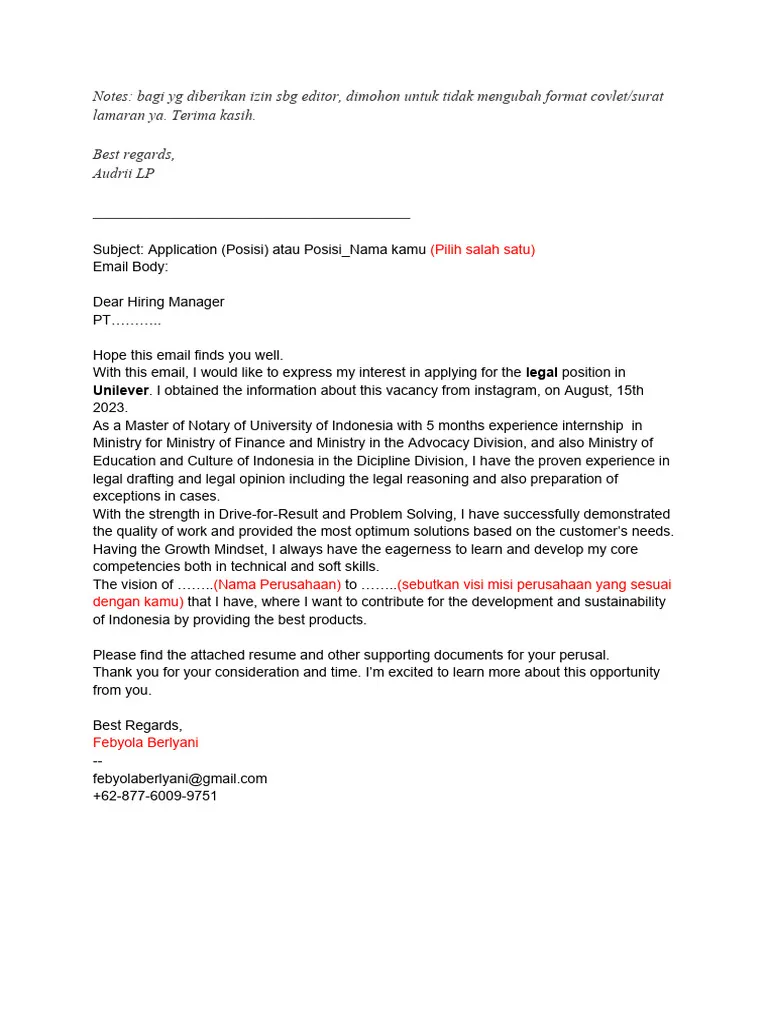
What Is a Cover Letter and Why Is It Important
A cover letter is a crucial document that accompanies your resume when applying for a job. It serves as your personal introduction, offering a glimpse into your personality, skills, and qualifications beyond the concise details of your resume. Unlike a resume, which presents a factual overview of your professional history, a cover letter allows you to tell your story, explaining why you’re the perfect fit for a specific role and company. It provides an opportunity to elaborate on your achievements, highlight relevant experiences, and express your genuine interest in the position. In essence, the cover letter is your chance to make a strong first impression and persuade the hiring manager to invite you for an interview. Without a well-crafted cover letter, your application might get overlooked, even if you have the necessary qualifications.
The importance of a cover letter cannot be overstated, especially in today’s competitive job market. Recruiters often use cover letters to gauge a candidate’s communication skills, attention to detail, and understanding of the job requirements. A compelling cover letter demonstrates that you’ve taken the time to research the company and understand the role, showing that you’re genuinely interested in the opportunity. Furthermore, it allows you to address any potential gaps in your resume, such as career changes or employment gaps, providing context and reassuring the hiring manager. In short, a well-written cover letter is a powerful tool that significantly increases your chances of getting noticed and moving forward in the hiring process. It sets the stage for a successful interview and potentially, your dream job.
Key Elements of a Strong Cover Letter
A strong cover letter is more than just a formality; it’s a carefully crafted document that captures the hiring manager’s attention and highlights your key qualifications. It should start with a professional and engaging opening, immediately stating the position you’re applying for and how you found the opportunity. Briefly mention your enthusiasm for the role and the company, demonstrating that you’ve done your research. The body of your cover letter should elaborate on your relevant skills and experiences. Instead of simply repeating your resume, provide specific examples of your accomplishments, quantifying your achievements whenever possible. For instance, instead of saying “Managed projects,” state “Managed projects, resulting in a 15% reduction in project completion time.” Make sure to align your skills and experiences with the requirements outlined in the job description, emphasizing the qualities that make you an ideal candidate.
Each paragraph should focus on a specific aspect of your qualifications, using clear and concise language. Keep your tone professional and enthusiastic, reflecting your interest in the company and the position. In addition to highlighting your skills, consider mentioning how your values align with the company’s mission or culture. This demonstrates that you’re not just looking for a job, but a long-term career fit. The closing paragraph should reiterate your interest in the position and express your eagerness to discuss your qualifications further in an interview. Include a call to action, such as “I am eager to discuss my qualifications further in an interview.” Finally, proofread your cover letter carefully for any grammatical errors or typos. A polished and well-written cover letter leaves a positive impression and increases your chances of landing an interview.
Formatting Your Cover Letter

Proper formatting is crucial for ensuring your cover letter is easy to read and professional in appearance. Begin by using a standard business letter format. Include your contact information at the top of the letter, followed by the date and the hiring manager’s contact information. If you don’t know the hiring manager’s name, research it or use a general salutation like “Dear Hiring Manager.” Use a readable font, such as Times New Roman, Arial, or Calibri, with a font size between 10 and 12 points. This ensures that the text is clear and easy on the eyes. Maintain consistent spacing throughout the document, typically using single spacing within paragraphs and double spacing between paragraphs. This enhances readability and creates a clean layout. Use left alignment for the body of the letter, and consider using a professional-looking header or footer, but avoid anything overly flashy.
Structure your cover letter into logical sections. Begin with an engaging opening paragraph that states the position you’re applying for and how you learned about it. The body of the letter should include several paragraphs highlighting your relevant skills and experiences, using specific examples to demonstrate your accomplishments. Each paragraph should focus on a distinct aspect of your qualifications, aligning them with the job requirements. The closing paragraph should reiterate your interest in the position and express your eagerness for an interview. Keep the letter concise, aiming for one page in length. Avoid lengthy paragraphs or excessive detail; instead, focus on the most relevant information. Finally, proofread the entire document carefully for any errors in grammar, spelling, or punctuation. A well-formatted cover letter reflects your professionalism and attention to detail.
Cover Letter Examples for Different Situations
Cover letters should be tailored to the specific situation and the job you are applying for. No single cover letter template fits every circumstance. For entry-level positions, focus on highlighting any relevant coursework, internships, volunteer work, or extracurricular activities that demonstrate your skills and enthusiasm. If you lack extensive professional experience, emphasize your transferable skills, such as communication, teamwork, and problem-solving, and explain how these skills will benefit the employer. For experienced professionals, your cover letter should highlight your accomplishments and quantify your achievements using data and metrics. Provide specific examples of how you have successfully contributed to previous companies and demonstrate your ability to deliver results. Align your skills and experiences with the job description, emphasizing the qualities that make you an ideal candidate for the role.
If you are changing careers, your cover letter must explain your transition and demonstrate how your skills and experiences are transferable to the new role. Identify any skills or experiences that are relevant to the position you are seeking, even if they were acquired in a different industry or field. Explain your motivation for the career change, highlighting your passion for the new field and your commitment to learning and growing. You can also include examples of how your previous experiences have prepared you for this new path. For each situation, the cover letter serves as a tool to showcase your qualifications, demonstrate your interest, and persuade the hiring manager to invite you for an interview.
Cover Letter Examples for Entry-Level Positions
When applying for entry-level positions, your cover letter needs to highlight your potential and enthusiasm, even if you lack extensive professional experience. Begin by expressing your strong interest in the company and the specific role. Highlight any relevant coursework, projects, or internships you’ve completed. Clearly articulate how these experiences have equipped you with the skills needed for the job. If you have limited work experience, emphasize transferable skills such as communication, problem-solving, teamwork, and time management. Offer specific examples of how you’ve used these skills in academic, volunteer, or extracurricular settings. Showcasing your willingness to learn and adapt is crucial. Mention any training programs, workshops, or certifications you’ve obtained to demonstrate your commitment to professional development. Moreover, research the company’s culture and values, and explain how your personality and work ethic align with their environment. Tailor your cover letter to match the job description’s requirements and convey your genuine interest in the opportunity. Proofread carefully to ensure the letter is polished and professional, leaving a strong impression on the hiring manager.
Cover Letter Examples for Experienced Professionals

Experienced professionals should leverage their cover letters to showcase their significant accomplishments and demonstrate their value to a potential employer. Start by highlighting your relevant experience, focusing on the specific skills and expertise that align with the job requirements. Quantify your achievements whenever possible, using data and metrics to illustrate your impact. For example, state how you increased sales by a certain percentage, improved efficiency by a certain metric, or successfully managed a project within budget and on time. Provide specific examples of how you’ve contributed to previous companies’ success. Tailor your cover letter to the specific role, emphasizing the skills and experiences most relevant to the job description. Mention how your expertise has helped you to navigate your field. Illustrate your leadership skills by describing your experiences managing teams, mentoring colleagues, or taking the initiative on projects. Mention any professional certifications, awards, or recognition you’ve received. Your goal is to convince the hiring manager that you are the perfect fit for the role by showcasing a history of impactful contributions and a proven track record.
Cover Letter Examples for Career Changes
When making a career change, your cover letter must clearly explain your transition and highlight the skills and experiences you’re bringing from your previous roles that are relevant to the new field. Start by stating your career transition and the reasons behind it. This demonstrates your motivation and initiative. Identify transferable skills, such as communication, problem-solving, project management, or leadership, and provide specific examples of how you’ve used them in your past experiences. Align these skills with the job description’s requirements, demonstrating that you possess the necessary qualifications. Research the new industry and company thoroughly, showing your genuine interest in the opportunity. Explain how your previous experiences, even if unrelated to the new field, have prepared you for the new role. Mention any training, certifications, or education that supports your transition. Address any potential gaps in your work history or industry experience by emphasizing your commitment to learning and growth. Tailor the cover letter to show how your diverse experience makes you an asset to the company. Be clear, concise, and enthusiastic about your new career path, leaving a positive impression.
How to Tailor Your Cover Letter
Customizing your cover letter for each job application is crucial for showing that you understand the role and the company. Begin by carefully reviewing the job description and identifying the key requirements and qualifications. Highlight your relevant skills, experiences, and achievements, and show how they directly align with the job’s demands. Research the company’s mission, values, and culture to understand their priorities. Tailor your language and tone to reflect their values and demonstrate your genuine interest in their organization. Instead of using generic statements, personalize your letter. Refer to specific projects, experiences, or achievements that showcase your relevant expertise. This shows the hiring manager you have taken the time to align your cover letter with the requirements of the job. Address the hiring manager by name, if possible. If you know someone at the company, mention their name in your letter. Proofread meticulously to ensure it reflects your professionalism. Demonstrating that you have specifically tailored your cover letter increases your chances of getting noticed.
Common Mistakes to Avoid in Your Cover Letter

Several common mistakes can undermine your cover letter’s effectiveness and reduce your chances of getting an interview. Avoid using generic templates; these make it seem like you haven’t put in the effort to personalize your application. Do not simply repeat your resume; instead, expand on your accomplishments and highlight relevant details. Make sure the cover letter is free of errors in grammar, spelling, and punctuation. Typos and grammatical errors can create a negative impression. Avoid being overly wordy or verbose; be concise and get to the point. Keep your letter to one page. Do not focus solely on what you want; show how you can benefit the employer. Avoid negative language or complaining about past employers or experiences. Don’t include irrelevant information that doesn’t pertain to the job. Failing to proofread your cover letter is a significant oversight, so always review your work. By avoiding these common mistakes, you can ensure that your cover letter effectively showcases your qualifications and increases your chances of securing an interview.
Proofreading and Polishing Your Cover Letter
Proofreading and polishing your cover letter are crucial steps to ensure that it reflects your professionalism and attention to detail. Begin by thoroughly reviewing your letter for any grammatical errors, spelling mistakes, and punctuation issues. Use spell-check and grammar-check tools, but don’t rely on them completely; they may not catch all errors. Read your cover letter aloud to catch any awkward phrasing or sentences. Get a second pair of eyes to review your letter. Ask a friend, family member, or career counselor to proofread it for you, as they may spot errors you missed. Ensure that your cover letter has a consistent tone and style throughout. Maintain a professional, enthusiastic, and confident tone. Verify that your formatting is consistent. Ensure the font, spacing, and margins are correct and visually appealing. Check that your contact information is accurate and up-to-date. Make sure to align your letter with the job description’s requirements and company values. By meticulously proofreading and polishing your cover letter, you’ll make a strong impression and increase your chances of securing an interview.