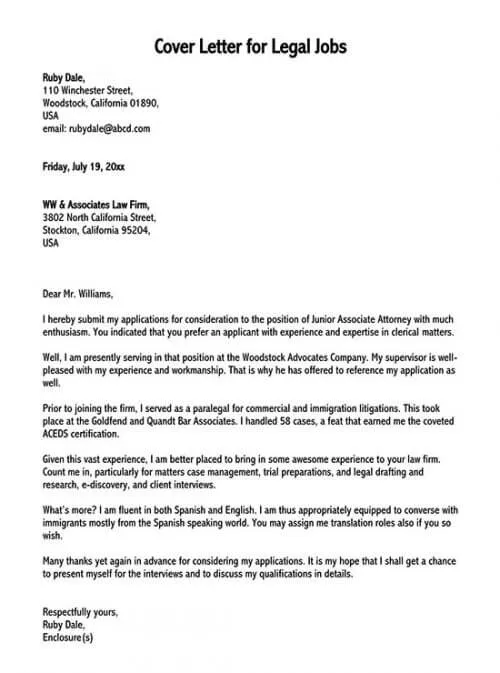
Why a Strong Cover Letter for Legal Jobs is Essential
In the competitive landscape of legal job applications, a well-crafted cover letter is not just a formality, it’s your first opportunity to make a compelling case for yourself. Unlike a resume, which provides a factual overview of your qualifications, a cover letter allows you to showcase your personality, writing skills, and genuine interest in the position. It’s your chance to demonstrate why you are the perfect fit for the role and the organization. A strong cover letter can set you apart from other qualified candidates, highlighting your unique strengths and experiences. Many hiring managers in the legal field place significant emphasis on cover letters because they provide insight into a candidate’s communication skills and attention to detail. Failing to submit a well-written cover letter, or submitting a generic one, can be a significant disadvantage, potentially leading to your application being overlooked. Therefore, investing time and effort in crafting a standout cover letter is crucial for securing your desired legal job.
Highlighting Your Legal Skills
Your cover letter should explicitly showcase the legal skills you possess that align with the job requirements. Start by identifying the key skills mentioned in the job description, such as legal research, writing, analysis, negotiation, or client communication. Then, provide specific examples from your experiences where you’ve successfully utilized these skills. For instance, if the job requires strong legal research abilities, you could describe a time you conducted in-depth research to support a successful case outcome, mentioning the databases and methods you employed. If the role emphasizes legal writing, highlight a project where you drafted compelling legal briefs, memos, or other documents. Quantifying your achievements whenever possible will further strengthen your claims, demonstrating the impact of your skills. Remember to use keywords from the job description to help your cover letter pass through applicant tracking systems (ATS) and resonate with the hiring manager. Tailor the skills you highlight to the specific needs of the legal job for which you are applying, ensuring relevance and showcasing your suitability for the position.
Showcasing Legal Experience

Legal experience is often a crucial factor in the hiring process, and your cover letter is the perfect place to showcase it effectively. Instead of simply listing your previous roles and responsibilities, use your cover letter to tell a story, highlighting the contributions you made and the outcomes you achieved. Start by briefly summarizing your legal experience, including the types of cases or legal areas you’ve worked on, and the duration of your involvement. Next, delve deeper into specific experiences that are relevant to the job you’re applying for. If you have experience in a similar role or with similar clients, be sure to emphasize these connections. Describe specific projects you worked on, the tasks you undertook, and the results you achieved. For example, if you worked on a complex litigation case, explain your role in the case, the key legal issues involved, and the favorable outcomes you helped to achieve. Remember to use action verbs and quantify your achievements whenever possible. Furthermore, explain how your experience has prepared you for the challenges and responsibilities of the new legal job. Highlighting your legal experience will significantly increase your chances of getting hired.
Quantifying Your Achievements
Numbers speak louder than words in a legal cover letter. Instead of merely stating what you did, quantify your achievements to make a more persuasive case for your candidacy. This means providing concrete data and statistics to demonstrate the impact of your work. For instance, if you improved the efficiency of a legal process, specify by what percentage or how much time you saved. If you contributed to a successful case outcome, mention the amount of damages won or the favorable resolution achieved. Did you manage a caseload? Specify the number of cases or clients you handled simultaneously. Did you conduct legal research? Indicate the number of documents reviewed or the databases used. Did you draft legal documents? Mention the number of briefs, contracts, or other documents you completed. Quantifying your achievements not only showcases your skills and capabilities but also demonstrates your ability to achieve measurable results. It provides concrete evidence of your value and makes your cover letter more compelling to the hiring manager. Always support your claims with verifiable information and strive to present your achievements in a clear, concise, and impactful manner.
Tailoring Your Cover Letter to the Job Description
A generic cover letter is a surefire way to get your application tossed aside. The key to success is tailoring your cover letter to each specific job application. This involves thoroughly reviewing the job description, identifying the key requirements, and customizing your letter to address them directly. Begin by carefully analyzing the job description, highlighting the skills, experiences, and qualifications that the employer is seeking. Then, use this information to structure your cover letter, ensuring that you highlight relevant skills and experiences. For each requirement, provide concrete examples from your past to show how you have demonstrated these skills. Use the same keywords and phrases from the job description to emphasize your suitability for the role. Avoid using the same cover letter for multiple job applications. The best cover letters are those that show that you have a deep understanding of the specific job and the organization. Demonstrating this will significantly increase your chances of being invited for an interview. Take the time to tailor your cover letter and show the hiring manager that you are the perfect fit.
Researching the Law Firm or Organization

Before you start writing your cover letter, research the law firm or organization to which you are applying. This demonstrates your interest in the position and allows you to tailor your letter to their specific needs and values. Visit the organization’s website, review their mission statement, and learn about their areas of practice, recent cases, and any notable achievements. Look for any press releases, articles, or news coverage that can provide insight into their culture and values. If possible, check out the firm’s social media accounts, such as LinkedIn, to learn more about their employees and recent activities. If you know someone who works at the firm, consider reaching out to them for insights into the firm’s culture and work environment. This research will enable you to write a cover letter that shows that you understand the organization and that your goals align with their values and mission. You can also use this information to highlight specific reasons why you want to work for them and showcase your familiarity with their work. This level of personalization will make your application stand out from the crowd.
Matching Skills to Requirements
Once you have a good understanding of the job and the organization, the next step is to carefully match your skills to the requirements outlined in the job description. Create a list of the essential skills and qualifications sought by the employer and then evaluate your own skill set. Identify the skills you possess that align with these requirements. Think about specific experiences where you have demonstrated these skills. For each skill, provide concrete examples from your past that showcase your ability to apply that skill effectively. Use keywords from the job description in your cover letter to highlight the alignment between your skills and the job requirements. For example, if the job requires strong analytical skills, provide an example of a complex legal issue you analyzed and the positive outcome you achieved. If the job requires excellent writing skills, describe a successful writing project, such as a legal brief or a memo. Matching your skills to the job requirements will demonstrate that you understand the position and that you have the necessary qualifications to succeed. This increases the likelihood of your application moving forward.
Proofreading and Editing for Perfection
In the legal profession, attention to detail is paramount. Your cover letter serves as a critical representation of your professionalism and competence. Proofreading and editing your cover letter are essential steps that ensure that your application is free of errors and reflects your commitment to excellence. After you finish writing, set it aside for a while. Then, return with fresh eyes and carefully review your letter for any grammatical errors, spelling mistakes, or typos. Pay close attention to punctuation, capitalization, and sentence structure. Read the cover letter aloud to identify any awkward phrasing or unclear sentences. It is always a good idea to have someone else proofread your cover letter. A second pair of eyes can catch mistakes you might have missed and provide valuable feedback. Consider using grammar and spell-checking software to catch common errors. Make sure your cover letter is well-organized, easy to read, and concise. A polished, error-free cover letter demonstrates your professionalism and shows the hiring manager that you pay attention to detail. This can significantly impact their perception of you as a candidate. So, take the time to proofread and edit your cover letter before submitting your application.
Formatting and Presentation

The formatting and presentation of your cover letter are as important as its content. A well-formatted cover letter is visually appealing, easy to read, and reflects your professionalism. Use a clean, professional font, such as Times New Roman, Arial, or Calibri, and ensure that the font size is easy on the eyes (typically 11 or 12 points). Use single-spacing with a blank line between paragraphs to improve readability. Ensure that your cover letter has consistent margins (1 inch on all sides) and proper alignment (left-justified). Use clear and concise headings and subheadings to break up large blocks of text and make it easier for the reader to scan the document. Proofread the cover letter for any formatting inconsistencies. When sending your cover letter electronically, save it as a PDF to ensure that the formatting remains consistent, regardless of the recipient’s software or operating system. A well-formatted cover letter makes a positive first impression and demonstrates your attention to detail, which are essential qualities in the legal profession.
Making Your Cover Letter Stand Out
To stand out from the crowd of other legal job applicants, you need to craft a cover letter that captures the attention of the hiring manager. Start by personalizing your letter. Instead of using generic language, address the hiring manager by name (if you know it) and express genuine enthusiasm for the opportunity. Highlight your unique qualifications and achievements. Don’t just list your skills, showcase them with specific examples and quantifiable results. Focus on your relevant experiences and achievements, and explain how they align with the needs of the law firm or organization. Show, don’t just tell. Use compelling language that conveys your passion for the law and your commitment to the role. Show them why you want the job, what you will bring to the table, and what makes you different from everyone else. Expressing your passion and demonstrating your understanding of the firm’s work will help you make a lasting impression. Make sure your cover letter is concise and easy to read. Avoid jargon and technical terms that the hiring manager may not understand. Make your letter informative, engaging, and memorable.
Using Action Verbs Effectively
One of the most effective ways to make your cover letter stand out is to use strong action verbs. Action verbs bring your experiences to life and provide a clear picture of what you accomplished in previous roles. Instead of using passive language, use active voice and strong verbs to describe your skills and achievements. Begin each sentence with a strong action verb. Action verbs help the hiring manager quickly understand what you have done and the impact you have made. Consider using verbs such as: researched, drafted, negotiated, analyzed, managed, led, implemented, and achieved. These verbs show what you did and how you did it. Avoid using vague verbs, such as “helped” or “assisted”. Use action verbs to paint a vivid picture of your capabilities. Focus on results, quantifying your achievements whenever possible to demonstrate the impact of your work. By using compelling action verbs, you can make your cover letter more engaging and demonstrate that you are a proactive and results-oriented candidate.
Demonstrating Passion for Law

In the legal field, passion and enthusiasm for the law are highly valued. Your cover letter is an ideal place to express your genuine interest in the law and showcase why you want to work in the legal field. Share your motivations for pursuing a legal career. Describe what draws you to the law and what you find most rewarding about it. Highlight your areas of legal interest and the specific practice areas or types of cases that excite you. Explain why you are interested in working for the specific law firm or organization. Share your understanding of their mission, values, and how you can contribute to their goals. Discuss how your experiences have fueled your passion for the law. Mention any legal activities you have been involved in, such as volunteer work, internships, or relevant coursework. Demonstrate your knowledge of the legal field. Express your enthusiasm for learning and growing within the legal profession. Be authentic, sincere, and let your personality shine through. Your passion for law will make you a more appealing candidate, setting you apart from those who may view the legal profession as just a job.
In conclusion, crafting a compelling cover letter for a legal job requires careful attention to detail, thorough research, and a genuine enthusiasm for the legal field. By following the tips outlined in this guide – from highlighting your skills and experience to tailoring your letter to each specific job and demonstrating your passion – you can significantly increase your chances of landing an interview and securing your desired legal role. Remember to proofread your cover letter meticulously, use action verbs, and make your letter unique and memorable. With a well-crafted cover letter, you’ll be well on your way to a successful career in law.