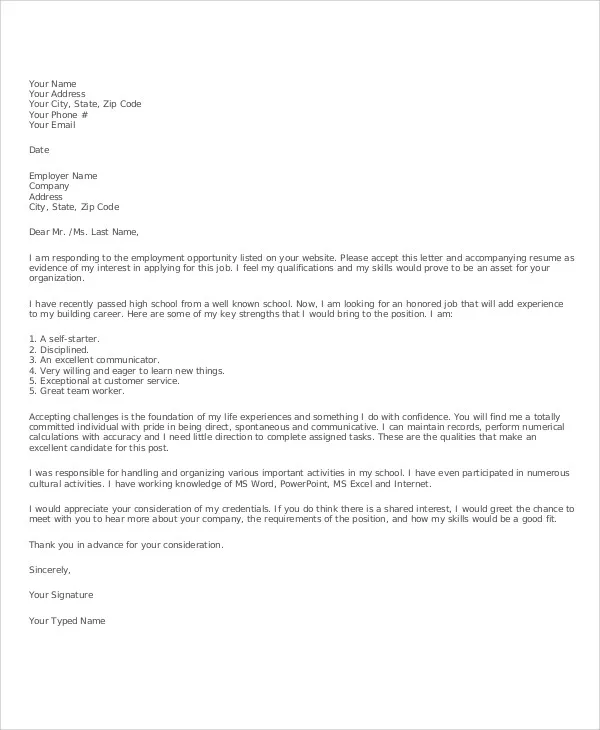
Crafting a Stellar Teen Cover Letter
As a teen, landing your first job or internship can feel like a monumental task. The job market is competitive, and you might feel like you lack the experience to stand out. This is where a well-crafted cover letter comes in. A cover letter is your chance to make a strong first impression and demonstrate why you’re the perfect candidate, even if you don’t have years of work history. By focusing on your skills, enthusiasm, and potential, you can use your cover letter to impress potential employers and increase your chances of getting hired. Remember that every cover letter should be tailored to the specific job and company you are applying for, showcasing your genuine interest and suitability for the role. This guide is designed to help you navigate the process, from understanding the purpose of a cover letter to avoiding common pitfalls, ensuring your application shines.
Understanding the Purpose of a Cover Letter
The primary purpose of a cover letter is to introduce yourself to the employer and express your interest in the specific position. It’s your opportunity to go beyond the information in your resume and provide context, personality, and passion for the job. Unlike a resume, which simply lists your qualifications, a cover letter allows you to tell a story. This is crucial when you’re a teen and may not have an extensive work history. Your cover letter allows you to highlight transferable skills gained through school, extracurricular activities, volunteering, or any other relevant experience. Moreover, it demonstrates your communication skills and writing ability, showing the employer that you can articulate your thoughts effectively. A compelling cover letter can set you apart from other candidates, even those with more experience, by showcasing your unique qualities and your genuine desire to contribute to the company. This is where you can make a lasting impression.
Why Cover Letters Matter for Teens

For teens, a cover letter is especially important because it gives you a platform to showcase your potential and enthusiasm. You might lack years of professional experience, but you likely possess a range of skills, qualities, and achievements that are valuable to employers. The cover letter offers an opportunity to highlight these assets, such as strong communication skills, teamwork abilities, a willingness to learn, and a positive attitude. Furthermore, a cover letter can help you address any potential gaps in your resume, such as a lack of formal work experience. By explaining how your skills and experiences align with the job requirements, you can convince the employer that you’re a good fit, even if your background isn’t traditional. A well-written cover letter also demonstrates your professionalism and attention to detail, showing that you’re serious about the opportunity and willing to put in the effort.
Key Components of a Teen Cover Letter
Header and Contact Information
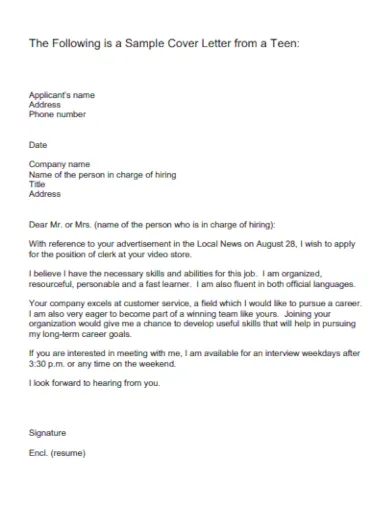
Start your cover letter with a professional header. Include your full name, address, phone number, and email address. Ensure your email address is professional and appropriate; avoid using nicknames or informal language. The header should be clearly formatted and easy to read. Following your information, include the date, and then the employer’s information if you know it (name, job title, company, and address). If you’re unsure of the hiring manager’s name, research the company website or LinkedIn to find it. If you cannot find a specific name, you can use a general greeting, but personalizing your cover letter with a specific name is always better. A well-organized header sets a professional tone and makes it easy for the employer to contact you.
Personalized Greeting

Address your cover letter to the specific hiring manager if possible. Using their name demonstrates that you’ve researched the company and are genuinely interested in the position. If you cannot find the hiring manager’s name, use a general greeting like “Dear Hiring Manager.” Avoid generic greetings like “To Whom It May Concern,” as they can make your letter seem impersonal. Your greeting is your first chance to grab the reader’s attention and show that you’ve taken the time to tailor your application. Make sure you spell the person’s name correctly to show your attention to detail. A personalized greeting immediately sets a positive tone and makes your cover letter more engaging.
Body Paragraph 1 Show Your Enthusiasm
In the first paragraph, state the position you’re applying for and how you found the job listing. Then, immediately express your enthusiasm for the role and the company. Explain why you’re excited about this specific opportunity and what attracts you to it. Show your genuine interest by mentioning something specific about the company’s mission, values, or recent achievements that resonate with you. Be sincere and avoid generic statements. This paragraph should hook the reader and make them want to learn more about you. Your enthusiasm can set you apart from other candidates and create a positive first impression. Show that you are not just looking for any job, but that you are specifically interested in this one.
Body Paragraph 2 Highlight Your Skills
This is where you showcase your skills and how they align with the job requirements. Even if you lack extensive work experience, focus on transferable skills, such as communication, teamwork, problem-solving, time management, or customer service. Provide specific examples of how you’ve demonstrated these skills in school, extracurricular activities, volunteering, or other experiences. For example, if the job requires strong communication skills, you might mention your participation in a debate club, your role in a school play, or your experience leading a group project. Quantify your achievements whenever possible. Instead of saying “I am a good leader,” say “I led a team of five students to successfully complete a science project within the given deadline.” Demonstrating your skills through concrete examples strengthens your cover letter and convinces the employer of your capabilities.
Body Paragraph 3 Showcase Achievements
Use this paragraph to highlight any achievements or accomplishments that are relevant to the job. This could include academic awards, volunteer work, participation in sports or clubs, or any special projects you’ve completed. Focus on the skills you developed through these experiences and how they relate to the job requirements. For instance, if you volunteered at a local community center, you could mention your experience with customer service, teamwork, and problem-solving. If you participated in a sports team, you could highlight your discipline, teamwork, and ability to perform under pressure. Make sure to quantify your achievements whenever possible. If you raised money for a charity, mention the amount you raised. If you improved your grades, state the percentage increase. Quantifiable achievements make your cover letter more compelling and demonstrate your ability to achieve results.
Call to Action and Closing
In your closing paragraph, reiterate your interest in the position and express your enthusiasm for the opportunity. Include a clear call to action, such as requesting an interview. Thank the employer for their time and consideration. Reiterate your contact information. Keep the tone professional and enthusiastic. End with a professional closing, such as “Sincerely” or “Respectfully,” followed by your full name. A strong closing leaves a lasting positive impression and encourages the employer to take the next step. Proofread the entire letter for any errors before submitting it.
Formatting and Presentation Tips
Choosing the Right Font and Size

Select a professional and easy-to-read font for your cover letter. Common and appropriate choices include Times New Roman, Arial, Calibri, and Helvetica. Use a font size between 10 and 12 points to ensure readability. Stick to a single font throughout your cover letter to maintain consistency. Proper formatting shows you pay attention to detail and that you understand professional standards. Avoid using overly fancy or decorative fonts, as they can be distracting and difficult to read. The goal is to make your cover letter look clean, organized, and professional. Using a standard format makes your letter easier for the reader to scan and comprehend, which is crucial when employers are reviewing multiple applications.
Proofreading and Editing
Proofreading is essential before submitting your cover letter. Carefully review your cover letter for any spelling, grammar, or punctuation errors. Read your cover letter multiple times, or better yet, have a friend, family member, or career advisor review it for you. Even a minor error can detract from your professionalism and make a negative impression. Ensure that your sentences are clear, concise, and well-structured. Eliminate any unnecessary words or phrases. Use a spell checker and grammar checker, but don’t rely on them entirely. Proofread every detail, including your contact information and the employer’s name and title. A polished and error-free cover letter demonstrates that you pay attention to detail and are serious about the job. Consider reading your cover letter aloud, as this can help you catch any awkward phrasing or errors.
Common Mistakes to Avoid
Generic Language and Clichés

Avoid using generic language and cliches in your cover letter. Phrases like “hardworking,” “team player,” and “results-oriented” are overused and don’t provide specific information about your skills and abilities. Instead, use concrete examples and demonstrate your skills through specific experiences. Tailor your cover letter to the specific job requirements and company culture. Generic cover letters give the impression that you haven’t put in the effort to research the position or the company. Highlight your unique qualities and show why you’re the best fit for the role. Instead of saying you’re a “team player,” describe a specific instance where you worked effectively as part of a team to achieve a goal. This will make your cover letter more compelling and memorable.
Typos and Grammatical Errors
Typos and grammatical errors can undermine your credibility and professionalism. Proofread your cover letter carefully to ensure that there are no spelling, grammar, or punctuation mistakes. Mistakes can create a negative first impression and suggest that you lack attention to detail. Use a spell checker and grammar checker, but don’t rely on them entirely. Double-check your contact information, including your email address and phone number. Consider asking a friend, family member, or career advisor to proofread your cover letter for you. Taking the time to proofread your cover letter will show the employer that you are serious about the opportunity and that you pay attention to detail. A well-written and error-free cover letter demonstrates your professionalism and increases your chances of getting noticed.
Lack of Enthusiasm
Show your genuine interest in the position and the company. A cover letter that lacks enthusiasm can fail to make a positive impression on the employer. Express your excitement about the opportunity and why you’re interested in the role. Mention specific aspects of the company or the job that appeal to you. Demonstrate your knowledge of the company and its mission, values, or recent achievements. Tailor your cover letter to the specific job requirements and company culture. Avoid being vague or generic. Your enthusiasm should be evident in your language, tone, and the specific details you provide. A cover letter that conveys genuine enthusiasm will make you more memorable and increase your chances of getting an interview.
Examples of Effective Teen Cover Letters

Reviewing examples of successful cover letters can provide valuable insights and inspiration. Look for examples that are tailored to specific industries or positions. Pay attention to how other teens highlight their skills, experience, and enthusiasm. Use these examples as a guide to help you structure your own cover letter and express your unique qualities. Be sure to adapt any examples to fit your own experiences and the specific job you’re applying for. Remember that your cover letter should be authentic and reflect your personality. Seek feedback from career advisors, teachers, or other professionals on your cover letter draft. Tailoring your cover letter to the specific job and company will increase your chances of making a positive impression.