Understanding the German Job Application Process
Navigating the German job market can be a rewarding experience, but it requires understanding its unique nuances. The job application process in Germany places a significant emphasis on thoroughness, professionalism, and attention to detail. Your cover letter serves as your initial introduction to a potential employer, and it plays a critical role in shaping their first impression. Therefore, mastering the art of crafting a compelling cover letter is essential for success. This guide will help you to understand what is important to write to get your dream job in Germany. The German job market favors well-structured and informative applications that clearly articulate your qualifications and suitability for the role.
Importance of a Strong Cover Letter
A strong cover letter is not merely a formality; it is a vital marketing tool. It allows you to showcase your personality, enthusiasm, and genuine interest in the position and the company. Unlike a resume, which primarily lists your skills and experiences, a cover letter provides an opportunity to explain why you are the ideal candidate. It’s your chance to connect your skills with the job requirements and demonstrate how you can contribute to the company’s success. A well-written cover letter can significantly increase your chances of securing an interview, while a poorly written one can lead to your application being overlooked. Therefore, treat your cover letter as an investment in your future.
Cultural Differences in Cover Letters

German job applications often adhere to specific cultural norms. Understanding these differences is crucial for making a positive impression. Germans appreciate directness, clarity, and a formal tone. Your cover letter should be concise, focused, and devoid of overly casual language. Unlike some cultures where creativity and self-promotion are encouraged, German employers often value modesty and a straightforward presentation of facts. It’s important to research the company culture beforehand to tailor your letter appropriately. Remember, demonstrating respect for German business etiquette can significantly increase your chances of success. (Image: cultural-differences-germany.webp)
Key Elements of a German Cover Letter
Personalization and Addressing the Recipient
Begin your cover letter by addressing the recipient by name whenever possible. This demonstrates that you have taken the time to research the company and that you are genuinely interested in the specific role. If the name of the hiring manager is not readily available, try to find it through LinkedIn or the company website. Avoid generic greetings like “Dear Sir or Madam” unless you have exhausted all other options. Addressing the letter personally shows respect and attention to detail. (Image: personalization-cover-letter.webp) Always double-check the spelling of the name to avoid any embarrassing errors.
Highlighting Relevant Skills and Experience
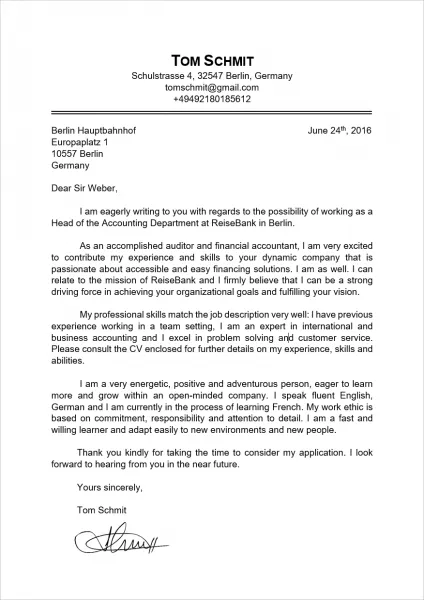
Your cover letter should concisely highlight the skills and experience that are most relevant to the job description. Avoid simply restating your resume; instead, elaborate on specific achievements and how they align with the requirements of the role. Use concrete examples to illustrate your abilities and quantify your accomplishments whenever possible. Focus on the key skills and experiences the employer is looking for, and tailor your letter to match their specific needs. Explain how your expertise can benefit the company, rather than just listing your qualifications. Provide evidence of your abilities. (Image: skills-and-experience.webp)
Demonstrating Enthusiasm and Motivation
Expressing your genuine enthusiasm for the position and the company is crucial. Explain why you are interested in the role and what motivates you to apply. Research the company’s values, mission, and recent projects to demonstrate your understanding and interest. Briefly mention why you are attracted to the company and the specific role. Show the employer that you are not only qualified but also excited about the opportunity to contribute to their team. Your passion will shine through and set you apart from other applicants.
Structuring Your Cover Letter for Germany
Format and Layout Guidelines

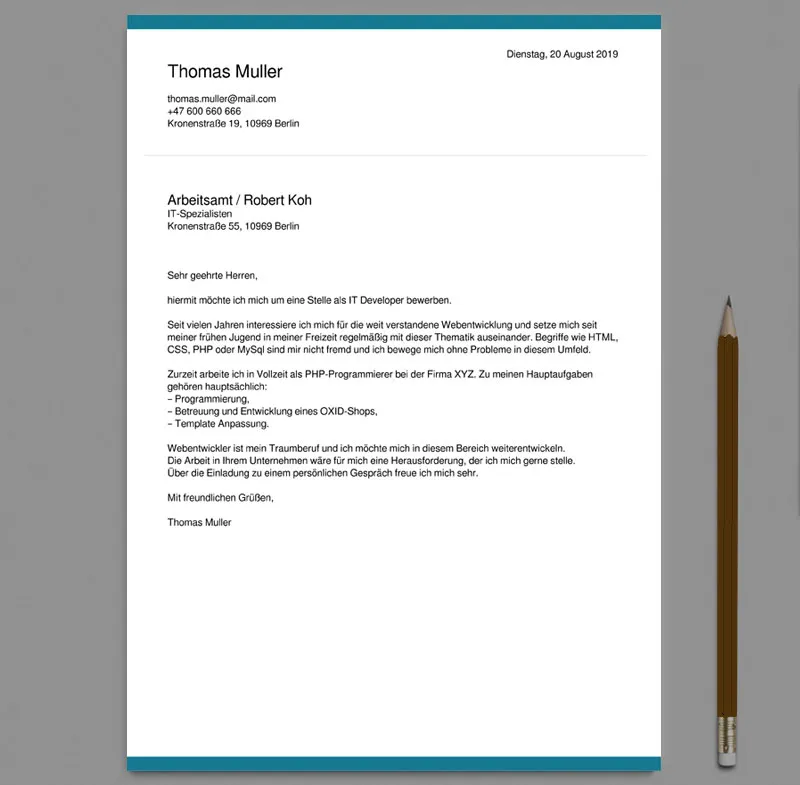
Maintain a professional format. Use a clear and legible font such as Arial or Times New Roman, with a font size between 10 and 12 points. Use standard margins and single-spacing. Include your contact information at the top of the letter, along with the date and the recipient’s information. Keep the layout clean and organized, using clear paragraphs and concise language. Ensure that the letter is easy to read and visually appealing. Consistency in formatting throughout your application is crucial. (Image: german-cover-letter-format.webp)
Length and Tone Considerations
In Germany, cover letters should generally be concise, ideally no more than one page. Aim for a tone that is professional, respectful, and straightforward. Avoid using overly flowery language or hyperbole. Be direct in your communication, clearly stating your qualifications and your interest in the role. Use formal language, including the appropriate salutations and closings. Show confidence in your abilities without being arrogant. Keep the tone of the letter appropriate for the specific industry and company culture.
Common Mistakes to Avoid
Generic and Uninspired Content

Avoid using generic cover letters that could be sent to any employer. Tailor each letter to the specific job and company. Research the company’s values, mission, and recent projects to show your genuine interest. Demonstrate that you have taken the time to understand the role and how your skills align with the company’s needs. Focus on why you are interested in this specific position, not just any job. Avoid generic phrases. Show the employer that you are genuinely enthusiastic about the opportunity.
Grammatical Errors and Typos
Grammatical errors and typos can undermine your credibility and make a negative impression. Proofread your cover letter carefully, paying attention to spelling, grammar, and punctuation. Use a grammar checker to catch any errors that you might have missed. It’s also a good idea to have a friend or colleague review your letter. Ensure the language is clear, concise, and easy to understand. Errors suggest a lack of attention to detail, which is important in Germany. Ensure that your contact information is accurate to make sure you can be contacted.
Failing to Tailor the Letter
Failing to tailor your cover letter to each specific job is a critical mistake. Each application should be customized to align with the job description and the company’s requirements. Highlight the skills and experiences that are most relevant to the position and explain how you can contribute to the company’s success. Avoid sending a generic cover letter that doesn’t address the specific needs of the role. Show the employer that you have taken the time to understand the role and demonstrate how your expertise can benefit their team.
Tips for Writing a Compelling Cover Letter

Researching the Company and Role
Thoroughly research the company and the specific role before writing your cover letter. Visit the company website, read news articles, and check social media profiles to gain insights into their culture, values, and recent projects. Understand the job description and identify the key skills and experiences the employer is looking for. Tailor your letter to address these requirements, showcasing how your qualifications align with the needs of the company. This shows that you are genuinely interested in the opportunity.
Quantifying Achievements and Results
Instead of simply listing your responsibilities, quantify your achievements and results whenever possible. Use numbers, percentages, and data to demonstrate the impact you have made in previous roles. For example, instead of saying, “Managed social media accounts,” say “Increased social media engagement by 30% in six months.” Provide specific examples to illustrate your skills and accomplishments, making your cover letter more compelling and persuasive. This is useful information that can help an employer decide if you are a good fit for the company.
Using Action Verbs to Show Impact

Start your sentences with strong action verbs to highlight your skills and achievements. Instead of using passive language, use verbs that demonstrate your initiative, leadership, and impact. Some examples of powerful action verbs include “managed”, “led”, “implemented”, “achieved”, “developed”, and “increased.” These verbs bring your experiences to life and make your cover letter more engaging. Using strong verbs can provide a significant impact on the employer.
Proofreading and Editing Your Cover Letter
Seeking Feedback from Native Speakers
Have your cover letter proofread by a native German speaker, if possible. They can check for grammatical errors, idiomatic expressions, and cultural appropriateness. A fresh perspective can help identify any areas for improvement and ensure that your letter is polished and professional. If you are not a native German speaker, it’s crucial to get feedback from someone who is. This is the best approach to have a better job application. (Image: proofreading-cover-letter.webp)
Tools and Resources
There are several tools and resources available to help you write a compelling cover letter. Use grammar and spelling checkers, such as Grammarly or the built-in tools in your word processor. Explore online templates and examples of successful German cover letters to get inspiration. Seek advice from career counselors or job placement services. Utilize these tools to enhance the quality of your application and increase your chances of securing an interview. (Image: german-job-application.webp)
In conclusion, crafting a successful cover letter for the German job market requires attention to detail, cultural awareness, and a strategic approach. By following these guidelines, you can create a compelling cover letter that showcases your skills, experience, and enthusiasm, increasing your chances of landing your dream job. Remember to tailor your letter to each specific job, proofread carefully, and seek feedback from native speakers. Good luck!