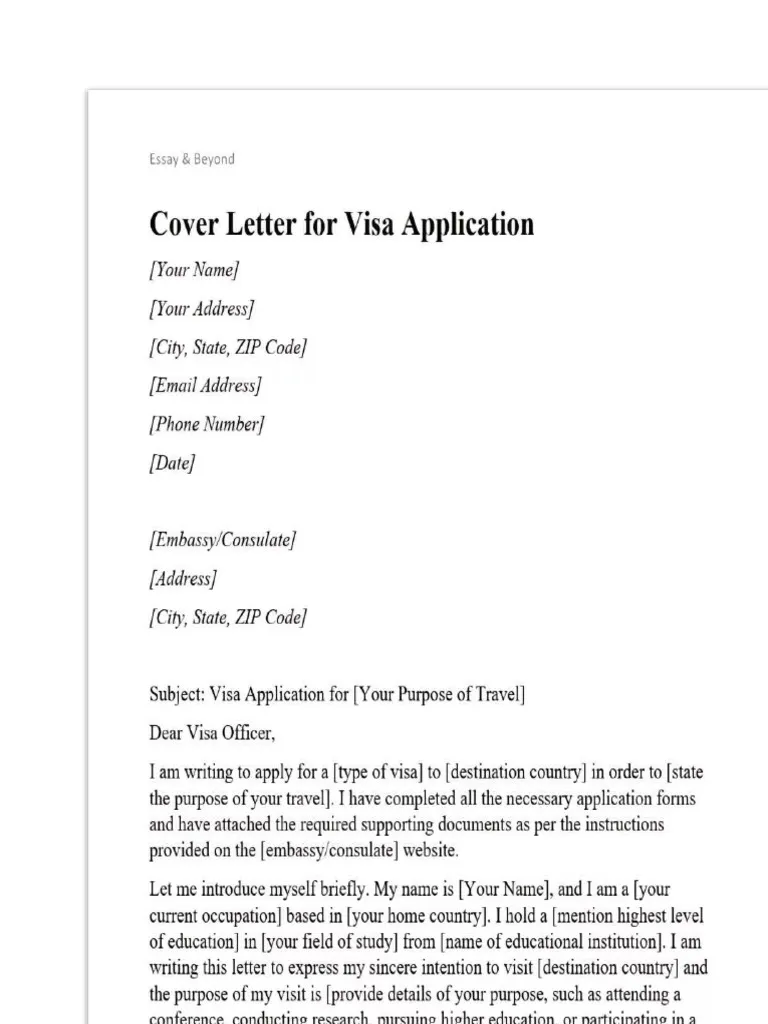
Why a Cover Letter Matters for Your Visa
A cover letter is a crucial component of your visa application, often serving as the first impression you make on the visa officer. It provides a concise and personal introduction, allowing you to explain the purpose of your visit, detail your travel plans, and provide additional context that standard application forms might not capture. Think of it as your opportunity to advocate for your case and demonstrate your genuine intent to comply with visa regulations. A well-crafted cover letter can significantly increase your chances of visa approval by addressing any potential concerns and providing a clear, organized presentation of your application.
Explain the Importance of a Cover Letter
The importance of a cover letter lies in its ability to humanize your application. While official forms and documents provide essential information, a cover letter allows you to communicate directly with the visa officer, conveying your personality, intentions, and the specifics of your travel. It provides the context needed to understand the overall picture, such as explaining the nature of your trip, the reasons for visiting, and your plans while abroad. A compelling cover letter can alleviate any doubts or concerns the visa officer may have, showcasing your credibility and commitment to returning to your home country after your visit. Essentially, it’s your voice within the application.
Cover Letter Benefits

The benefits of including a well-written cover letter in your visa application are numerous. Firstly, it offers a chance to clarify any ambiguities or complexities in your application, providing a comprehensive explanation for any unusual circumstances. Secondly, it allows you to emphasize the important aspects of your application, such as your strong ties to your home country, ensuring your intention to return. Thirdly, a cover letter gives you the opportunity to express your enthusiasm and genuine purpose for travel. This adds a personal touch to your application. Finally, a well-structured cover letter streamlines the visa officer’s review process, making it easier for them to understand your case and ultimately increasing your approval chances.
Key Components of a Successful Cover Letter
A successful cover letter comprises several essential components, starting with your personal details at the top. This includes your full name, address, contact information, and passport details. Next, clearly state the purpose of your visit, whether it’s tourism, business, or study, and provide detailed explanations. Include a well-defined travel itinerary, including dates, locations, and accommodation plans, to demonstrate the specifics of your trip. Also include details on your financial stability and proof of funds, such as bank statements, to show you can support yourself during your stay. Finally, provide a list of supporting documents and conclude with a professional closing, expressing your gratitude for their consideration.
Applicant’s Personal Details
Begin your cover letter with your personal details to ensure the visa officer can easily identify your application. Include your full name as it appears on your passport, your current address, phone number, and email address for easy contact. Also, provide your passport number, date of issue, and place of issue. This initial section helps the visa officer quickly verify the identity and match the cover letter to your application form and other supporting documents. Accurate and complete personal information ensures there’s no confusion and helps streamline the review process.
Purpose of the Visit

Clearly state the purpose of your visit in the opening paragraph. Be direct and unambiguous, stating whether you are traveling for tourism, business, study, or any other reason. Provide a brief overview of why you are traveling, giving the officer a clear understanding of your intentions. If visiting for tourism, mention the places you plan to visit and the activities you’ll engage in. For business, explain the nature of your work or meetings. For education, state the course or program you’ll be attending. The more specific you are, the better the visa officer understands the scope of your travel, and helps in assessing your eligibility for the visa.
Travel Itinerary and Accommodation
Providing a detailed travel itinerary significantly strengthens your visa application by demonstrating that you have a well-planned trip. Include the specific dates of your travel, the cities or locations you intend to visit, and the planned activities you’ll undertake. Specify your flight details, if booked, including arrival and departure information. Include information about your accommodation, such as hotel reservations or addresses of where you will be staying. This detailed itinerary not only proves your intention to follow your plan but also reduces any concerns the visa officer may have regarding the duration and nature of your stay, increasing your credibility.
Financial Stability and Proof of Funds
Demonstrate your financial stability by providing proof of funds to cover your expenses during your stay. This typically includes bank statements, showing sufficient funds to cover accommodation, travel, and daily expenses. If someone is sponsoring your trip, include a sponsorship letter detailing their commitment to cover your costs, along with their financial documents. This is an important step in showing that you have the means to support yourself and are less likely to overstay your visa or become a burden on the host country. Detailed information about your financial resources enhances your credibility and increases your chances of visa approval.
Supporting Documents to Include

In your cover letter, clearly list all the supporting documents you are including with your application. This helps the visa officer easily cross-reference your information and ensures that all the required documents are present. Include copies of your passport and visa (if applicable), travel insurance, financial documents, travel itinerary, accommodation details, and any other documents relevant to your application, such as invitation letters or proof of employment. Listing these documents makes the officer’s job easier and shows you are organized and prepared. It also ensures that you have all the necessary documents in place.
Passport and Visa Copies
Always include a clear copy of your passport and any previous visa(s) you may have. Your passport copy should include the biographical page with your photo, personal details, and signature. If you have any previous visas from the country you are applying to, or from other countries, include copies as well. This helps in verifying your identity and travel history. Ensuring that these copies are clear and easy to read is essential. This allows the visa officer to quickly review your information and assess your eligibility based on your current and past travel details.
Travel Insurance
Providing proof of travel insurance is a critical component of your visa application. The travel insurance should cover medical emergencies, hospitalization, and repatriation to your home country. Include a copy of your insurance policy, detailing the coverage period, the sum insured, and the policy terms. Make sure the insurance meets the specific requirements of the country you are applying to. Travel insurance is important to demonstrate that you are prepared for unforeseen circumstances. Providing this shows the visa officer that you have considered your health and safety during your trip.
Other Relevant Documents

Depending on the purpose of your visit, include other supporting documents. For tourism, this could include flight confirmations, hotel reservations, and a detailed itinerary. If visiting for business, attach an invitation letter from the host company, along with information about the business meetings or conferences you will be attending. For educational purposes, provide your acceptance letter from the educational institution. If you are employed, attach a letter from your employer confirming your employment and stating that you will return to your job after your trip. Providing as much relevant documentation as possible helps create a more comprehensive application.
Best Practices for Writing a Compelling Letter
When writing a cover letter for your visa application, there are several best practices to consider to maximize its impact. First, use a professional tone and format. Maintain a formal and respectful tone throughout the letter. Second, ensure that you are clear and concise. Avoid using overly complex language or jargon. Third, always proofread carefully for any grammatical errors, typos, or inconsistencies. Fourth, be honest and accurate in all your statements; never exaggerate or provide false information. Fifth, personalize your letter by including details specific to your situation and your travel plans, making it unique to you. Finally, ensure you adhere to any specific guidelines provided by the embassy or consulate.
Use a Professional Tone
Maintaining a professional tone is paramount. Use a formal and respectful tone in your writing, avoiding slang, colloquialisms, or overly casual language. Address the visa officer appropriately, typically using their title or ‘Sir/Madam’. Ensure the language is clear, concise, and easy to understand. Your tone should reflect your seriousness about the visa application and your respect for the country’s immigration process. The use of appropriate language demonstrates your attention to detail and commitment to complying with the necessary regulations.
Be Clear and Concise

Clarity and conciseness are critical for a successful cover letter. Keep your sentences brief and to the point, avoiding unnecessary complexity or jargon. Focus on providing essential information about your trip, your reasons for visiting, and your intentions. Use direct language and avoid vague statements that could confuse the visa officer. Clearly state each point, explaining your application’s details thoroughly. A clear and concise letter ensures that the visa officer can quickly grasp the key information. This demonstrates your ability to communicate clearly and directly, simplifying the evaluation process.
Proofread Carefully
Proofreading your cover letter is an essential step in preparing your visa application. Carefully review your letter for any grammatical errors, spelling mistakes, punctuation errors, or formatting inconsistencies. Ensure all names, dates, and other factual details are accurate. It is advisable to have someone else review your letter to catch any errors you might have missed. A well-proofread cover letter reflects attention to detail and professionalism, which can significantly enhance the credibility of your application and make a positive impression on the visa officer. Correcting errors ensures your message is clear and strengthens your case.
Common Mistakes to Avoid
To increase your chances of visa approval, it’s vital to avoid common mistakes that can negatively impact your application. One significant mistake is exaggerating or providing false information. This undermines your credibility and can lead to rejection. Another is missing key information, such as omitting details about the purpose of your visit or your financial stability. Ignoring instructions provided by the embassy or consulate is another common error. This includes not following the specific formatting requirements or failing to provide all the required documents. Avoiding these errors can greatly improve the chances of your application being approved.
Exaggerating or Lying

Avoid the temptation to exaggerate or lie in your cover letter. Providing false or misleading information is a serious offense that can lead to visa rejection and potential consequences. Stick to the truth and provide accurate details about your travel plans, financial status, and intentions. Be transparent about your purpose of visit and any other relevant factors. Even small inaccuracies can raise doubts about your credibility and make the visa officer question the entire application. Honesty is essential to ensure your application is viewed positively. The best approach is always to provide factual information in a clear, straightforward manner.
Missing Key Information
Ensure that you provide all necessary information in your cover letter. Failing to include essential details can lead to delays or rejection. Review the embassy or consulate’s requirements to be certain that you have included everything. Specifically, confirm that you have clearly stated the purpose of your visit, provided a detailed travel itinerary, and included proof of your financial stability. Make certain you have listed all supporting documents. Missing information can create confusion and uncertainty, undermining your application. Taking the time to include all required information helps streamline the review process and increases your chances of a successful outcome.
Ignoring Instructions
Always carefully follow the specific instructions provided by the embassy or consulate. These instructions often include formatting guidelines, document requirements, and the order in which documents should be submitted. Ignoring these instructions can lead to delays or rejection. Review all guidelines thoroughly before starting your application. Pay close attention to details such as the required font type, margins, and the types of documents you need to provide. By following instructions precisely, you demonstrate that you are organized and that you pay attention to detail, showing that you are taking the application process seriously, which can positively impact the visa officer’s assessment.