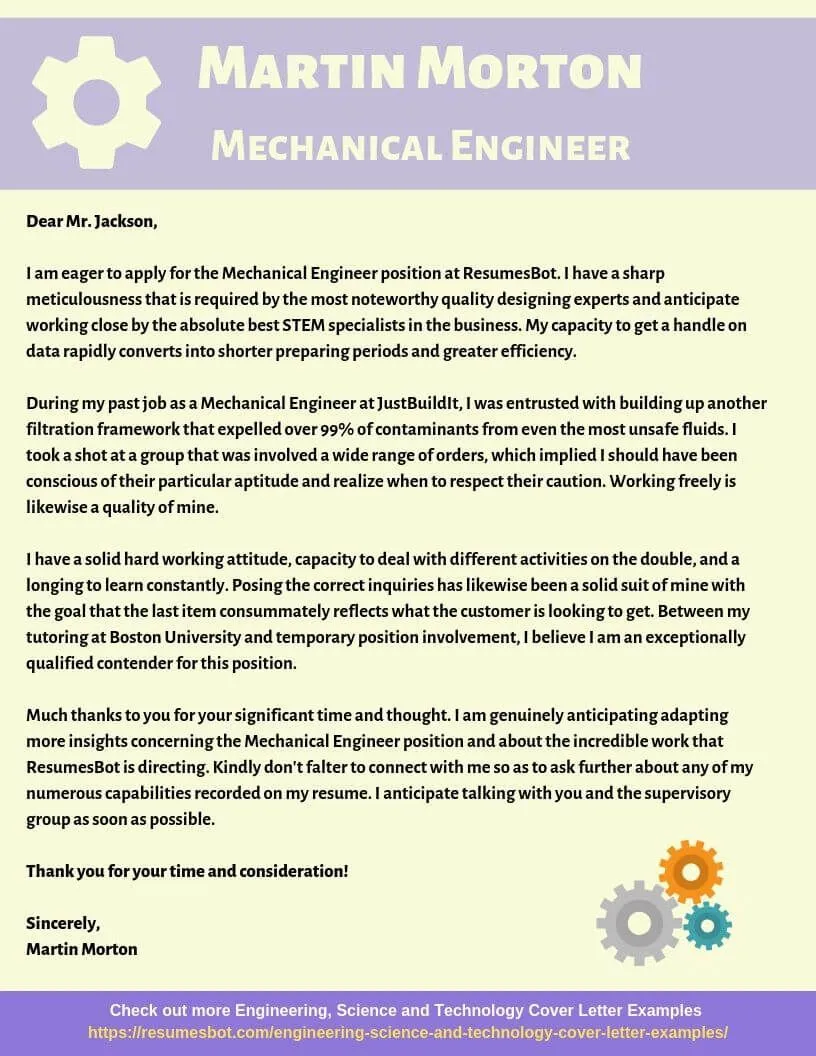
Crafting a Winning Mechanical Engineer Cover Letter
A well-crafted cover letter is your first chance to make a strong impression on a potential employer. For a mechanical engineer, this document is a crucial tool for showcasing your technical skills, relevant experience, and enthusiasm for the role. This guide will provide you with a comprehensive sample and tips on how to write a cover letter that truly impresses, increasing your chances of landing your dream job. Remember that a generic cover letter will likely end up in the ’no’ pile, so customization is key.
Understanding the Purpose of a Cover Letter
The primary purpose of a mechanical engineer cover letter is to introduce yourself and highlight your qualifications in a way that a resume cannot. It’s an opportunity to explain why you are a good fit for the specific role and company, demonstrating your understanding of their needs and your ability to meet them. It also allows you to add a personal touch to the application and convey your personality and passion for mechanical engineering. This goes beyond simply listing skills and accomplishments, offering context and illustrating how your experience aligns with the job’s requirements.
Highlighting Your Skills and Qualifications

Your cover letter is the perfect place to emphasize the skills and qualifications that make you stand out. Identify the key skills the employer is looking for in the job description, and make sure to highlight how you possess them. Mention relevant software proficiency, design experience, and any specific technical expertise that aligns with the role’s requirements. Avoid simply listing these skills; instead, provide specific examples of how you have utilized them in past projects or roles. This section is all about demonstrating the value you bring to the table.
Tailoring Your Cover Letter to the Job
One of the most significant aspects of a successful cover letter is tailoring it to each specific job application. Generic cover letters that are used repeatedly are easily spotted by hiring managers. Before writing, carefully review the job description and identify the key requirements and preferred qualifications. Use the language from the job description to demonstrate your understanding of their needs. Research the company and their projects, and explain how your skills and experience align with their goals and values. This level of personalization shows that you’re genuinely interested in the role and have taken the time to understand the company.
Essential Sections for Your Mechanical Engineer Cover Letter
Your Contact Information and the Date

At the top of your cover letter, include your contact information – your name, phone number, email address, and LinkedIn profile URL (if applicable). Also include the date you are writing the letter. This ensures that the hiring manager can easily reach you if they want to offer an interview.
Addressing the Hiring Manager
Address the hiring manager by name if possible. This shows that you’ve taken the time to research the company and understand the specific role you are applying for. If you are unable to find the hiring manager’s name, then use a professional greeting such as “Dear Hiring Manager” or “Dear [Department Name] Team.” Avoid generic greetings like “To Whom It May Concern.”
Writing a Compelling Opening Paragraph
Your opening paragraph is crucial as it is your chance to grab the reader’s attention. Start with a strong statement that immediately indicates your interest in the position and the company. Briefly mention your key qualifications or a compelling achievement that aligns with the job requirements. Clearly state the specific position you are applying for. Avoid generic openings and get straight to the point, showing your enthusiasm and demonstrating your understanding of the role.
Showcasing Your Relevant Experience

The main body of your cover letter should focus on showcasing your relevant experience. Select a few key experiences that align with the job requirements and describe them in detail. Use the STAR method (Situation, Task, Action, Result) to provide context, explain your responsibilities, detail the actions you took, and highlight the positive outcomes. Quantify your achievements whenever possible to demonstrate the impact you made in your previous roles. This section should provide a narrative that demonstrates your skills and how they can contribute to the company.
Quantifying Your Accomplishments
Whenever possible, quantify your accomplishments using numbers and data. Instead of saying ‘Improved efficiency,’ say ‘Improved efficiency by 15%’. Quantifiable results are far more impressive and provide concrete evidence of your abilities. Consider using metrics like project budgets managed, cost savings achieved, or product improvements implemented. This approach makes your accomplishments more tangible and demonstrates your value to potential employers.
Using Action Verbs
Use strong action verbs to describe your accomplishments and responsibilities. Verbs like ‘designed,’ ‘managed,’ ‘developed,’ ‘implemented,’ ‘analyzed,’ and ‘improved’ make your descriptions more impactful and engaging. Start each bullet point or sentence with a strong action verb to showcase your initiative and drive. This approach helps to create a dynamic narrative, highlighting your contributions and skills in a compelling way.
Demonstrating Your Technical Skills

As a mechanical engineer, your technical skills are paramount. In your cover letter, clearly list the technical skills that are relevant to the job description. This may include CAD software, FEA analysis, knowledge of specific materials, and experience with various manufacturing processes. Provide specific examples of how you have utilized these skills in past projects or roles to demonstrate your proficiency and practical application of your technical knowledge. Make sure to emphasize the skills that are directly related to the job requirements.
Mentioning Software Proficiency
Specify the software you are proficient in, such as AutoCAD, SolidWorks, ANSYS, or any other relevant tools. Mentioning specific software showcases your ability to perform tasks effectively and efficiently. If a job description requires knowledge of a particular software, make sure to emphasize your experience with that specific program. Highlight any certifications or training you have received related to these software programs.
Highlighting Design Experience
Highlight your experience with design projects, including product design, system design, or process design. Describe the challenges you faced, the design solutions you developed, and the results you achieved. Mention any design standards or codes you are familiar with, and provide examples of your ability to translate concepts into practical designs. If possible, provide links to any design portfolios to showcase your work and expertise.
Expressing Your Enthusiasm and Interest

Show your genuine enthusiasm for the role and the company. Explain why you are interested in working for them and what attracts you to the position. Mention any specific projects, products, or values that resonate with you. Your enthusiasm will make a lasting impression and demonstrate that you are not just looking for any job, but a specific opportunity that you are truly passionate about. Research the company and mention specific aspects that align with your career goals.
Concluding with a Strong Call to Action
Conclude your cover letter with a strong call to action. Thank the hiring manager for their time and consideration, and reiterate your interest in the position. Express your eagerness to discuss your qualifications further and state your availability for an interview. Provide your contact information again and make it easy for the hiring manager to reach you. This demonstrates your proactiveness and increases your chances of moving forward in the hiring process.
Formatting and Proofreading Your Cover Letter
Choosing the Right Font and Formatting

Choose a professional and easy-to-read font, such as Times New Roman, Arial, or Calibri. Use consistent formatting throughout your cover letter, including font size, spacing, and margins. Keep the layout clean and organized with clear headings and bullet points to make it easy for the hiring manager to scan and read. Aim for a one-page cover letter, as it demonstrates your ability to be concise and focused.
Proofreading for Grammar and Spelling
Proofread your cover letter carefully for any grammatical errors or spelling mistakes. These errors can create a negative impression and undermine your credibility. Use a spell checker and grammar checker, but also manually review your cover letter to catch any errors that the software may miss. Ask a friend or family member to review your cover letter as well. A polished and error-free cover letter demonstrates your attention to detail and professionalism.
Tips for Making Your Cover Letter Stand Out
Personalizing Your Letter

Personalize your cover letter to reflect your unique skills, experiences, and personality. Avoid using a generic template and instead tailor your letter to each specific job application. Show that you have researched the company and are excited about the opportunity. Highlighting your personality and genuine interest makes you more memorable.
Using Keywords from the Job Description
Carefully review the job description and identify the keywords that are most important to the role. Incorporate these keywords into your cover letter naturally, using them to describe your skills and experiences. This helps demonstrate that you meet the required qualifications and ensures that your application will be seen by the hiring manager. Avoid keyword stuffing and ensure the keywords are used in context.
Showcasing Your Problem-Solving Abilities
Mechanical engineers are often faced with complex problems. In your cover letter, demonstrate your ability to solve these challenges by highlighting specific examples. Describe the problems you have successfully addressed, the solutions you developed, and the results you achieved. Showcase your critical thinking skills and your ability to work through complicated situations to find effective solutions. Use the STAR method to make your explanations clear and concise.
Providing Specific Examples of Your Achievements
Instead of making general statements about your skills, provide specific examples of your achievements. Quantify your results whenever possible. For example, instead of saying ‘Improved efficiency,’ say ‘Improved efficiency by 15% through process optimization.’ These specific examples make your accomplishments more tangible and provide concrete evidence of your abilities. Use the STAR method and focus on the outcomes that resulted from your contributions.
By following these guidelines, you can create a compelling mechanical engineer cover letter that highlights your skills, experience, and passion for the role. Remember to tailor your letter to each job, proofread carefully, and showcase your unique abilities. Good luck with your job search!