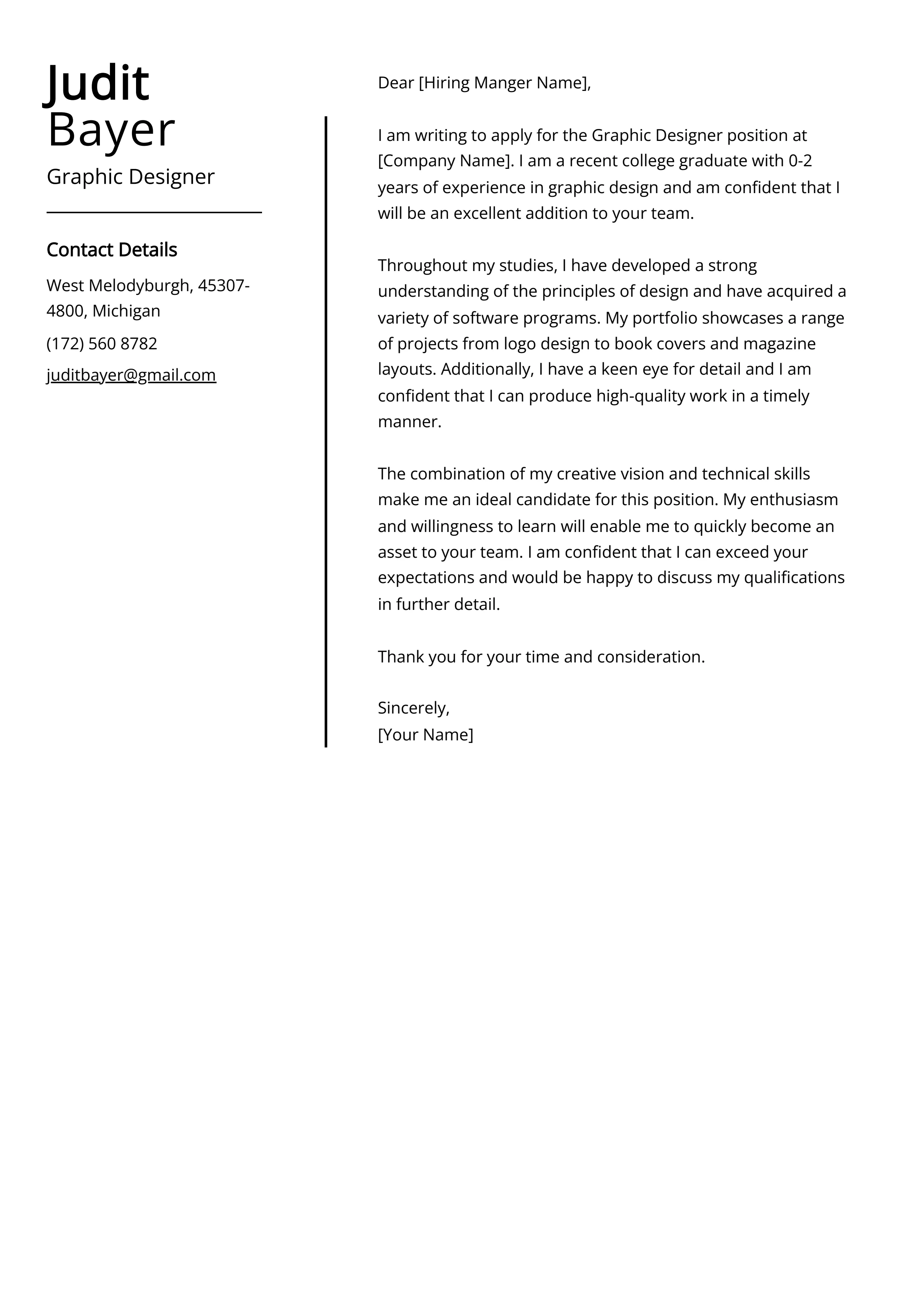
Crafting a Winning Cover Letter
A compelling cover letter is your first opportunity to make a strong impression on potential employers. For graphic designers, it’s a chance to demonstrate not only your communication skills but also your design acumen. Your cover letter should be a visual representation of your design style while effectively conveying your qualifications and enthusiasm for the role. It’s not just a formality; it’s a crucial tool in your job search arsenal. Taking the time to craft a well-written, beautifully designed cover letter can significantly increase your chances of landing an interview and ultimately, your dream job. Remember, this is your first project for the potential employer, so make it count by showcasing your ability to pay attention to detail and create an overall amazing first impression.
Highlight Your Design Skills
Your cover letter should immediately highlight your core design skills. Instead of simply listing skills, provide context. Mention how you’ve used these skills in past projects and what results you achieved. For instance, if you are proficient in Adobe Photoshop, don’t just state this. Explain how you used Photoshop to create stunning visuals for a marketing campaign that increased engagement by a certain percentage. Do you have skills in branding, web design, or illustration? Make sure these are clearly stated. Use keywords that align with the job description to ensure your application gets noticed by applicant tracking systems. Demonstrating a clear understanding of design principles and the ability to translate them into effective visual communication is essential.
Showcase Your Portfolio’s Best Work

Your cover letter is the perfect place to introduce your portfolio, your most powerful tool for showcasing your talent. Instead of just stating that your portfolio is available, be selective and mention specific projects that align with the job requirements. Briefly describe the project, your role, and the impact of your work. Provide a direct link to your online portfolio or, if applicable, a link to specific projects within your portfolio that are most relevant to the role. This allows the hiring manager to quickly assess your skills and creative style. Consider including a visual element within the cover letter itself, such as a small, well-designed graphic that links to your portfolio, creating a seamless connection between your letter and your body of work.
Tailor Your Letter to the Job
Generic cover letters are a major turnoff. Customizing your cover letter for each job application demonstrates your genuine interest in the specific opportunity and the company. Thoroughly research the company, its values, and the specific requirements of the role. Address the hiring manager by name, if possible. Highlight the skills and experiences that are most relevant to the job description, using keywords from the description. Mention how your skills and experience align with the company’s needs and values. This shows you’ve invested time and effort in understanding the role and that you’re a good fit for their team. Avoid the temptation to reuse the same template for every application; a tailored cover letter shows you care.
Use Strong, Action-Oriented Verbs
The language you use in your cover letter can make a significant difference. Replace passive phrases with strong, action-oriented verbs. Instead of saying, “I was responsible for,” say, “I designed,” “I developed,” “I managed,” or “I created.” These verbs create a more compelling narrative and highlight your accomplishments. Quantify your achievements whenever possible. For example, instead of saying, “Increased website traffic,” say, “Increased website traffic by 25% through strategic content marketing.” Using strong verbs makes your cover letter more dynamic and engaging. This approach makes your cover letter more impactful and memorable to the reader. This helps to demonstrate your abilities and achievements in a direct, compelling manner.
Proofread and Polish Your Cover Letter

Attention to detail is critical for a graphic designer, and your cover letter is a prime example of this. Errors in grammar, spelling, and formatting can undermine your credibility and make a negative impression. Before submitting your cover letter, carefully proofread it multiple times. Use a spell checker, but don’t rely on it entirely. Have a friend, family member, or colleague review it as well, as a fresh pair of eyes can often catch errors you’ve missed. Pay close attention to the layout, ensuring it’s clean, professional, and visually appealing. Ensure your contact information is correct and up-to-date. A polished, error-free cover letter demonstrates your professionalism and attention to detail.
Formatting Your Cover Letter
Choose a Professional Font and Layout
The design of your cover letter should be visually appealing while remaining professional and easy to read. Choose a clean, legible font like Arial, Helvetica, or Open Sans. Keep the font size between 10 and 12 points for optimal readability. Use a layout that is well-organized and allows for easy scanning. Ensure ample white space between paragraphs and sections to avoid a cluttered appearance. Consider using a subtle design element, such as a strategically placed line or graphic, to add visual interest without distracting from the content. Aim for a balance between visual appeal and professional presentation to demonstrate your design capabilities effectively.
Maintain a Clean and Readable Design

Your cover letter should be a reflection of your design aesthetic. It should demonstrate your ability to create visually appealing and readable content. Avoid using overly complex designs or excessive colors that can detract from the message. The focus should be on the content and your qualifications. Use a clear hierarchy to guide the reader’s eye. Ensure that the most important information, such as your skills and accomplishments, is easily identifiable. Remember, the goal is to showcase your design skills while also making it easy for the hiring manager to quickly understand your qualifications and appreciate your attention to detail. A simple, elegant design is often the most effective.
Contact Information and Salutation
Always include your contact information at the top of your cover letter. This should include your name, phone number, email address, and a link to your online portfolio or website. Address the hiring manager by name if possible; it shows you’ve done your research and that you’re genuinely interested in the role. If you can’t find the hiring manager’s name, use a professional salutation like “Dear Hiring Manager.” Make sure the salutation matches the tone and style of your cover letter. Close with a professional closing, such as “Sincerely” or “Best regards,” followed by your full name. Your contact information should be easy to find and accurate, making it simple for the recruiter to get in touch with you.
Writing the Body of Your Cover Letter
Opening with a Hook

The opening paragraph of your cover letter is crucial for capturing the reader’s attention. Instead of starting with a generic introduction, try to create a “hook” that immediately draws the reader in. State the specific position you are applying for and how you found it. Then, quickly explain why you’re excited about the opportunity. If possible, mention something specific that caught your eye about the company or the role. This shows that you’ve done your research and that you’re genuinely interested in the position. Try to keep the opening concise and compelling. You want to make the reader want to continue reading and learn more about your qualifications.
Highlighting Your Accomplishments
In the body of your cover letter, focus on your accomplishments rather than simply listing your responsibilities. Use the STAR method (Situation, Task, Action, Result) to describe your achievements effectively. Briefly explain the situation or challenge, the task you were assigned, the actions you took, and the results you achieved. Provide specific examples of your work and quantify your accomplishments whenever possible. For example, instead of saying, “Improved website design,” say, “Redesigned the company website, resulting in a 30% increase in user engagement.” Demonstrating tangible results is far more persuasive than simply listing what you did. Show the value you brought to previous employers and how you can bring that value to the new position.
Mentioning Relevant Skills and Experience
Clearly state the skills and experience that are most relevant to the job requirements. Review the job description carefully and highlight the skills and experience that align with the employer’s needs. Use keywords from the job description to ensure your cover letter gets noticed by applicant tracking systems. Provide specific examples of how you’ve used these skills in previous projects. Mention any software or tools you are proficient in, such as Adobe Creative Suite, Sketch, or Figma. If you have experience in specific areas of graphic design, such as branding, web design, or illustration, be sure to highlight those. Connect your skills and experience directly to the requirements of the role to show that you are a strong candidate.
Closing with a Call to Action

Your closing paragraph should leave a lasting impression and encourage the hiring manager to take the next step. Restate your interest in the position and reiterate why you are a good fit. Include a call to action, such as, “I am eager to discuss how my skills and experience can contribute to your team. Thank you for your time and consideration.” Express your enthusiasm for the opportunity and your eagerness to learn more about the role. Provide your contact information once more to make it easy for the recruiter to reach out. End the letter on a positive note, expressing your anticipation of hearing from them soon. A strong closing helps the hiring manager remember you and motivates them to move forward in the hiring process.
Cover Letter Examples and Templates
Graphic Design Cover Letter Template Overview
Leveraging cover letter templates can save you time and provide a solid structure for your application. However, remember to personalize the template to match the specific job and company. Templates typically provide a basic framework, including sections for your contact information, a salutation, an introduction, a skills section, a body section highlighting your accomplishments, and a call to action. Use the template as a starting point and customize each section with your own information and design elements. Make sure to tailor the content to the requirements of the job description. Review the template and make sure it aligns with your personal style and brand. Add design elements to make the cover letter visually appealing, but be careful not to overdo it.
Cover Letter Samples for Different Design Roles

Different graphic design roles require different skills and experiences. Therefore, your cover letter should be tailored to the specific job. For example, a cover letter for a web designer should emphasize skills in UI/UX design, front-end development, and responsive design. A cover letter for a brand designer should showcase your understanding of branding principles, visual identity, and marketing. A cover letter for an illustrator should focus on your artistic skills, creativity, and ability to create unique visuals. Customize your cover letter samples to reflect the role and emphasize the skills most relevant to the position. Include the specific software and design tools you are proficient in and provide examples of your work in the relevant areas.
Resources for Graphic Designers
Portfolio Website Best Practices
Your portfolio website is your most important asset as a graphic designer. It’s where you showcase your best work, demonstrate your skills, and make a great first impression. Ensure your website is easy to navigate and that your projects are displayed in an organized and visually appealing way. Include clear descriptions of each project, highlighting your role, the client, and the goals. Use high-quality images and ensure your website is mobile-friendly. Always keep your portfolio up to date with your latest projects. Include a call to action, such as a contact form or a link to your resume. Your portfolio website is a reflection of your personal brand; it should be professional and well-designed, reflecting your design skills.
Interview Preparation

Once you’ve landed an interview, preparation is key. Review your portfolio and be prepared to discuss your projects in detail. Anticipate common interview questions and prepare your answers. Research the company and the role thoroughly. Practice answering questions about your skills, experience, and design process. Prepare questions to ask the interviewer; this demonstrates your interest and initiative. Dress professionally and arrive on time. During the interview, be enthusiastic and show your passion for graphic design. Highlight your accomplishments and provide examples of your work. Demonstrate your ability to communicate effectively and work collaboratively. Be prepared to discuss your design process and how you approach challenges. Always follow up with a thank-you note to express your appreciation.