Crafting Your Elementary Teaching Cover Letter
An elementary teaching cover letter is your first introduction to a potential employer. It’s your opportunity to showcase your qualifications, experience, and passion for teaching young children. Unlike a resume, which presents a factual overview, a cover letter allows you to tell a story, highlighting why you’re the perfect fit for the specific role and school. A well-crafted cover letter can significantly increase your chances of securing an interview, while a poorly written one can lead to your application being overlooked. Therefore, taking the time to carefully craft your letter is crucial.
Understanding the Purpose of a Cover Letter
The primary purpose of an elementary teaching cover letter is to persuade the hiring manager that you are a strong candidate. It’s not just a summary of your resume; it’s a persuasive document designed to highlight your key skills and experiences in a way that directly addresses the needs of the school and the requirements of the teaching position. It demonstrates your personality, your communication skills, and your understanding of the school’s mission and values. Furthermore, it allows you to explain any gaps in your resume or unique circumstances that might be relevant to your application.
Highlighting Your Qualifications

Your cover letter should emphasize the qualifications that make you an excellent elementary teacher. This includes your educational background, teaching certifications, and any specialized training or experience. But it’s not enough to simply list these qualifications; you must also demonstrate how they translate into tangible benefits for the school and its students. Focus on the skills and experiences that align with the job description, providing concrete examples of how you’ve successfully applied those skills in previous teaching roles or during student teaching. Quantify your achievements whenever possible, using numbers or data to show the impact you’ve made.
Essential Components of an Elementary Teaching Cover Letter
Header and Contact Information
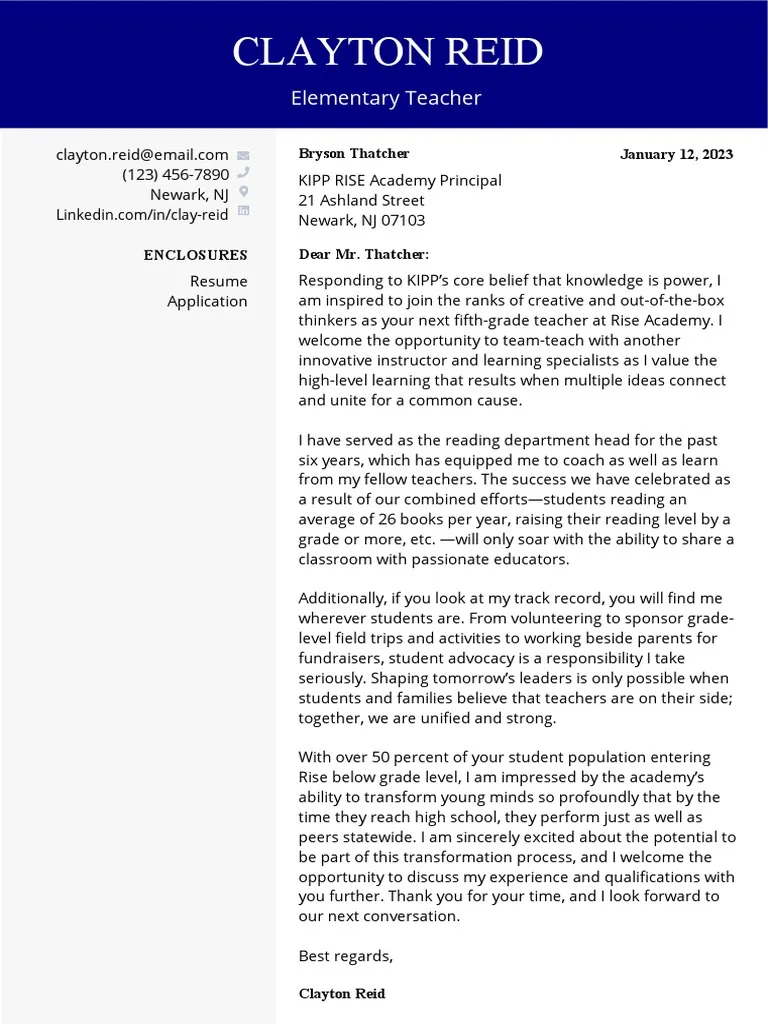
Start with a professional header that includes your name, address, phone number, and email address. Ensure your email address is professional (e.g., firstname.lastname@email.com) and not something casual or humorous. If you have a LinkedIn profile, include the URL as well. This section provides the hiring manager with your contact details at a glance. Make sure your contact information is accurate and up-to-date so that the school can easily reach you.
Greeting and Introduction

Address the hiring manager by name if possible. Research the school’s website or LinkedIn to find the name of the principal or hiring manager. If you can’t find a name, use a professional greeting like “Dear Hiring Committee” or “Dear [School Name] Hiring Team.” In your introduction, state the position you are applying for and briefly explain how you learned about the opening. Immediately grab the reader’s attention by mentioning your most relevant qualifications or a compelling achievement.
Body Paragraphs
The body paragraphs are the heart of your cover letter. They should provide detailed examples of your skills and experiences, demonstrating how you meet the job requirements. Avoid simply restating your resume; instead, expand on your accomplishments and explain how you’ve made a positive impact in previous roles. Tailor these paragraphs to the specific needs of the school and the teaching position. Use action verbs to describe your accomplishments, and provide concrete examples whenever possible. This section should be around 3 paragraphs.
Skills and Experience
Highlight your core teaching skills, such as lesson planning, classroom management, and student assessment. Provide specific examples of how you’ve successfully implemented these skills in previous roles. For example, describe a time you designed a lesson plan that significantly improved student engagement or a classroom management strategy that reduced disruptive behavior. Be specific and quantify your achievements whenever possible. Mention any awards or recognition you received for your teaching abilities.
Classroom Management

Effective classroom management is crucial for elementary teachers. Describe your strategies for creating a positive and productive learning environment. This could include your approach to establishing classroom rules, managing student behavior, and building positive relationships with students and parents. Share how you adapt your management style to meet the diverse needs of students and how you handle challenging situations. Provide concrete examples of your classroom management successes.
Curriculum Development
Elementary teachers often play a role in curriculum development. Discuss your experience in creating and implementing engaging lesson plans that align with educational standards. Mention any experience you have with curriculum mapping or aligning lessons with state standards. If you’ve developed any innovative teaching methods or incorporated technology into your lessons, highlight these. Showcase your ability to create a stimulating and effective learning environment.
Closing and Call to Action
In your closing paragraph, reiterate your interest in the position and express your enthusiasm for the opportunity. Thank the hiring manager for their time and consideration. End with a clear call to action, such as stating that you are available for an interview and providing your contact information again. Proofread this section carefully to ensure a professional and polished final impression. Keep it concise and confident.
Formatting and Presentation

Font and Readability
Choose a professional and easy-to-read font, such as Times New Roman, Arial, or Calibri. Use a font size between 10 and 12 points. Ensure your letter has clear formatting with consistent margins (1 inch on all sides), appropriate spacing between paragraphs, and a well-organized layout. Avoid excessive use of bolding or italics, and ensure your letter is visually appealing and easy for the hiring manager to scan. This improves readability and shows attention to detail.
Proofreading and Editing
Thoroughly proofread your cover letter for any grammatical errors, spelling mistakes, or typos. Use spell-check and grammar-check tools, but don’t rely on them entirely; always read your letter carefully to catch any errors that might be missed by these tools. Consider having a friend or family member review your letter as well. A polished, error-free cover letter demonstrates your professionalism and attention to detail.
Tailoring Your Letter

Researching the School and Position
Before writing your cover letter, research the school and the specific teaching position. Visit the school’s website to learn about their mission, values, and programs. Review the job description carefully to identify the key skills and qualifications they are seeking. Tailor your cover letter to address these specific requirements, highlighting how your skills and experience align with the school’s needs. This shows that you’ve done your homework and are genuinely interested in the position.
Matching Skills to Job Requirements
Carefully review the job description and identify the key skills and qualifications that the school is looking for. In your cover letter, explicitly address each of these requirements, providing specific examples of how you meet them. Use keywords from the job description to show that you understand the school’s needs. By matching your skills to the job requirements, you demonstrate that you are a strong fit for the role.
Showcasing Your Passion for Teaching

Throughout your cover letter, infuse your passion for teaching. Share your enthusiasm for working with young children and creating a positive learning environment. Highlight your commitment to student success and your desire to make a difference in the lives of your students. Let your personality shine through, but always maintain a professional tone. Expressing your passion can help you connect with the hiring manager on a deeper level.
In conclusion, a well-crafted elementary teaching cover letter is crucial for making a positive first impression and securing an interview. By following these guidelines, you can create a compelling cover letter that showcases your qualifications, experience, and passion for teaching. Remember to tailor your letter to each specific job and school, and always proofread carefully before submitting your application. Good luck with your job search!