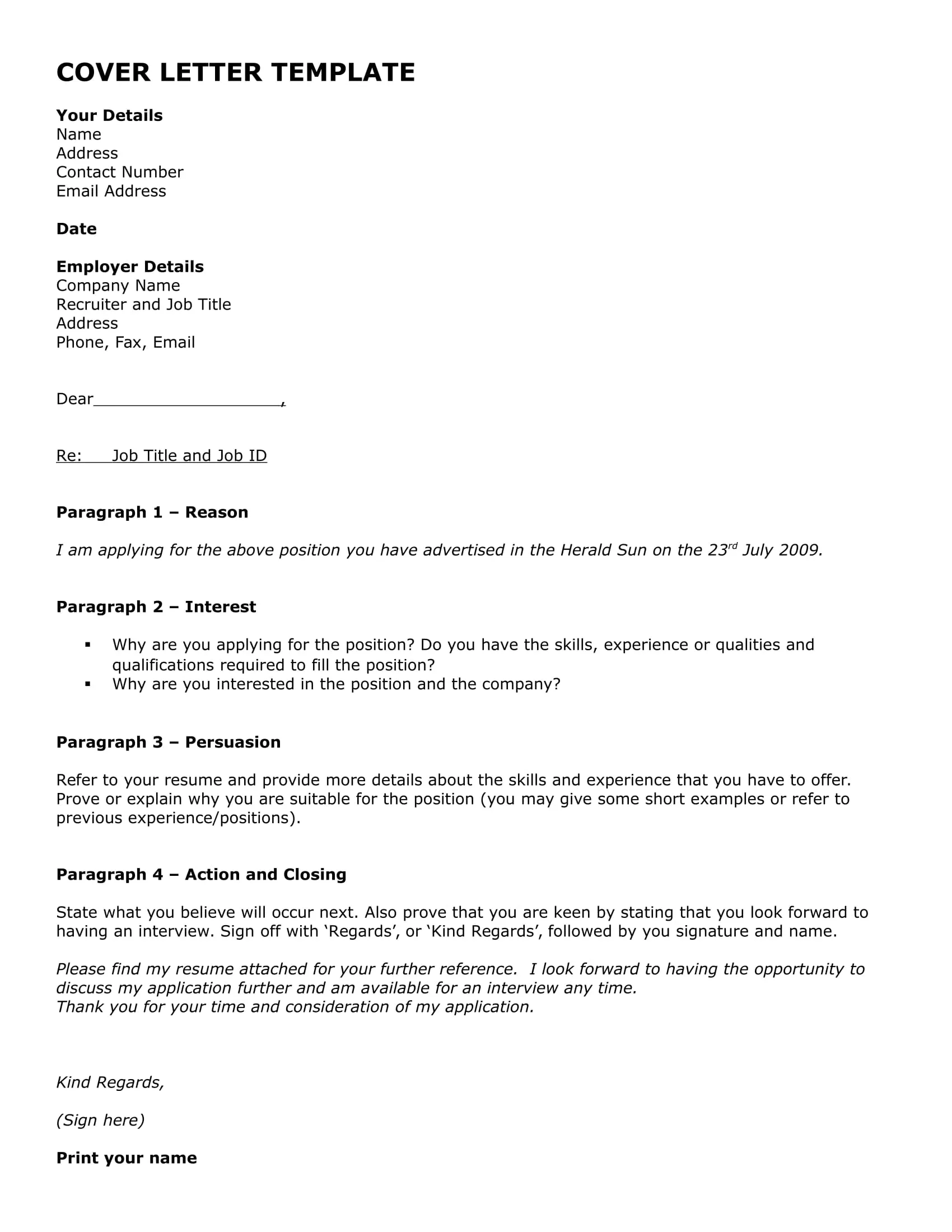
What is an Example Cover Letter
An example cover letter is a sample document that serves as a template and guide for individuals applying for jobs. It’s a crucial part of any job application, acting as a personalized introduction to potential employers. Unlike a resume, which lists your skills and experience, a cover letter allows you to showcase your personality, express your enthusiasm for the role, and explain why you’re the perfect fit for the company. It provides an opportunity to highlight specific achievements, elaborate on skills, and demonstrate your understanding of the job requirements. Using an example cover letter is beneficial because it helps job seekers understand the proper structure, tone, and content needed to create a compelling application. It provides a starting point, helping to reduce the anxiety associated with writing a cover letter from scratch. It also allows for comparison and adaptation, making it easier to tailor the letter to the specific job and industry. Remember to always customize the example to your own experiences and the specific role you are applying for.
The Importance of a Cover Letter
A well-crafted cover letter is not just a formality, but a critical tool in your job search arsenal. It’s your first impression, a chance to make a memorable impact before the hiring manager even glances at your resume. In today’s competitive job market, a strong cover letter can set you apart from other applicants, especially when applying for jobs where many candidates have similar qualifications. It offers a platform to bridge any gaps in your resume, such as career changes or employment gaps. It is also an opportunity to connect your skills and experiences to the specific job requirements, showing the employer why you are the ideal candidate. Moreover, a cover letter allows you to showcase your writing skills, attention to detail, and communication style, which are all valuable assets in almost any professional role. Failing to include a cover letter, or submitting a poorly written one, can significantly decrease your chances of getting an interview. It’s a clear indication that you may not have the attention to detail or the effort required to land the job.
Key Elements of a Cover Letter

An effective cover letter is composed of several key elements that work together to create a persuasive and compelling narrative. These include a professional header with your contact information, a personalized greeting to the hiring manager or company representative, an engaging introductory paragraph, clear and concise body paragraphs showcasing your relevant skills and experiences, and a call to action that expresses your interest and eagerness for the role. Each section plays a crucial role in building a strong case for why you’re the right fit. The header ensures the recipient has easy access to your contact details. The greeting establishes a personal connection, making your letter feel less generic. The introduction captures the reader’s attention and states your purpose. The body paragraphs provide evidence of your capabilities and how they align with the job requirements. Finally, the call to action encourages the employer to take the next step, such as scheduling an interview. Paying close attention to these elements is the first step to crafting a winning cover letter.
Header and Contact Information
The header of your cover letter serves a practical purpose, providing essential contact information so the recipient can easily reach you. It should include your full name, professional title (if applicable), phone number, email address, and optionally, your LinkedIn profile URL or personal website link. Ensure that this information is accurate and up-to-date. Place the header at the top of the letter, aligning it to the left or right, depending on your preferred style. The header is the first thing a hiring manager sees, so make sure it looks clean and professional. Double-check the contact information for any typos, as a small error here can prevent you from being contacted for an interview. Also, consider using a professional-sounding email address, avoiding nicknames or informal phrases. The layout should be neat, with clear spacing between the different elements for easy readability. The header establishes your identity and provides the necessary details for follow-up.
Professional Greeting
The greeting in your cover letter sets the tone for the entire document. A well-crafted greeting is essential for grabbing the reader’s attention and making a positive first impression. Ideally, address the hiring manager by name. Researching the company to find the name of the hiring manager or the person who will be reviewing your application is the best way to personalize your letter. Use ‘Dear Mr./Ms./Mx. Last Name’ instead of generic greetings like ‘To Whom It May Concern’. If you cannot find a specific name, use a title like ‘Dear Hiring Manager’ or ‘Dear [Department Name] Team’. Avoid overly casual greetings. It is important to show respect and demonstrate that you’ve taken the time to learn about the company and the specific role. This personalized approach immediately distinguishes your cover letter from generic ones. The greeting is more than just a formality; it’s an opportunity to connect with the hiring manager from the outset.
Body Paragraph 1 Showcase Your Value

The first body paragraph is your opportunity to make a strong initial statement. Begin by clearly stating the position you are applying for and how you discovered the opportunity. This should be followed by a concise summary of why you are the perfect fit for the role. Highlight your most relevant skills, experiences, and achievements that align with the job description. Focus on the key requirements and demonstrate your understanding of the company’s needs. Quantify your accomplishments whenever possible, using numbers and data to illustrate your impact. For instance, instead of saying ‘Managed projects’, you might say ‘Managed a team of 10, delivering projects under budget and ahead of schedule’. Make a direct connection between your past experiences and the job requirements, demonstrating that you possess the skills and knowledge necessary to excel in the role. The first paragraph should be impactful and focused. The aim is to pique the reader’s interest and encourage them to read on.
Body Paragraph 2 Demonstrate Your Skills
The second body paragraph should expand on your abilities and expertise, providing specific examples to support your claims. This is where you can detail your relevant skills and provide evidence of your achievements. Use the STAR method (Situation, Task, Action, Result) to provide a structured approach to showcasing your skills. Describe the situation you were in, the task you needed to complete, the actions you took, and the results you achieved. This method offers a clear and concise narrative that allows the hiring manager to understand your impact and abilities. Tailor your examples to the specific requirements listed in the job description, demonstrating how your skills and experiences align with the company’s needs. Focus on tangible results and highlight any quantifiable achievements that demonstrate your value. This paragraph gives the reader concrete examples of how you have performed in similar situations. This will give the hiring manager confidence in your ability to perform effectively.
Body Paragraph 3 Express Enthusiasm
The final body paragraph should express your enthusiasm for the role and the company. Highlight what excites you about the opportunity and why you are passionate about working there. Show that you have researched the company and understand their mission, values, or recent initiatives. Mention specific aspects of the job that intrigue you and align with your career goals. This will demonstrate that you are genuinely interested in the position. Reiterate your key qualifications and emphasize the value you can bring to the team. Conclude with a clear call to action, expressing your eagerness to discuss your qualifications further and indicating your availability for an interview. Thank the hiring manager for their time and consideration, leaving a positive and lasting impression. A well-written conclusion underscores your interest and encourages the next step.
Call to Action

The call to action is your final opportunity to guide the hiring manager towards the next step. It should be a clear and direct statement expressing your interest in an interview. Reiterate your enthusiasm for the position and the company. Provide a concise overview of how you can contribute to their team, highlighting your most relevant skills and experiences. A simple call to action could be ‘I am eager to learn more about this opportunity and discuss how my skills and experience can benefit your team. I am available for an interview at your earliest convenience’. Thank the hiring manager for their time and consideration, showing appreciation for the effort they have invested in reviewing your application. Offer to provide any additional information or references if needed. Proofread the entire cover letter to ensure it is free of errors and expresses your professionalism and attention to detail. The call to action is your last chance to encourage engagement.
Formatting and Style
Formatting and style are crucial for creating a cover letter that is easy to read and professional-looking. Choose a clean and professional font like Times New Roman, Arial, or Calibri. Maintain a consistent font size, typically between 10 and 12 points, for optimal readability. Use single-spacing for the body of the letter and double-spacing between paragraphs to separate ideas. Keep the letter concise, ideally within one page, to respect the hiring manager’s time. Use clear headings and bullet points to break up large blocks of text and make the content easier to scan. Align your text to the left, avoiding centered or justified text, as this is generally easier to read. Ensure consistent margins (typically 1 inch on all sides) to create a balanced and professional look. Pay attention to the overall layout, ensuring that it is uncluttered and visually appealing. Correct formatting and styling show your attention to detail and respect for the recipient.
Choosing the Right Font
The font you choose for your cover letter impacts readability. Select a professional, easy-to-read font. The best choices include Times New Roman, Arial, Calibri, and Helvetica. These fonts are standard and are widely accepted in professional correspondence. Avoid using overly stylized fonts or fonts that are difficult to read, as this can detract from your message. Keep the font size consistent throughout the letter, typically between 10 and 12 points, to maintain a clean and professional look. Using a standard font demonstrates your professionalism and attention to detail.
Using Proper Grammar and Spelling

Correct grammar and spelling are essential to making a positive impression. Proofread your cover letter carefully, checking for any errors in grammar, punctuation, and spelling. Poor grammar and typos can undermine your credibility and make you appear unprofessional. Use a spell checker and grammar checker, but do not rely on them entirely. Proofread the document multiple times. Ask a friend or colleague to review it. Pay close attention to the use of correct verb tenses, subject-verb agreement, and correct punctuation. Ensuring grammatical accuracy demonstrates your communication skills and attention to detail.
Proofreading Your Cover Letter
Proofreading is a vital step in preparing your cover letter. After completing the initial draft, take a break and then review the document with a fresh perspective. Look for grammatical errors, spelling mistakes, punctuation issues, and inconsistencies in formatting. Read the letter aloud to catch any awkward phrasing or unclear sentences. Consider asking a trusted friend, family member, or career counselor to review your cover letter. They may catch errors that you overlooked. Proofread multiple times. Take a break to reset your mind and view the document with fresh eyes. This is essential for ensuring your cover letter is polished and professional.
Example Cover Letter Samples by Industry
Different industries and roles require different approaches. Tailoring your cover letter to the specific industry and job you are applying for is essential for effectively conveying your qualifications. For instance, a cover letter for a marketing position should highlight your creativity, communication skills, and ability to drive results, using relevant keywords and showcasing your experience with campaigns and data analysis. A cover letter for an engineering role should emphasize your technical expertise, problem-solving abilities, and experience with specific technologies or projects. A cover letter for an education position should showcase your teaching philosophy, experience with curriculum development, and passion for student success. Examine cover letter samples specific to your field. Adapt the example to your own background and the requirements of the specific job. Tailoring your cover letter demonstrates your understanding of the industry and your genuine interest in the role.
Example Cover Letter for Marketing

When crafting a cover letter for a marketing position, focus on demonstrating your creativity, communication skills, and ability to achieve measurable results. Start by highlighting your experience with marketing campaigns, emphasizing your knowledge of digital marketing, content creation, social media management, SEO, and data analysis. Use specific examples to showcase your successes, such as increases in website traffic, lead generation, or conversion rates. Tailor your letter to the specific marketing role and the company’s objectives, demonstrating your understanding of their brand, target audience, and marketing strategies. Use marketing-specific keywords and phrases to show that you understand the industry jargon. Include a portfolio link. Showing your marketing skills will impress the hiring manager.
Example Cover Letter for Engineering
A cover letter for an engineering position should highlight your technical expertise, problem-solving abilities, and experience with specific technologies or projects. Emphasize your experience with relevant software, tools, and methodologies, such as CAD, simulation software, or project management tools. Provide details about your projects, highlighting your role, the challenges you overcame, and the outcomes you achieved. Tailor your cover letter to the specific engineering discipline and the requirements of the role. Use technical language. Show your understanding of the company’s products, services, and engineering needs. Demonstrate your ability to work collaboratively in a team environment and your commitment to producing high-quality results. Highlight any certifications, licenses, or relevant skills. Showing your experience will allow the hiring manager to trust you.
Example Cover Letter for Education
When applying for an education position, a cover letter is an opportunity to showcase your teaching philosophy, experience with curriculum development, and passion for student success. Highlight your teaching experience, including the grade levels and subjects you have taught, along with any specializations or certifications you possess. Describe your teaching style and your approach to creating a positive and engaging learning environment. Provide examples of your ability to differentiate instruction, assess student progress, and manage a classroom. Demonstrate your knowledge of relevant educational standards, technologies, and best practices. Emphasize your commitment to fostering a supportive and inclusive learning community. Tailor your cover letter to the specific school or district’s mission, values, and educational goals. This will show you’re a good fit and will allow the hiring manager to trust your abilities.
Customizing Your Cover Letter

Customizing your cover letter is vital for showcasing your suitability for the specific job. Generic, one-size-fits-all cover letters demonstrate a lack of interest. Begin by carefully reviewing the job description. Identify the key skills, qualifications, and experiences that the employer is seeking. Tailor your cover letter to highlight how your qualifications align with the job requirements. Use specific examples and quantifiable results to showcase your abilities. Research the company, understanding its mission, values, and recent achievements, and then weave this understanding into your letter, showing that you are interested in the company itself, not just any job. Customize your cover letter for each application, tailoring your language, tone, and focus to the specific requirements. This will make it clear that you are a strong candidate.
Tailoring to the Job Description
The job description is your guide. Carefully review it to identify the key requirements, skills, and experiences. Use the job description as a framework. Use the same language. Highlight your relevant qualifications, demonstrating how your skills, experiences, and achievements align with the employer’s needs. Include keywords, which will increase your chances of getting noticed by applicant tracking systems (ATS). Customize your cover letter to align with the job description. Showing that you have specifically the skills needed increases your chances of success.
Keywords to Include
Keywords are critical to ensuring your cover letter grabs attention. Review the job description and identify the key skills, qualifications, and industry-specific terms. Incorporate these keywords naturally throughout your cover letter, especially in the body paragraphs. Using keywords demonstrates that you possess the required skills and experiences. This also helps applicant tracking systems (ATS) scan your application. Ensure you use the right keywords. Don’t overload your cover letter, and integrate keywords naturally into the text. This way, your letter will resonate with both human readers and the algorithms.
Common Mistakes to Avoid
Certain mistakes can significantly undermine the effectiveness of your cover letter, potentially leading to your application being overlooked. One common mistake is using generic opening phrases. Another mistake is focusing too much on yourself, neglecting to connect your skills and experiences with the job’s requirements and the company’s needs. Finally, a failure to proofread your cover letter can lead to errors that reflect poorly on your attention to detail and professionalism. Avoiding these common pitfalls will improve your chances of making a strong first impression and securing an interview.
Generic Opening Phrases
Generic opening phrases, such as ‘To Whom It May Concern’ or ‘I am writing to express my interest’, can make your cover letter feel impersonal. These phrases offer no immediate connection. Instead, take the time to research the hiring manager’s name. Address the letter directly to them. Use a personalized greeting that grabs the reader’s attention. This will show that you have taken the time to learn about the company and the role. Personalized greetings and a more tailored approach will help you stand out from other applicants.
Focusing on Yourself Too Much
While it is essential to highlight your skills and experiences, focusing solely on yourself without connecting them to the job’s requirements and the company’s needs can be a significant mistake. Frame your achievements and qualifications in relation to the job. Demonstrate how your skills can contribute to the company’s goals and the specific requirements of the role. Show the hiring manager how you can benefit the company. Make the connection between your skills and the job. This approach will demonstrate your understanding of the position and show that you’re a great fit.
Not Proofreading
Failing to proofread your cover letter is a critical error. Typos, grammatical errors, and formatting inconsistencies can make you look unprofessional and negatively impact your credibility. Before submitting your cover letter, carefully review the document. Check for grammatical errors, spelling mistakes, punctuation issues, and inconsistencies in formatting. Use spell-check and grammar-check tools, but do not rely on them completely. Read your cover letter aloud. Consider asking a friend, family member, or career counselor to review your cover letter. A polished, error-free cover letter conveys your professionalism and attention to detail.
Conclusion: Crafting a Winning Cover Letter
Crafting a winning cover letter involves understanding its key elements, tailoring it to each job, and avoiding common mistakes. A compelling cover letter should provide essential contact information, open with a strong and personal greeting, and then showcase your skills, experiences, and achievements. Remember to customize your cover letter. Align your qualifications with the job requirements. Express your genuine enthusiasm for the role and the company. Conclude with a clear call to action. A carefully crafted cover letter can distinguish you from other candidates. A cover letter is your first impression, so make it a good one.