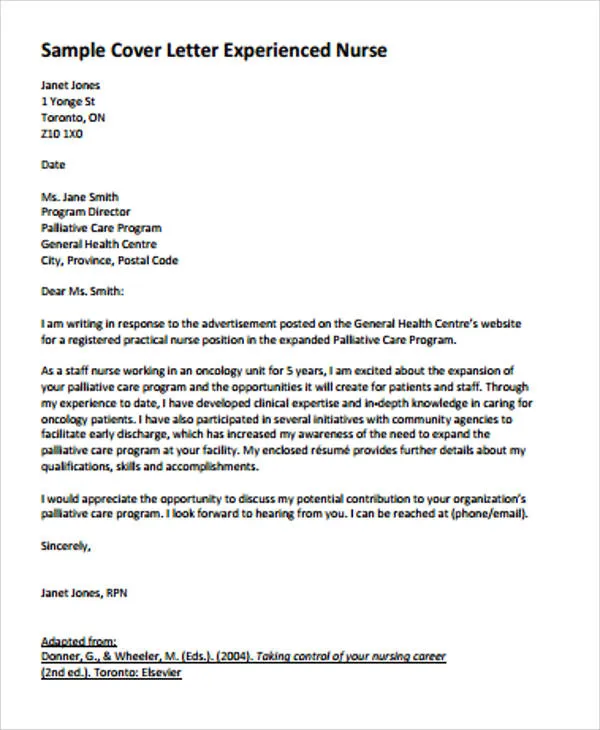
Introduction
Crafting a compelling cover letter is crucial for experienced nurses aiming to make a positive impression on potential employers. Your cover letter serves as your initial introduction, setting the stage for the hiring manager’s perception of your qualifications and suitability for the role. It’s your opportunity to go beyond the information listed in your resume and demonstrate your unique value proposition as a nursing professional. A well-written cover letter not only highlights your skills and experience but also reflects your personality, enthusiasm, and genuine interest in the position. The introduction should immediately capture the reader’s attention and clearly state the position you are applying for, where you saw the job posting, and a brief overview of your key qualifications.
Highlighting Your Experience
When you’re an experienced nurse, you have a wealth of knowledge and expertise to draw upon. Your cover letter is the perfect place to showcase this. Don’t just list your previous job titles; instead, focus on the responsibilities you held, the specific patient populations you worked with, and the types of procedures you performed. For example, instead of saying “Registered Nurse at City Hospital,” you could write, “Registered Nurse specializing in critical care, responsible for administering medications, monitoring vital signs, and providing comprehensive care to patients in the ICU.” This level of detail paints a clearer picture of your capabilities and allows the employer to understand your skill set better. Be sure to include details about the number of years you worked in each role and the specific units or departments in which you gained experience.
Quantify Your Achievements

Numbers speak volumes. Instead of simply stating that you improved patient outcomes, quantify your achievements whenever possible. Did you reduce patient readmission rates by a certain percentage? Did you improve patient satisfaction scores? Did you implement a new protocol that led to measurable improvements in efficiency or safety? These kinds of achievements demonstrate your impact in previous roles. For example, you could write, “Implemented a new fall prevention protocol that reduced patient falls by 15% within six months.” or “Trained and mentored a team of 10 new nurses, resulting in a 90% positive performance review from the department head.” The more specific you are, the more compelling your cover letter becomes, because it proves your ability to deliver results and make a difference in a healthcare setting. Use data to support your claims and demonstrate your value as an employee.
Showcase Relevant Skills
Your nursing skills encompass more than just clinical expertise. Employers are also looking for soft skills such as communication, teamwork, problem-solving, and leadership. Identify the skills that are most relevant to the job you’re applying for and highlight them in your cover letter. Review the job description carefully and align your skills with the requirements listed. For example, if the job description emphasizes teamwork and collaboration, you could describe your experience working in a multidisciplinary team to improve patient care, and how you proactively communicated with other healthcare providers. If the role involves leadership responsibilities, you could showcase your experience in mentoring, supervising, or taking charge in high-pressure situations. Choose the top skills the employer requires and illustrate those skills with examples from your past. This is the best way to make a great impression on the hiring manager.
Tailoring Your Letter to the Job
One of the biggest mistakes nurses make is submitting generic cover letters. It’s crucial to customize each cover letter to the specific job you’re applying for. This means researching the healthcare facility or organization, understanding their mission, values, and the specific needs of the role. Demonstrate your knowledge of the organization and explain why you are a good fit for the position. Reference specific details from the job description and explain how your qualifications align with their needs. If the job description mentions a specific skill or experience, be sure to emphasize it. The goal is to show that you understand the role and have taken the time to present yourself as the perfect candidate. This level of personalization demonstrates your commitment and your genuine interest in the opportunity.
Emphasizing Patient Care and Compassion

Nursing is a profession built on compassion, empathy, and a commitment to patient well-being. In your cover letter, make sure to highlight your dedication to providing exceptional patient care. Share examples of situations where you went above and beyond to help patients, or the times you made the greatest impact on a patient’s recovery and well-being. This can involve sharing success stories about your patient interactions, demonstrating your ability to build relationships with patients and their families, or explaining how you prioritize patient safety. If you have experience working with particular patient populations, such as the elderly, children, or patients with specific health conditions, be sure to mention it. Remember, showing you care about patients is an excellent way to stand out from the other applicants and showcase your true passion.
Formatting and Presentation
Your cover letter should be professional and easy to read. Choose a clean, standard font like Times New Roman, Arial, or Calibri. Use clear headings and subheadings to organize your information. Ensure proper spacing and margins for visual appeal. Proofread your letter carefully to catch any errors in grammar or spelling. A well-formatted cover letter shows attention to detail and a commitment to excellence. Consider using bullet points to highlight key skills or achievements, making it easier for the reader to scan the document. Keep your letter concise and focused, ideally no more than one page. Include your contact information at the top of the letter and use a professional salutation, such as “Dear [Hiring Manager Name]” or “Dear Hiring Committee.”
Proofreading and Editing
Before submitting your cover letter, it’s essential to proofread and edit it thoroughly. Typos, grammatical errors, and inconsistencies can create a negative impression and detract from your qualifications. Read through your letter multiple times and look for any errors. It’s also a good idea to ask a friend, family member, or career advisor to review your letter for you. They can provide a fresh perspective and catch any errors you may have missed. Pay close attention to the flow of your letter, and ensure that your sentences are clear, concise, and well-structured. Check the grammar and spelling using a tool like Grammarly to ensure you avoid any mistakes. A polished and error-free cover letter shows that you care about the details and are committed to presenting yourself in the best possible light.
Conclusion

A well-crafted cover letter is a powerful tool that can significantly enhance your chances of landing your dream nursing job. By highlighting your experience, quantifying your achievements, showcasing your skills, tailoring your letter to the job, emphasizing patient care, and focusing on presentation and proofreading, you can create a cover letter that captivates potential employers. The tips provided can help you write a cover letter that makes a great impression. Remember to always adapt and personalize your cover letter to each specific job application. By following these tips, you will be well on your way to creating a cover letter that will help you stand out from the competition and secure your next nursing role. Good luck with your job search!