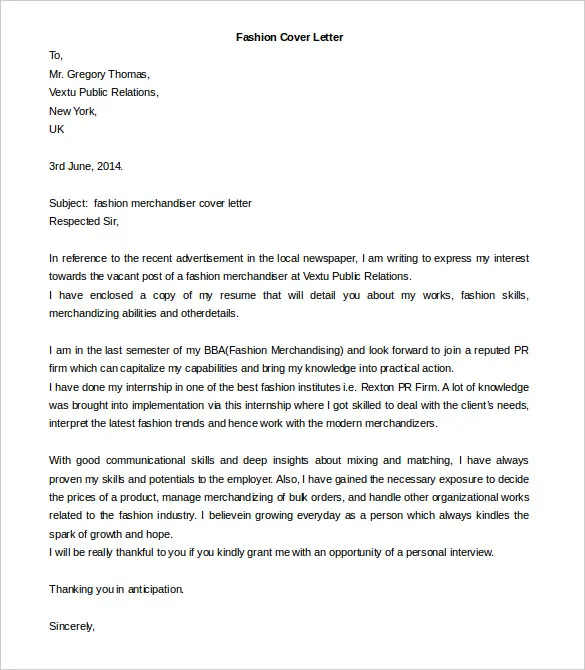
What is a Fashion Retail Cover Letter?
A fashion retail cover letter is a crucial document that accompanies your resume when applying for jobs in the fashion industry. It serves as your introduction to potential employers, providing an opportunity to showcase your personality, enthusiasm, and qualifications. Unlike your resume, which lists your experiences and skills, a cover letter allows you to tell a story, explaining why you are the perfect fit for the specific role and the company’s culture. It’s your chance to make a strong first impression and grab the hiring manager’s attention. A well-crafted cover letter can significantly increase your chances of getting an interview, while a poorly written one can lead to your application being overlooked.
Why is a Cover Letter Important?
In the competitive world of fashion retail, a cover letter is more than just a formality it’s an essential tool for differentiating yourself from other candidates. It allows you to highlight specific skills and experiences that align with the job requirements, demonstrating your understanding of the role and the company. A cover letter shows that you have taken the time and effort to personalize your application, indicating genuine interest in the opportunity. It allows you to elaborate on experiences, explain career gaps, and showcase your communication skills. By using a cover letter, you can show your personality and passion for fashion, making a lasting positive impression on the employer and increasing your chances of landing an interview.
Key Components of a Fashion Retail Cover Letter

A strong fashion retail cover letter comprises several key components that work together to create a compelling narrative. Each section serves a specific purpose, conveying different aspects of your qualifications and personality. Proper structuring and content in each section will help you make a positive impression on the hiring manager. This structured approach ensures that you present yourself in the best possible light and convince the employer of your suitability for the role. Understanding the components will enable you to create a polished and effective cover letter.
Contact Information
Begin your cover letter with your contact information, including your full name, phone number, email address, and LinkedIn profile (if you have one). This allows the employer to easily reach you if they want to move forward with your application. Place this information at the top of the letter, either on the left or right-hand side, making it readily accessible. Ensure the contact information is up-to-date and professional; use a professional email address and double-check the accuracy of your phone number. Presenting clear contact details is a fundamental aspect of the application process and shows your attention to detail.
The Salutation
The salutation sets the tone for your cover letter. Whenever possible, address the hiring manager by name. Research the company website or LinkedIn to find the name of the person in charge of hiring; this shows that you have taken the initiative to learn about the company. If you can’t find a specific name, use a professional greeting, such as “Dear Hiring Manager.” Avoid generic greetings like “To Whom It May Concern” as they appear impersonal. Make sure your salutation is friendly and professional, making a positive initial impression. Getting the salutation right sets the stage for a positive interaction and can help make your cover letter stand out.
Body Paragraphs

The body paragraphs are the heart of your cover letter, where you showcase your skills, experience, and passion for fashion retail. Start with an engaging opening that grabs the reader’s attention, perhaps by mentioning something specific about the company or the role that sparked your interest. In the subsequent paragraphs, provide details about your relevant experience, highlighting achievements and quantifying your results whenever possible. Explain why you are interested in the specific role and how your skills align with the job description. Demonstrate your understanding of the fashion industry and the company’s brand. End with a strong closing that summarizes your key qualifications and reiterates your interest in the position. Keep your paragraphs concise and focused to maintain the reader’s interest.
Highlighting Relevant Skills and Experience
Focus on the skills and experiences that are most relevant to the job requirements. Use keywords from the job description to demonstrate that you meet their criteria. Provide concrete examples of your accomplishments, rather than just listing your responsibilities. For instance, if the job requires excellent customer service skills, describe a situation where you went above and beyond to assist a customer and the positive outcome. If the role requires experience in sales, detail how you have met or exceeded sales targets. Quantify your achievements whenever possible; use numbers and data to illustrate your successes. This helps the employer understand the value you can bring to their team and shows that you are a results-oriented individual.
Showcasing Passion for Fashion Retail
Express your genuine enthusiasm for the fashion industry and the specific role you are applying for. Explain what interests you about the company and its brand. Demonstrate your knowledge of current fashion trends and your understanding of the company’s target market. Talk about what excites you in the world of retail. Showcasing your passion makes your cover letter more engaging and memorable. Employers want to hire people who are genuinely interested in fashion and who are excited about the opportunity to work with their brand. Share insights on the industry, show how you follow fashion trends and brands to show your genuine interest in the role.
Addressing the Employer’s Needs

Tailor your cover letter to address the specific needs and requirements of the employer. Read the job description carefully and identify the key skills and qualifications they are looking for. In your cover letter, explain how your skills and experiences align with their needs. Highlight the aspects of the role that appeal to you most and why you are a good fit. Demonstrate your understanding of the company’s values and how your work ethic aligns with their culture. By showing that you understand their needs, you can make a compelling case for why they should hire you. Tailoring your letter to the specific employer showcases a sincere interest in the specific company.
The Closing Paragraph
The closing paragraph is your opportunity to summarize your key qualifications and reiterate your interest in the position. Thank the hiring manager for their time and consideration. Reiterate your enthusiasm for the opportunity and express your desire to discuss your qualifications further in an interview. Include a call to action, such as encouraging them to contact you or letting them know when you are available. Keep the closing paragraph concise and professional, leaving a lasting positive impression. A strong closing paragraph confirms your eagerness and sets you apart from other applicants.
Call to Action
Include a clear call to action in your closing paragraph. This can be as simple as stating that you are eager to discuss your qualifications further in an interview. You could also provide your availability for an interview, making it easier for the hiring manager to contact you. A call to action encourages the employer to take the next step in the hiring process, demonstrating your proactive approach. A call to action shows enthusiasm and initiative to the hiring manager, encouraging them to take the next step.
Proofreading and Editing

Proofreading and editing are essential steps in ensuring your cover letter is polished and professional. Typos, grammatical errors, and formatting inconsistencies can undermine your credibility and make a negative impression. Always proofread your cover letter multiple times, checking for any errors in grammar, spelling, and punctuation. Ensure that the letter is well-organized, with clear and concise language. Ask someone else to review your cover letter; a fresh pair of eyes can often catch errors that you might have missed. Pay attention to the overall tone and style of the letter, making sure it is professional and engaging. Proofreading and editing will showcase attention to detail, making your cover letter stand out.
Formatting Your Cover Letter
Proper formatting makes your cover letter easy to read and visually appealing. A well-formatted cover letter is crucial for making a positive impression. Proper formatting also shows that you pay attention to detail. The key to a well-formatted cover letter is to make it visually appealing.
Font and Style Choices
Choose a professional and easy-to-read font, such as Times New Roman, Arial, or Calibri. Keep the font size between 10 and 12 points to ensure readability. Use a consistent font throughout the document. Avoid using decorative or overly stylized fonts, as they can be distracting. Use a clear and simple format that makes your cover letter easy to read. Proper font and style choices convey professionalism and show you’re serious about the application. Maintain consistency across the document, and adhere to the style guidelines to create a professional document.
File Format and Naming Conventions

Save your cover letter as a PDF file to ensure that the formatting remains consistent across different devices and operating systems. Use a clear and descriptive file name, such as “Your Name_Cover Letter_Fashion Retail.” Avoid using generic file names like “coverletter.doc”. Using PDF files ensures that your formatting will remain consistent and prevent any unexpected changes to your application. A well-named file ensures your application is organized and easily identifiable.
Tailoring Your Cover Letter
Tailoring your cover letter is vital to demonstrate your genuine interest and suitability for each specific job. A generic cover letter will likely be overlooked. The key to effective tailoring is to customize your content to match the specific requirements of each job. This demonstrates your understanding of the company and your commitment to the role. Tailoring your cover letter makes a strong impression on the hiring manager, showing you have invested time and effort into the application.
Researching the Company
Before writing your cover letter, research the company thoroughly. Visit their website, read their “About Us” section, and explore their social media profiles. Understand their brand, their target market, and their values. Learn about their recent achievements and any challenges they are facing. Researching the company provides valuable insights, which allows you to address specific needs and demonstrate your genuine interest. This shows that you are a proactive and informed candidate, setting you apart from those who submit generic applications. Showing knowledge of the company is beneficial for the applicant and crucial when applying.
Customizing Content for Each Application

Customize the content of your cover letter for each job application. Review the job description carefully, paying attention to the key skills and qualifications they are seeking. Use keywords from the job description in your cover letter to demonstrate that you meet their requirements. Provide specific examples of your relevant experience and accomplishments. Tailor the language and tone of your cover letter to match the company’s brand and culture. Customizing the content will convince the hiring manager that you are a perfect fit for the role and the company. Customization will also help you stand out from other candidates.
Common Mistakes to Avoid
Avoid common mistakes to ensure your cover letter makes a positive impression. Common errors in cover letters can instantly lead to the rejection of your application. The cover letter must be free of errors and tailored to each job. By avoiding common mistakes, you will increase the chances of landing an interview.
Generic Content
Avoid using generic content that could apply to any job. Tailor your cover letter to the specific role and company. Highlight relevant skills and experiences. Show how your qualifications align with the specific job requirements. Generic content shows a lack of genuine interest and effort. The applicant must present tailored content to make sure the hiring manager knows they are interested in the role.
Typos and Grammatical Errors

Typos and grammatical errors can undermine your credibility and make a negative impression. Proofread your cover letter carefully before submitting it. Use grammar checking tools. Ask someone else to review your letter for errors. Poorly written cover letters demonstrate a lack of attention to detail. Typos and grammatical errors make it more difficult for the hiring manager to understand your content, which is a bad sign for the applicant.
Negativity and Complaining
Avoid expressing negativity or complaining about previous employers or jobs. Focus on your positive qualities and achievements. Maintain a professional and enthusiastic tone. Negativity reflects poorly on your attitude and professionalism. The main purpose of the cover letter is to express your enthusiasm for the job and company. The candidate must focus on their achievements and passion, and express enthusiasm and positivity.
Formatting Issues
Poor formatting makes your cover letter difficult to read. Use a clear and professional font. Maintain consistent formatting throughout the document. Ensure proper spacing and alignment. Avoid using complex or distracting formatting elements. Formatting issues reflect poorly on your attention to detail and professionalism. Pay close attention to these details to give the hiring manager a better experience while reviewing your cover letter.
Examples of Strong Fashion Retail Cover Letters
Reviewing examples of strong fashion retail cover letters can provide inspiration and guidance. Studying successful examples can help you understand the best practices for writing a compelling cover letter. You can tailor the examples to your experience and desired roles. Remember to customize examples to fit your needs.
Example 1 Entry Level
An entry-level cover letter should focus on your passion for fashion, relevant skills, and any experience you have, even if it’s not directly related to retail. Highlight your ability to learn quickly, your customer service skills, and your enthusiasm for the brand. For instance, if you have volunteered in a retail setting or have experience in a customer-facing role, make sure to emphasize those skills. The most important part is the enthusiasm for the brand. Make sure to include enthusiasm in the letter to make sure the hiring manager knows your passion for the role.
Example 2 Experienced Professional
An experienced professional cover letter should showcase your previous accomplishments and highlight your leadership skills. Quantify your achievements whenever possible, such as increased sales, improved customer satisfaction, or successful visual merchandising. Show how your skills and experience align with the specific requirements of the job. Provide specific examples of your accomplishments and illustrate your successes. Demonstrate the value that you can bring to the new company. The applicant must illustrate their achievements in the role and express their interest in the role and company.
Example 3 Tailored to a Specific Job
A cover letter tailored to a specific job should directly address the requirements of the role. Use keywords from the job description. Provide specific examples of how your skills and experience match the job requirements. Tailor the language and tone to match the company’s brand and culture. Show your understanding of the role and the company. The applicant should highlight their experience, making them a good match for the role and requirements.
Final Thoughts and Next Steps
Writing a stellar fashion retail cover letter requires careful planning, research, and attention to detail. By following these guidelines, you can create a cover letter that showcases your qualifications, passion, and enthusiasm for the fashion industry. Remember to tailor your cover letter to each job application and proofread it carefully before submitting. A well-written cover letter is the first step toward securing your dream job in fashion retail. With an outstanding cover letter, you will increase the chances of success.