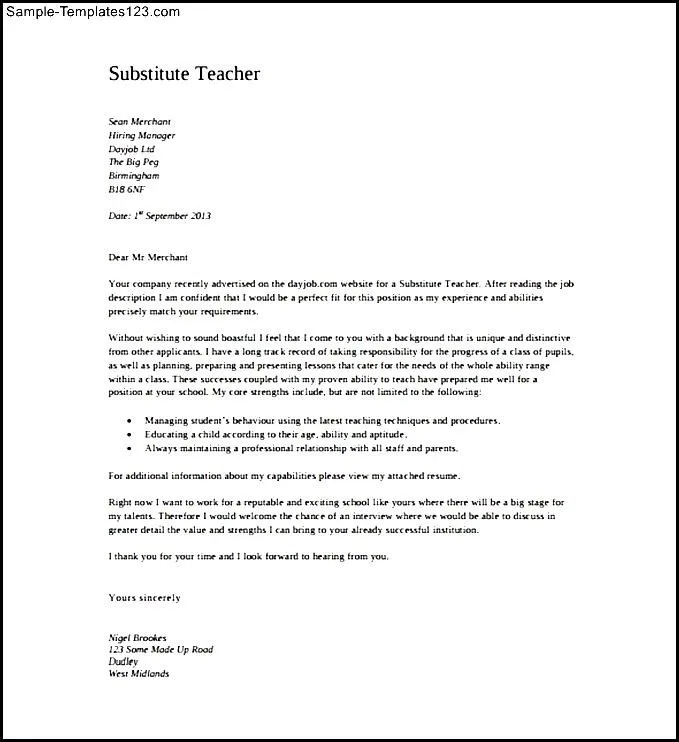
Understanding the Purpose of a Substitute Teacher Cover Letter
A substitute teacher cover letter is your first impression on potential employers. It’s more than just a formality; it’s your chance to showcase why you’re the perfect fit for their school. Unlike a resume, which lists your qualifications, a cover letter allows you to express your personality, passion for teaching, and understanding of the specific school’s needs. It bridges the gap, providing context and personality that a resume alone cannot. A well-crafted cover letter demonstrates your communication skills, attention to detail, and genuine interest in the position. It highlights your unique strengths and how you can contribute to a positive learning environment for students. Think of it as a tailored sales pitch, designed to convince the hiring manager that you are the ideal candidate for their substitute teaching needs. This is especially important in the competitive field of education, where standing out is key.
Key Components of a Compelling Cover Letter
A strong cover letter is built on several essential components. These elements work together to create a cohesive narrative that highlights your qualifications and enthusiasm. Each section serves a specific purpose in convincing the reader of your suitability for the role. A well-structured letter is easy to read and allows the hiring manager to quickly grasp your key strengths and experience. By carefully crafting each part, you can significantly increase your chances of getting an interview and ultimately landing the substitute teaching position. Ignoring any of these components can weaken your application and make it less memorable. Prioritizing these components is crucial for creating a cover letter that stands out from the crowd and effectively showcases your capabilities and suitability for the substitute teaching position.
Contact Information and Addressing

Start by including your full name, address, phone number, and professional email address at the top of the letter. This allows the recipient to easily reach you. Always address the letter to a specific person, such as the principal or hiring manager, if possible. Researching the school’s website or calling the office can help you find the correct name and title. If you can’t find a specific name, use a professional salutation like “Dear Hiring Committee.” Avoid generic greetings like “To Whom It May Concern.” This shows you’ve taken the time to personalize your application, demonstrating your attention to detail and genuine interest in the position. This attention to detail can go a long way in making a positive first impression, showcasing your professionalism and commitment to the role.
Opening Paragraph Crafting
Your opening paragraph is your hook. It should immediately grab the reader’s attention and make them want to learn more about you. State the position you are applying for and how you learned about the opening. Briefly mention your relevant qualifications and why you are interested in the school or district. Expressing your enthusiasm is crucial. A compelling opening paragraph sets the tone for the rest of the letter and highlights your key strengths right away. Start with a strong, concise statement that captures the reader’s attention and demonstrates your eagerness for the role. This initial impression is critical; make it count by conveying your personality and professionalism from the outset. Remember, this paragraph is your first chance to connect with the reader, so make it memorable and impactful.
Highlighting Relevant Skills and Experience
This is where you showcase your skills and experience. Focus on what makes you a strong substitute teacher. Mention your experience in classroom management, lesson planning, and working with children of different ages and abilities. Emphasize any special skills or training you have, such as experience with special education students or proficiency in a second language. Use specific examples to illustrate your abilities. For instance, if you mention classroom management, describe a situation where you successfully handled a challenging student or kept the class engaged. Quantify your achievements whenever possible; instead of saying ‘improved student engagement,’ state ‘increased student participation by 20%.’ Use action verbs to describe your accomplishments, and tailor your skills to align with the specific needs of the school or district.
Tailoring Your Letter to the School

Demonstrate that you’ve researched the school and understand its mission and values. Mention specific programs, initiatives, or aspects of the school that resonate with you. This shows that you are genuinely interested in the position and have taken the time to learn about the school. Referencing the school’s website, mission statement, or recent news can help you tailor your letter. This personalization makes your application stand out, making you seem like a thoughtful candidate. Addressing the school’s specific needs will prove that you are a great fit for the school community. Showing genuine interest makes you a more compelling candidate because it highlights your desire to be part of the school’s environment. Tailoring your letter goes beyond simply customizing; it shows your dedication and commitment.
Quantifying Achievements and Providing Examples
Instead of just listing your skills, provide concrete examples and quantifiable results. Use data to back up your claims. For example, if you’ve improved student performance, state the percentage increase. Describe specific situations where you demonstrated your skills. Detail how you handled a challenging classroom situation or successfully implemented a lesson plan. This adds credibility to your application. Concrete examples provide evidence of your abilities, making your claims more believable. Quantitative data adds to your credibility and helps the hiring manager assess your impact. Provide enough detail to show your accomplishments without overwhelming the reader. This approach makes your cover letter more impactful, demonstrating that you can translate your skills into real results within the classroom environment.
Expressing Enthusiasm and Availability
End your letter by expressing your enthusiasm for the position. Reiterate your interest in the school and the opportunity to contribute to its mission. State your availability and willingness to substitute at a moment’s notice. This can be crucial for substitute positions. Make it clear that you are ready and available to work. Offering flexibility shows your dedication to the school. Mentioning your willingness to work on short notice makes you a more appealing candidate. This final impression ensures that the hiring manager views you as a proactive and eager applicant. Remember to maintain a positive and professional tone throughout your letter. A genuine expression of interest can significantly increase your chances of getting an interview and securing the position.
The Closing Paragraph and Call to Action

In your closing paragraph, thank the reader for their time and consideration. Reiterate your interest in the position and express your availability for an interview. Include a call to action, such as ‘I look forward to hearing from you soon’ or ‘Thank you for considering my application.’ Provide your contact information again for easy reference. A strong closing paragraph reinforces your key message and leaves a positive impression. Expressing gratitude and reiterating your availability demonstrates your professionalism and eagerness. A clear call to action encourages the hiring manager to take the next step. Ensuring a strong closing helps guarantee your application leaves a lasting positive impression, which helps enhance your chances of securing an interview for the substitute teacher position.
Formatting and Presentation Tips
The appearance of your cover letter is just as important as its content. A well-formatted letter demonstrates your attention to detail and professionalism. Use a clean, easy-to-read font like Times New Roman, Arial, or Calibri. Ensure your letter is single-spaced with a consistent font size (typically 11 or 12 points). Use clear and concise language, and break up long paragraphs into shorter, more manageable chunks. Proofread your letter carefully for any grammatical errors or typos. A well-formatted and visually appealing letter makes a positive first impression and increases your chances of getting your application noticed. Following these guidelines allows your qualifications and enthusiasm to be perceived in the best possible light.
Font and Readability
Choose a professional font that is easy on the eyes. Avoid overly fancy or decorative fonts, which can be difficult to read. Stick to standard fonts such as Times New Roman, Arial, or Calibri, as they are universally accepted and easy to read. Use a font size between 11 and 12 points for body text. Ensure that your font size is consistent throughout the letter. Proper font selection improves readability and enhances the overall impact of your cover letter. Readability is critical; if the letter is difficult to read, the hiring manager might not engage with your content. Selecting the right font helps convey professionalism and makes your letter more approachable, improving the chances of a favorable response.
Proofreading and Editing

Always proofread your cover letter carefully before submitting it. Typos and grammatical errors can undermine your credibility and give the impression that you are not detail-oriented. Use spell-check and grammar-check tools, but don’t rely on them entirely. Proofread the letter yourself multiple times. It may be beneficial to have someone else review your letter to catch errors you might have missed. Ensure your letter is concise, and the language is clear and professional. Proper proofreading can significantly enhance your chances of securing an interview. Correcting errors builds a positive impression, proving you can produce quality work. A mistake-free cover letter shows your professionalism and attention to detail, creating a positive impression that enhances your chances.
Common Mistakes to Avoid
Avoiding common mistakes can significantly improve the effectiveness of your cover letter. Certain errors can immediately disqualify your application. A few simple steps can make a significant difference in how the hiring manager views your candidacy. Being aware of these common issues will help you create a cover letter that stands out for all the right reasons. These mistakes can create a negative impression, so it’s important to learn to avoid them.
Generic Language and Lack of Personalization
Avoid using generic phrases that could apply to any job. Tailor your letter to the specific school and the specific position. Show that you’ve taken the time to research the school and understand its needs. Avoid generic language, as it diminishes your application’s impact. Customize your cover letter for each application, addressing the school’s specific requirements. Your interest becomes more apparent when you provide concrete examples and demonstrate that you have studied the school and its values. Personalized and tailored letters are more likely to engage hiring managers. Highlighting your understanding of the school makes you a more desirable candidate and shows your initiative.
Typos and Grammatical Errors

Typos and grammatical errors are a major red flag. Proofread your letter carefully, and use spell-check and grammar-check tools. Consider having a friend or family member review it as well. Errors give the impression that you are not detail-oriented or that you lack professionalism. Always double-check and triple-check your cover letter before submitting. A cover letter should be error-free and professional. Eliminating mistakes demonstrates that you are serious about the position and helps create a positive first impression with hiring managers. This attention to detail shows you care about your application, which can significantly improve your prospects.
Providing a Substitute Teacher Cover Letter Example
Here’s a sample cover letter to guide you. [Your Name] [Your Address] [Your Phone Number] [Your Email Address] [Date] [Hiring Manager Name], [Hiring Manager Title] [School Name] [School Address] Dear [Mr./Ms./Mx. Last Name], I am writing to express my interest in the Substitute Teacher position at [School Name], as advertised on [Platform]. With my [Number] years of experience in education and a passion for fostering a positive learning environment, I am confident I can make a significant contribution to your school. In my previous role at [Previous School], I successfully managed classrooms of various sizes, implemented engaging lesson plans, and maintained a positive and supportive atmosphere for students. I am proficient in [List relevant skills, e.g., classroom management, differentiated instruction, etc.]. I am eager to learn more about this opportunity and discuss how my skills and experience align with the needs of [School Name]. Thank you for considering my application. I am available for an interview at your earliest convenience. Sincerely, [Your Signature] [Your Typed Name] Adapt this example to your specific experience and the specific requirements of the job. This adaptable example can serve as a solid foundation for crafting a cover letter. Be sure to customize the letter for each position.