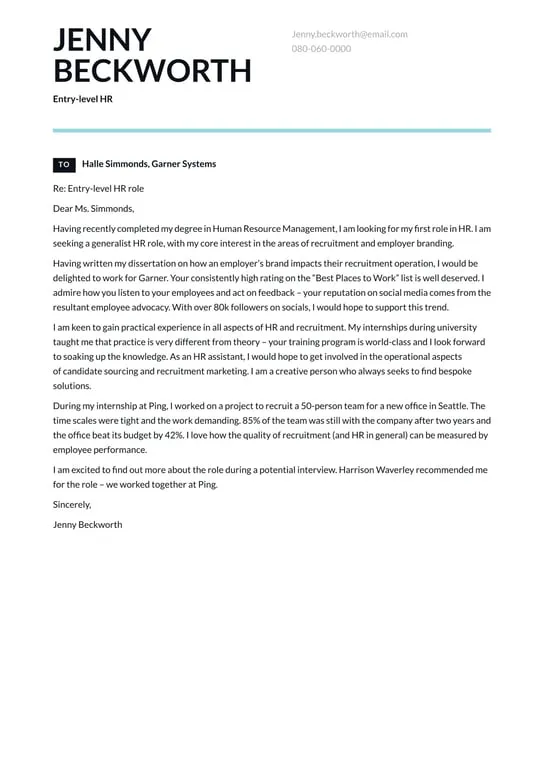
What is a HR Cover Letter?
A Human Resources (HR) cover letter is a crucial document that accompanies your resume when applying for HR-related positions. It serves as a personalized introduction to your potential employer, allowing you to showcase your qualifications, skills, and experience in a way that a resume alone cannot. Unlike a resume, which provides a factual overview of your background, a cover letter gives you the opportunity to express your personality, demonstrate your understanding of the role and the company, and explain why you are the perfect fit for the job. It’s your chance to make a strong first impression and convince the hiring manager to read your resume and consider you for an interview. A well-crafted HR cover letter can significantly increase your chances of landing your dream HR role.
Why is a HR Cover Letter Important?
In the competitive landscape of HR job applications, a cover letter is more than just a formality; it is a powerful tool to differentiate yourself from other candidates. It provides a platform to elaborate on your key skills and experiences, connecting them directly to the requirements of the specific HR position. It allows you to explain any gaps in your resume, address specific concerns the employer might have, and highlight your understanding of the company’s culture and values. A well-written cover letter demonstrates your communication skills, attention to detail, and genuine interest in the role, all of which are essential qualities for any HR professional. Moreover, it provides an opportunity to showcase your personality and passion for HR, making you more memorable to the hiring manager.
Essential Components of an HR Cover Letter

A compelling HR cover letter includes several key components that work together to create a strong impression. These components, when properly executed, effectively communicate your qualifications and suitability for the role. From your contact details at the top to your professional sign-off at the end, each element plays a crucial role in conveying your professionalism and enthusiasm. Ensure each part is clear, concise, and tailored to the specific job and company. Carefully consider the order and content of these components to maximize the impact of your cover letter and increase your chances of securing an interview.
Your Contact Information and the Date
At the very top of your HR cover letter, include your full name, address, phone number, and professional email address. This ensures that the hiring manager can easily contact you. Following your contact information, include the date you are submitting the cover letter. The date is important for record-keeping and helps the employer understand when you applied for the position. Make sure your contact information is up-to-date and accurate. Use a professional email address (e.g., your.name@email.com) and avoid using informal or unprofessional addresses. Double-check all details to prevent any errors that could hinder the recruiter’s ability to reach you.
The Hiring Manager’s Contact Information
Always address your cover letter to a specific person whenever possible. Research the hiring manager’s name and title. If you cannot find a specific name, use a professional title such as ‘Hiring Manager’ or ‘Recruiting Team.’ This personalization demonstrates your initiative and attention to detail. Including the hiring manager’s information shows that you have taken the time to learn about the company and the role. Addressing the letter to a specific person makes it feel more personal and shows that you’re truly interested in the opportunity. If you are unable to find the name of the hiring manager, it’s better to use the title instead of a generic greeting like ‘To Whom It May Concern,’ which can make your application feel impersonal.
Crafting a Compelling Opening

The opening paragraph of your HR cover letter is your chance to grab the hiring manager’s attention. Start with a strong statement that immediately highlights your interest in the position and the company. Mention where you saw the job posting and briefly state why you are a great fit. Avoid generic phrases like ‘I am writing to express my interest…’ Instead, use a statement that conveys your enthusiasm and demonstrates your understanding of the role. This introductory paragraph should be concise and impactful, setting the tone for the rest of your letter. Ensure your opening paragraph clearly states the position you are applying for and how your goals align with the company’s needs.
Highlighting Your Relevant Skills and Experience
In the body of your HR cover letter, focus on highlighting your relevant skills and experiences. Carefully review the job description and identify the key requirements and responsibilities. Provide specific examples of how your skills and experiences align with these requirements. Use action verbs to describe your accomplishments and avoid simply listing your job duties. Instead, showcase your achievements by quantifying your successes whenever possible. For instance, if you have experience in recruitment, mention the number of hires you have made or the percentage reduction in time-to-hire. This section should make a strong connection between your qualifications and the needs of the role.
Quantifying Your Achievements
To make your HR cover letter even more impactful, quantify your achievements whenever possible. Numbers and data provide concrete evidence of your skills and abilities. Use metrics to demonstrate your success in previous roles. For instance, instead of saying ‘Managed employee relations,’ say ‘Successfully resolved over 50 employee relations issues, resulting in a 15% reduction in grievances.’ This approach allows the hiring manager to see the tangible results you have delivered. By quantifying your achievements, you not only showcase your value but also make your cover letter more compelling and memorable. Provide specific examples of how you’ve improved processes, increased efficiency, or saved costs in previous roles.
Demonstrating Your Passion for HR

Demonstrating your passion for HR is crucial in making a memorable impression. In your cover letter, express your enthusiasm for the field and what motivates you. This can include your interest in employee development, diversity and inclusion, or any other specific area of HR. Discuss why you are drawn to the company and its values, showing that you have done your research and are genuinely interested in working there. Share your career goals and how this role aligns with your aspirations. This will help to show that you are not just looking for a job, but a long-term career opportunity. This helps to distinguish you from other applicants who might only see the job as a means to an end.
Tailoring Your Letter to the Job Description
One of the most critical steps in writing an effective HR cover letter is tailoring it to each specific job application. Never use a generic cover letter. Carefully review the job description and identify the key requirements, skills, and qualifications the employer is seeking. Customize your letter to address these specific points directly. Highlight your relevant experiences and skills that align with the job requirements. Explain how your past roles have prepared you for the responsibilities outlined in the job description. This shows the hiring manager that you have taken the time to understand the role and that you are a good fit. Customizing your letter makes it clear that you are genuinely interested in the specific opportunity and haven’t just sent out a mass application.
Showcasing Your Understanding of the Company
Demonstrate your understanding of the company by conducting thorough research before writing your cover letter. Visit the company’s website, review their social media profiles, and read any recent news articles or press releases. Understand the company’s mission, values, and culture. Mention specific projects, initiatives, or values that resonate with you. For instance, if the company emphasizes employee well-being, highlight your experience in wellness programs or your interest in promoting a positive work environment. This information makes your cover letter more impactful and shows that you are truly interested in being a part of their team. Tailoring your cover letter to align with the company culture can significantly enhance your application.
Closing Your HR Cover Letter Effectively

The closing of your HR cover letter should be professional and leave a lasting impression. Express your enthusiasm for the position and reiterate your interest in the opportunity. Thank the hiring manager for their time and consideration. Include a call to action, such as stating that you look forward to hearing from them soon or that you are available for an interview at their earliest convenience. Use a professional closing such as ‘Sincerely’ or ‘Best regards,’ followed by your full name. Double-check your contact information to ensure it is correct. A strong closing paragraph reinforces your qualifications and demonstrates your professionalism.
Proofreading and Formatting Your Cover Letter
Before submitting your HR cover letter, thoroughly proofread and format it to ensure it is free of errors and presents a professional appearance. Check for any grammatical errors, spelling mistakes, and typos. Ensure that your sentences are clear, concise, and well-structured. Use a professional font such as Arial or Times New Roman, and maintain consistent formatting throughout the document. Pay attention to spacing, margins, and paragraph alignment. A well-formatted and error-free cover letter demonstrates your attention to detail and professionalism. Consider having someone else review your letter to catch any mistakes you may have missed. Proofreading is a critical step to make sure your application leaves a positive impression.
Common Mistakes to Avoid in Your HR Cover Letter
Avoid common mistakes that can undermine your HR cover letter and reduce your chances of getting an interview. Generic cover letters, which lack personalization, are a major turn-off. Avoid using the same cover letter for every job application; always tailor your letter to the specific role and company. Do not simply repeat information from your resume. Instead, use your cover letter to provide additional context and elaborate on your achievements. Ensure your letter is free of errors. Typos, grammatical errors, and incorrect formatting can create a negative impression. Avoid being overly formal or using jargon. Instead, write in a clear and concise style. Do not include irrelevant information or personal opinions that are not related to the job. Focus on demonstrating your qualifications and interest in the position.
In conclusion, writing a compelling HR cover letter is essential for making a strong first impression and increasing your chances of landing your dream job. By following the guidelines outlined in this article, you can create a cover letter that highlights your skills, experience, and passion for the field. Remember to tailor your letter to each job application, quantify your achievements, and demonstrate your understanding of the company. With careful attention to detail and a professional approach, your HR cover letter will make you stand out from the competition and secure you an interview.