Understanding the Engineering Cover Letter’s Importance
In the competitive world of engineering, a well-crafted cover letter can be your key to unlocking job opportunities. It’s not just a formality; it’s a critical tool that allows you to showcase your unique skills, experience, and enthusiasm to potential employers. While your resume provides a factual overview of your qualifications, the cover letter offers a chance to tell your story, demonstrating how your background aligns with the specific needs of the role and the company. It’s your first opportunity to make a strong impression and set yourself apart from other candidates. A compelling cover letter can significantly increase your chances of getting an interview, which is the first step toward landing your dream engineering job.
Why a Strong Cover Letter Matters
A strong cover letter offers several key advantages. First, it provides context to your resume. Engineering roles often require specialized skills and experiences, and the cover letter is where you can explain how your past projects and accomplishments directly relate to the job description. Second, it allows you to demonstrate your communication skills, which are crucial in any engineering role. Clear, concise, and professional writing reflects your ability to convey complex ideas effectively. Third, it gives you an opportunity to express your genuine interest in the company and the position, showing that you’ve done your research and are genuinely excited about the opportunity. Finally, a well-written cover letter can compensate for any perceived weaknesses in your resume, such as a career gap or a lack of experience in a particular area, by highlighting transferable skills and your willingness to learn.
Key Elements of an Effective Engineering Cover Letter

Contact Information and Date
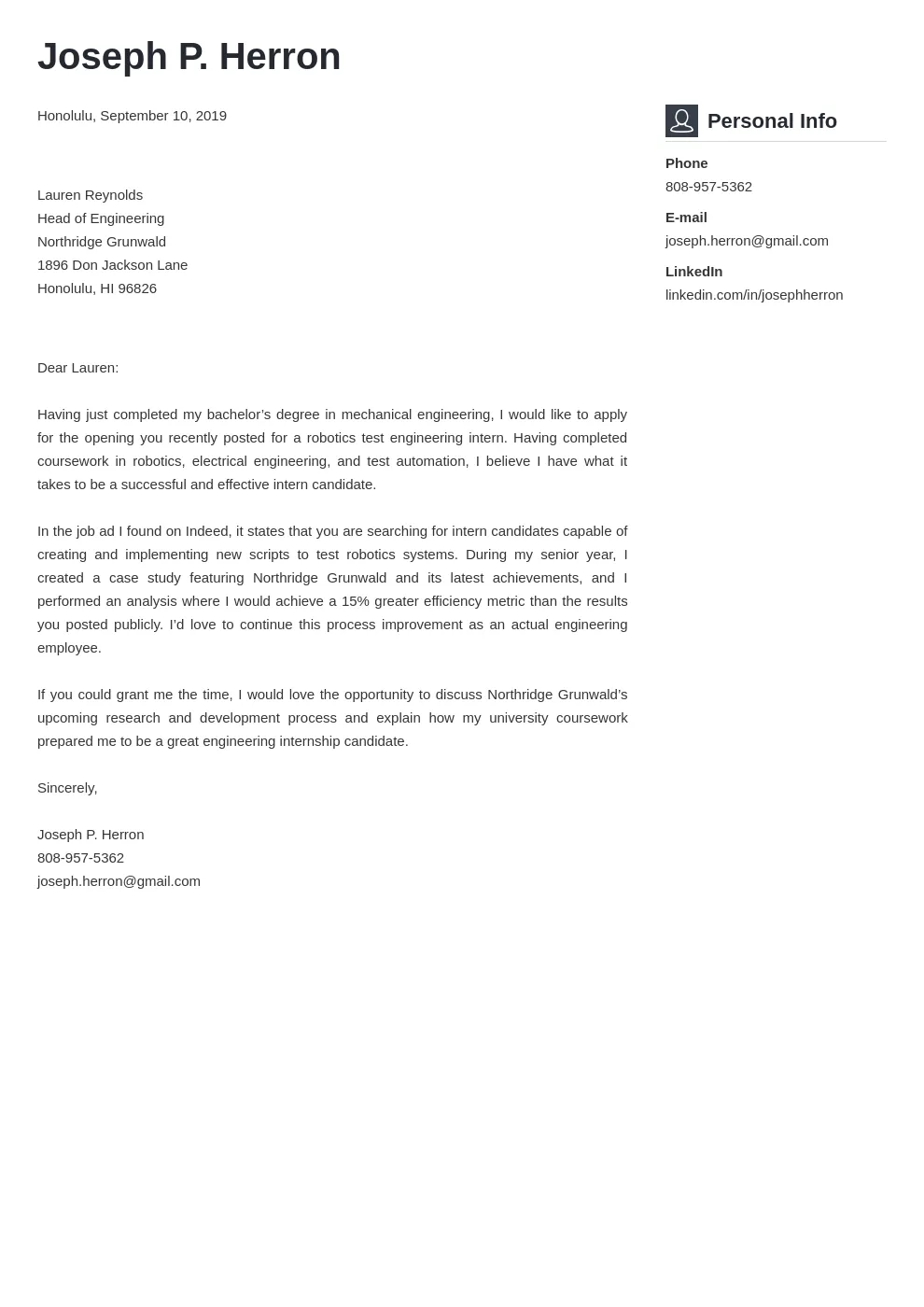
Start with your contact information – your name, phone number, email address, and optionally, your LinkedIn profile URL. Place this information at the top left or right corner of the letter. Below your contact information, include the date of the letter. This provides a professional start and ensures the employer knows when the letter was written. This is a standard professional practice that sets a tone of organization and attention to detail from the outset. The date also helps in tracking the application process.
Professional Greeting
Address the hiring manager by name whenever possible. Research the company to find out who is responsible for hiring. Generic greetings like “Dear Sir/Madam” can make your letter feel impersonal. If you can’t find a specific name, try to address the department or team you’re applying to (e.g., “Dear Hiring Manager, Engineering Department”). A personalized greeting shows that you’ve taken the time to learn about the company and the role, which is a good first impression. Proper formatting includes a comma after the greeting.
Highlighting Relevant Skills and Experience

The body of your cover letter is where you shine. Start by clearly stating the position you’re applying for and where you found the job posting. Then, focus on the skills and experiences that align with the job description. Don’t just rehash your resume; elaborate on your achievements and how they match the requirements. Use the job description as a guide to identify the key skills and experiences the employer is seeking. Provide specific examples of projects you’ve worked on, technologies you’ve used, and challenges you’ve overcome. This is your opportunity to explain how your skills and experience make you the ideal candidate for the role.
Quantifiable Achievements and Projects
Whenever possible, quantify your achievements. Instead of saying “Improved efficiency,” state “Improved efficiency by 15% by implementing…”. Use numbers, percentages, and data to demonstrate the impact of your work. Describe specific projects you’ve worked on, highlighting your role and the results you achieved. For example, if you designed a new system, describe the features, the challenges you faced, and the positive outcomes (e.g., cost savings, improved performance, or enhanced user experience). This makes your accomplishments more tangible and easier for the employer to understand your value.
Tailoring Your Cover Letter to the Job
Each cover letter should be unique and tailored to the specific job you’re applying for. Avoid sending generic cover letters. Carefully review the job description and identify the key requirements and expectations. Then, customize your letter to address these points directly. Highlight the skills and experiences that are most relevant, and explain how your background aligns with the company’s needs. This demonstrates that you’ve done your research and are genuinely interested in the position. Take the time to research the company, its values, and its projects to show you understand their goals.
Demonstrating Enthusiasm and Company Research
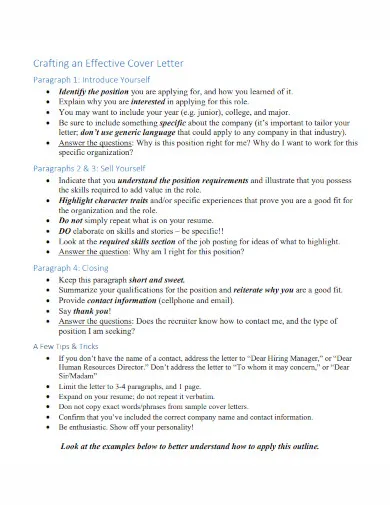
Express your enthusiasm for the position and the company. Explain why you’re interested in working there and what excites you about the opportunity. This can involve mentioning specific projects or initiatives that align with your interests and career goals. Show that you have researched the company, its products or services, its culture, and its recent news. This demonstrates your proactive approach and your genuine interest in the role and the organization. A brief mention of something specific, like a recent innovation or an award, shows that you’ve done your homework and are engaged.
Call to Action and Closing
Conclude with a clear call to action. Express your interest in an interview and indicate your availability. Thank the hiring manager for their time and consideration. Use a professional closing, such as “Sincerely” or “Best regards,” followed by your typed name. Ensure your contact information is readily available for the reader to follow up. Review the entire letter to ensure all information is current, correct and error-free.
Common Mistakes to Avoid in Engineering Cover Letters
Generic and Vague Statements

Avoid generic statements that could apply to any job. Instead, provide specific examples that demonstrate your skills and experience. Phrases like “I am a team player” or “I am hard-working” are not very effective. Instead, provide evidence, like “In my previous role, I collaborated with a team of engineers to…”. Be specific about your accomplishments and the results you achieved. Tailor your descriptions to reflect the requirements outlined in the job description. This will make your cover letter stand out from the crowd.
Typos and Grammatical Errors
Typos and grammatical errors can undermine your credibility and make you appear unprofessional. Always proofread your cover letter carefully before submitting it. Use a spell-checker, but also read through the letter yourself to catch any errors that spell-checkers might miss. Ask a friend, mentor, or career advisor to review your letter as well. A fresh pair of eyes can often identify errors you might have missed. Attention to detail is a critical skill for engineers, and a flawless cover letter demonstrates this skill effectively.
Focusing Solely on Responsibilities
Your cover letter should highlight your achievements and contributions, not just a list of your job responsibilities. The employer is interested in what you accomplished, not just what you were supposed to do. Instead of saying “Responsible for designing systems,” say “Designed and implemented a new system that improved efficiency by 10%.” Focus on the results you achieved and the impact of your work. Quantify your achievements whenever possible. This approach shows that you are a results-oriented professional.
Using Unprofessional Language or Tone

Maintain a professional tone throughout your cover letter. Avoid slang, jargon, or overly casual language. Your cover letter should be well-written and grammatically correct. Show respect for the reader by using a formal tone and avoiding contractions. Ensure your language reflects your professionalism. Use clear and concise language, and avoid unnecessary words. The goal is to present yourself as a serious, qualified candidate who can communicate effectively.
Formatting and Presentation Tips for Your Engineering Cover Letter
Font Selection and Readability
Choose a professional and easy-to-read font, such as Times New Roman, Arial, or Calibri. Use a font size between 10 and 12 points. Ensure your font choice is consistent throughout the letter. Avoid using unusual or decorative fonts, as they can make your letter difficult to read. Your cover letter should be visually appealing and easy on the eyes. A well-formatted letter shows that you pay attention to detail.
Proper Use of White Space

Use white space effectively to make your cover letter visually appealing and easy to read. Use margins of at least one inch on all sides. Double-space between paragraphs and use a single space after each sentence. Avoid large blocks of text, as they can be overwhelming. Proper use of white space helps to break up the text and improve readability. A well-structured layout demonstrates that you pay attention to the details and can present information in a clear and organized manner.
File Format and Submission Guidelines
Save your cover letter as a PDF file to preserve its formatting and ensure it can be viewed on any device. Always follow the submission guidelines provided in the job posting. Some employers may have specific requirements for file format or naming conventions. Adhering to these guidelines demonstrates your attention to detail and your ability to follow instructions. If the job posting doesn’t specify a format, a PDF is generally preferred. If the application requires it, include your cover letter as part of your application package, along with your resume and any other requested documents.