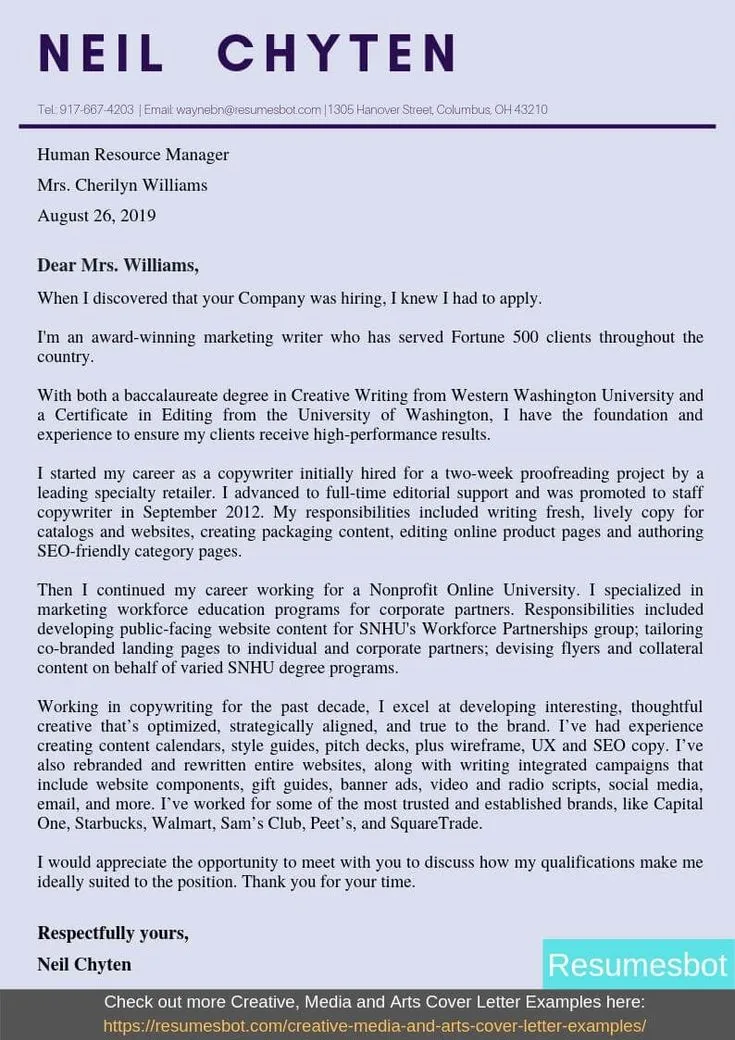
Crafting a Winning Copywriter Cover Letter
A well-crafted copywriter cover letter is your first impression on a potential employer. It’s more than just a formality; it’s your chance to demonstrate your writing skills, showcase your experience, and express your enthusiasm for the role. A compelling cover letter can be the deciding factor in whether your application moves forward. It allows you to personalize your application, highlight your unique strengths, and explain why you’re the perfect fit for the company. With so many applicants vying for the same positions, a standout cover letter is crucial to getting noticed. This guide provides you with the tools and insights needed to create a cover letter that not only gets you an interview but also sets you apart from the competition. You’ll learn how to structure your letter, highlight your achievements, and ultimately, land your dream copywriting job.
Understanding the Importance of a Cover Letter
In the competitive field of copywriting, a cover letter offers a significant advantage that a resume alone cannot provide. It allows you to go beyond the surface-level details of your resume and truly connect with the hiring manager. A well-written cover letter acts as a bridge, connecting your skills and experiences to the specific needs and values of the company. It’s an opportunity to explain why you’re interested in this particular role and company, demonstrating that you’ve done your research. It’s also a chance to showcase your writing style and voice. Unlike a resume, which is typically factual and concise, a cover letter lets you be creative. You can tell a story, highlighting the impact of your work and the value you bring to the table. This level of personalization and engagement is what sets you apart and increases your chances of securing an interview. Ultimately, a strong cover letter underscores your professionalism and genuine interest in the opportunity.
Showcasing Your Skills Effectively

Your cover letter is your first opportunity to showcase your copywriting prowess. Avoid generic statements and instead, provide concrete examples of your skills in action. Focus on demonstrating, not just stating, your abilities. Quantify your achievements whenever possible. For example, instead of saying ‘I increased website traffic’, specify the percentage increase and the time frame. Use action verbs to describe your accomplishments and responsibilities. Start your sentences with strong verbs that convey impact, such as ‘developed’, ‘created’, ‘implemented’, ‘improved’, or ‘increased’. Tailor your letter to the specific job description, highlighting the skills and experiences most relevant to the role. If the job description emphasizes SEO, make sure to mention your experience with keyword research, on-page optimization, and content strategy. If it highlights a specific industry, relate your experience to that industry, emphasizing your knowledge and understanding.
Highlighting Relevant Copywriting Experience
When detailing your experience, go beyond simply listing your past roles and responsibilities. Focus on the results you achieved in each position. Use the STAR method – Situation, Task, Action, Result – to structure your descriptions. Start by briefly setting the scene (Situation), explain what was required of you (Task), describe the actions you took (Action), and then, most importantly, detail the outcomes of your efforts (Result). Include metrics and data to back up your claims. For example, instead of saying ‘I wrote website copy’, you could say ‘I wrote website copy that increased lead generation by 30% within six months’. Be specific about the types of copywriting projects you’ve worked on. Mention the industries, platforms, and formats you’re familiar with. Highlight any specialized skills or experience that align with the job requirements. Showing you’ve worked on similar projects demonstrates your ability to hit the ground running.
Detailing Your Copywriting Portfolio
Your copywriting portfolio is your most powerful asset, and your cover letter should highlight it effectively. Instead of just stating that you have a portfolio, provide a brief, engaging overview of what it contains. Mention specific projects that are most relevant to the job you’re applying for. If the job focuses on e-commerce, highlight your work on product descriptions or sales copy. If it’s for a tech company, showcase any technical writing or website copy. Include a direct link to your online portfolio within your cover letter. Make it easy for the hiring manager to access and review your work. Consider including a small selection of your best work, especially if your portfolio is extensive. This can be a short excerpt or a brief summary of a successful project. Ensure your portfolio is well-organized, easy to navigate, and showcases your best work. Regularly update your portfolio to reflect your most recent achievements and the variety of projects you’ve completed.
Tailoring Your Letter to the Job

Generic cover letters are easily recognized and quickly discarded. To make your cover letter stand out, you must tailor it to each specific job. Thoroughly review the job description and identify the key skills, experiences, and qualities the employer is seeking. Use this information to customize your letter. Highlight the experiences and skills from your background that directly align with these requirements. Use the same keywords and phrases as those used in the job posting, but in a natural, non-repetitive way. Show genuine interest in the company. Research the company’s mission, values, and recent projects. Mention what specifically attracts you to the company and why you believe you would be a good fit. Personalize the letter by addressing the hiring manager by name. If possible, find out who the hiring manager is and direct the letter to them. If the name isn’t available, try to find it on LinkedIn or the company website. These extra steps demonstrate your attention to detail and your genuine interest in the position.
Formatting for Maximum Impact
The format of your cover letter is as important as the content. A well-formatted letter is easy to read and visually appealing, while a poorly formatted one can distract the reader. Use a professional font like Arial, Times New Roman, or Calibri, and ensure the font size is easy on the eyes (11 or 12 points). Use clear, concise language and avoid jargon. Break up large blocks of text with short paragraphs, bullet points, and white space. This makes your letter more readable and visually appealing. Use a standard business letter format, including your contact information, the date, the hiring manager’s name and title (if known), and a professional closing. Proofread your letter carefully for any typos or grammatical errors. Ensure that the margins are consistent and the alignment is correct. Pay attention to the overall layout. Your cover letter should be a reflection of your professionalism and attention to detail, so a clean, well-organized format is essential.
Proofreading and Polishing Your Letter
Proofreading is the most crucial step in the cover letter writing process. Even a single typo or grammatical error can undermine your credibility and reduce your chances of getting an interview. After you’ve written your cover letter, take a break and come back to it with fresh eyes. Read it aloud to catch any awkward phrasing or errors you might have missed. Use a grammar and spell-checker tool to identify potential issues, but don’t rely on these tools entirely. Have a friend, family member, or a career advisor review your letter. A second pair of eyes can often catch errors that you might miss. Ensure that your letter flows logically, with each paragraph building on the previous one. Make sure your tone is appropriate and professional. Avoid using slang, contractions, or informal language. Always double-check the company name, the hiring manager’s name, and the job title to ensure accuracy. Your attention to detail in this step shows the employer your commitment to excellence.
Demonstrating Your Passion for Copywriting

Your cover letter should clearly demonstrate your enthusiasm for copywriting. Express your genuine interest in the role and the company. Explain what excites you about copywriting and why you’re passionate about the craft. Showcase your understanding of the industry and the latest trends. Mention any relevant industry publications you follow or any professional development you have undertaken. Describe your writing philosophy and your approach to creating compelling copy. Mention any copywriting challenges you’ve overcome or any particularly successful projects you’ve completed. Tailor your tone to match the company’s brand voice. If the company has a casual, friendly tone, it’s acceptable to inject some personality into your letter. If the company has a more formal tone, maintain a professional and polished demeanor. Always conclude your cover letter with a strong closing statement, reiterating your interest and expressing your enthusiasm for the opportunity.
Follow-up Strategies to Secure the Job
After submitting your cover letter and resume, follow up to show your continued interest in the position. Send a brief email to the hiring manager a week or two after applying, restating your interest and asking if they need any additional information. Keep your follow-up concise and professional. If you don’t hear back after a reasonable amount of time, it’s okay to follow up again. However, avoid being overly persistent. Be respectful of the hiring manager’s time and don’t bombard them with emails. If you receive an interview invitation, prepare thoroughly. Research the company, review your portfolio, and practice answering common interview questions. Dress professionally and be punctual. After the interview, send a thank-you note to the interviewer, reiterating your interest and thanking them for their time. This final step reinforces your professionalism and dedication, further increasing your chances of landing the job. Remember, persistence and professionalism can make a significant difference in the hiring process.