Why Your Cover Letter Matters
In the digital age, where resumes are often the first impression, a cover letter sent as an email remains a crucial tool for job seekers. It is your opportunity to go beyond the bullet points of your resume and connect with the hiring manager on a more personal level. Your cover letter, when crafted correctly, can set you apart from other applicants by showcasing your personality, passion, and specific skills relevant to the job. It allows you to elaborate on your qualifications, explain career transitions, and demonstrate a genuine interest in the company and the role. A well-written cover letter grabs attention and increases your chances of securing an interview, while a poorly written one can lead to your application being overlooked. Therefore, taking the time to write a compelling cover letter is a critical step in any job search strategy.
Crafting a Compelling Email Subject Line
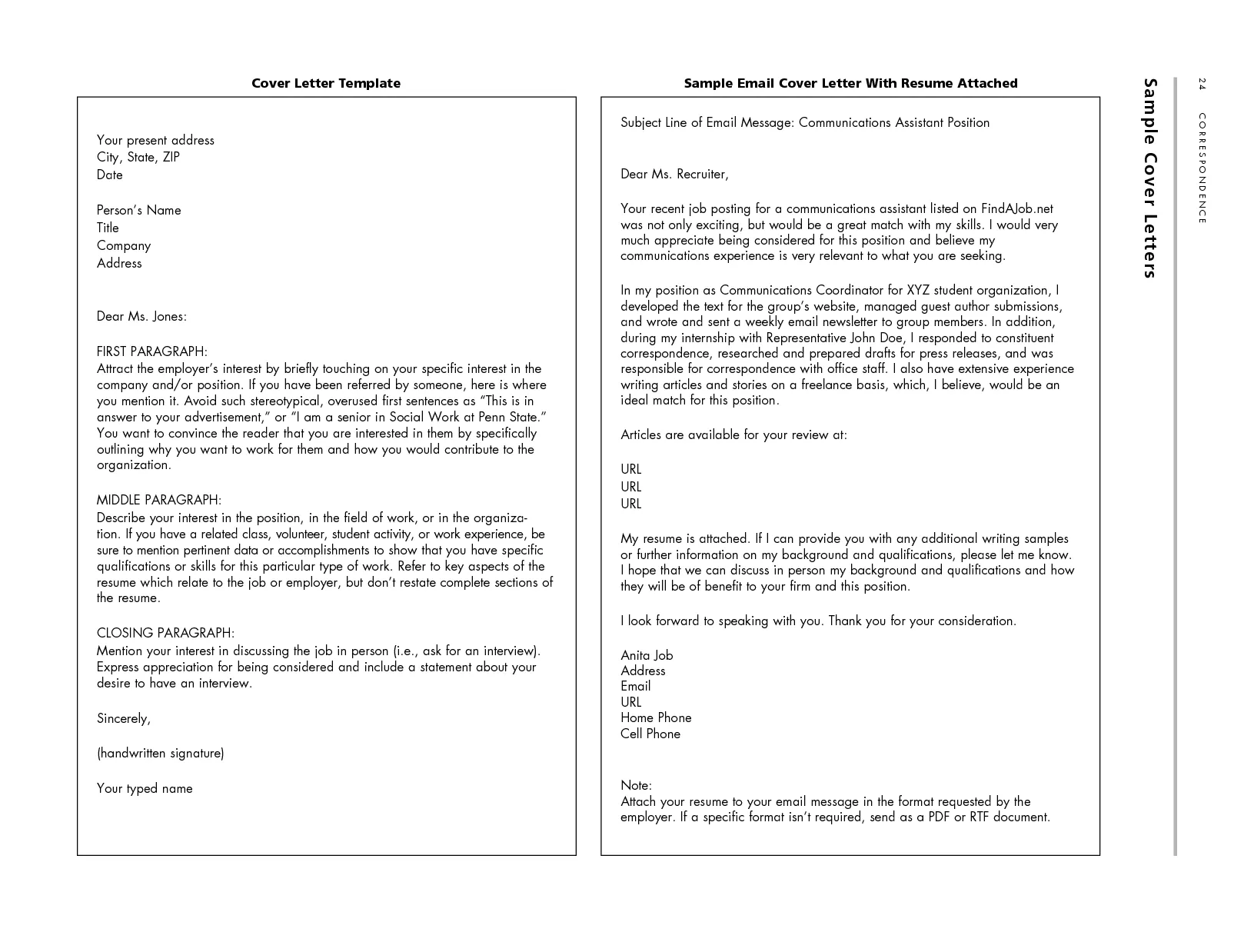
Your email subject line is the first thing a recruiter sees. A compelling subject line is essential for getting your email opened. Avoid generic phrases such as “Job Application” or “Resume.” Instead, use a subject line that is clear, concise, and directly related to the job you’re applying for. Including the job title or the reference number (if provided) is a good practice. Consider adding a personalized touch, such as mentioning where you saw the job posting or the name of the person you are addressing the email to, if known. Your subject line should be professional and intriguing, but most importantly, it should encourage the reader to open your email. This initial impression can significantly influence whether your application gets read and considered. An effective subject line can also help the recruiter quickly identify the purpose of your email and prioritize its importance.
Personalizing Your Email Cover Letter

Personalization is key to making a strong impression. A generic cover letter sent to multiple companies is unlikely to resonate with the hiring manager. Research the company and the specific role, and tailor your cover letter accordingly. Address the hiring manager by name, if possible, showing that you’ve taken the time to learn about the company and the role. Mention the company’s values, mission, or recent projects that interest you, demonstrating your genuine interest and understanding. Highlight the skills and experiences most relevant to the job description, and explain how your qualifications align with their specific requirements. Personalization shows that you are not just sending out a generic application, but that you are genuinely interested in the specific opportunity. This targeted approach helps you stand out from the crowd and makes you a more memorable candidate.
Formatting Your Cover Letter for Email
Formatting your cover letter correctly for email is crucial for readability and professionalism. Because email clients can vary in how they display text, avoid overly complex formatting. Keep your font simple, such as Arial or Calibri, and use a standard font size (10-12 points) for easy reading. Use clear and concise language, and keep paragraphs relatively short to make it easier for the reader to scan the content. Use bullet points to highlight key skills or achievements, and leave enough white space between sections for readability. Ensure the formatting looks clean and professional across different devices and email clients. Review your email cover letter on multiple platforms, if possible, to ensure that all elements display correctly. Avoid using images or complex tables unless it is strictly necessary, as these can sometimes cause display problems. By following these formatting guidelines, you can ensure that your cover letter is easy to read and makes a positive impression.
Email Cover Letter Best Practices
Adhering to best practices for your email cover letter enhances your chances of success. Always proofread your cover letter carefully for any spelling, grammar, or punctuation errors. A polished cover letter reflects professionalism and attention to detail. Keep your cover letter concise and to the point; aim for a maximum of one page. Be enthusiastic and enthusiastic about the opportunity, but maintain a professional tone throughout. Include a call to action, inviting the hiring manager to review your resume or contact you for an interview. Attach your resume in a professional format, such as PDF, to preserve the formatting and ensure compatibility. Make sure the attached file is clearly named (e.g., “YourName_Resume.pdf”). Test your email by sending it to yourself before sending it to the hiring manager to ensure that the formatting displays correctly and that all attachments are present. By adhering to these best practices, you will demonstrate your commitment to professionalism and significantly improve the impact of your application.
Essential Content for Your Cover Letter

A well-structured cover letter should include several key elements to make a strong impact. Begin with a professional greeting, addressing the hiring manager by name whenever possible. State the position you are applying for and how you found the job posting, or state the referral, if any. In the body of your letter, briefly explain your qualifications and how they align with the job’s requirements. Highlight the most relevant skills and experiences from your resume, providing concrete examples of your achievements and how you have benefited previous employers. Demonstrate your understanding of the company’s mission, values, or recent projects. Explain why you are a good fit for the company and why you are interested in the role. Express your enthusiasm for the opportunity and a willingness to discuss your qualifications further in an interview. End with a professional closing and your contact information.
Highlighting Your Skills and Experience
Effectively showcasing your skills and experience is critical to capturing the hiring manager’s attention. Review the job description carefully and identify the key skills and qualifications that the employer is seeking. Use specific examples to demonstrate how you have successfully used these skills in the past. Instead of simply listing your skills, explain how you used them to achieve specific results. Quantify your achievements whenever possible to demonstrate the impact of your work. For example, instead of saying, “Managed social media accounts,” say “Increased social media engagement by 30% in six months.” Use action verbs to describe your accomplishments (e.g., “Managed,” “Led,” “Developed,” “Implemented”). Tailor your cover letter to highlight the most relevant experience for the specific role. This personalized approach proves that you are an ideal fit. Ensure that the skills and experiences you highlight in your cover letter are consistent with those listed on your resume.
Demonstrating Your Value to the Employer
Demonstrating the value you can bring to the employer is one of the main goals of your cover letter. Highlight how your skills and experience can benefit the company and contribute to its goals. Explain how you can solve their problems, meet their needs, and help them achieve their objectives. Research the company’s recent achievements, challenges, or initiatives, and explain how your skills are directly relevant to these areas. Show that you understand the company’s mission and values and that you are aligned with their goals. Use specific examples of your previous accomplishments to demonstrate your ability to produce results. Provide insights or ideas that show your forward-thinking nature and your ability to contribute to the organization’s success. By clearly articulating your value, you convince the hiring manager that you are the best candidate for the role and will contribute positively to the company.
Closing Your Email Cover Letter Effectively

Your closing provides a final opportunity to leave a lasting impression and encourage the recruiter to take the desired action. Thank the hiring manager for their time and consideration. Reiterate your interest in the role and the company. Include a clear call to action, such as, “I am eager to discuss my qualifications in more detail and am available for an interview at your earliest convenience.” Provide your contact information, including your phone number and email address, for easy communication. Restate your enthusiasm for the opportunity and express your appreciation for their time. Use a professional closing, such as “Sincerely,” “Best regards,” or “Thank you,” followed by your name. Proofread the entire letter, including the closing, to ensure that it is free of errors and makes a positive final impression. By closing your email effectively, you encourage the hiring manager to take the next step and consider your application further.
Reviewing and Proofreading Your Cover Letter
Before sending your cover letter as an email, meticulous review and proofreading are essential. Take the time to carefully read through your cover letter, checking for any spelling, grammar, or punctuation errors. Read the cover letter aloud to identify awkward phrasing or sentences that don’t flow smoothly. Ensure that your tone is professional and that your message is clear and concise. Ask a friend, family member, or career counselor to review your cover letter and provide feedback. They can often spot errors or areas for improvement that you might have missed. Pay close attention to the formatting to ensure that it is consistent and easy to read across different devices. Verify all contact information, including your email address and phone number. Make sure that your attached resume is the correct version and is properly formatted. Sending a polished and error-free cover letter demonstrates attention to detail and professionalism, increasing your chances of making a positive impression on the hiring manager. A well-reviewed cover letter reflects positively on your overall qualifications.