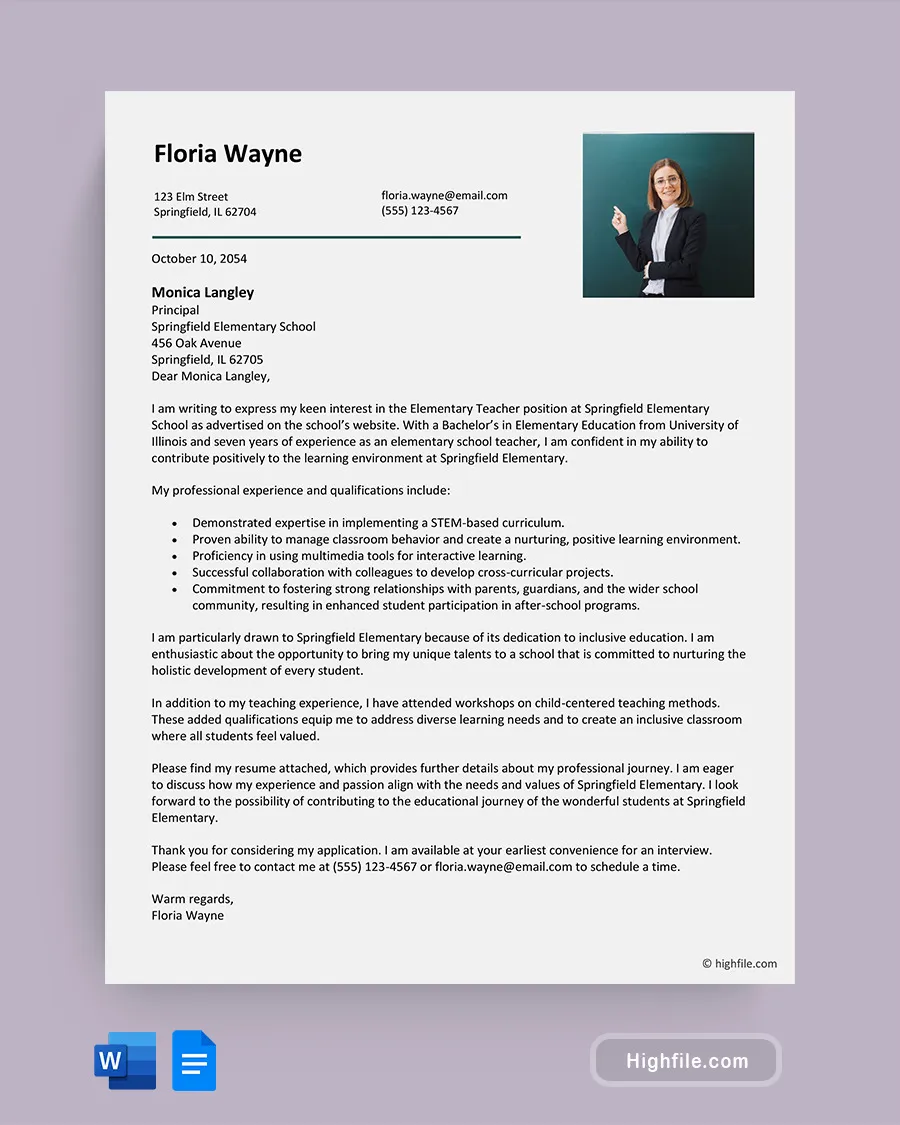
What is an Elementary Teacher Cover Letter?
An elementary teacher cover letter is a crucial document accompanying your resume when applying for teaching positions. It serves as your introduction to a potential employer, offering a glimpse into your personality, teaching philosophy, and why you’re the ideal candidate for their school. It’s more than just a summary of your resume; it’s an opportunity to showcase your passion for education, your skills, and your unique qualifications that set you apart from other applicants. A well-crafted cover letter can significantly increase your chances of landing an interview and ultimately securing the job.
Why is an Elementary Teacher Cover Letter Important?
The importance of an elementary teacher cover letter cannot be overstated. It’s your first impression, and in a competitive job market, making a strong one is essential. It allows you to personalize your application, demonstrating your genuine interest in the specific school and its values. The cover letter gives you a platform to explain any gaps in your resume, highlight achievements not explicitly stated on your resume, and articulate your teaching style and philosophy. It also allows you to show your communication skills and attention to detail, as a well-written and error-free letter reflects professionalism and commitment.
Key Components of a Successful Elementary Teacher Cover Letter

A successful elementary teacher cover letter has several key components. Each section plays a vital role in presenting you as a competent and enthusiastic candidate. Ensuring you include all these elements and tailor them to the specific school is vital to your application’s success.
Contact Information and Date
At the top of your cover letter, include your contact information (name, phone number, email address, and optionally, your LinkedIn profile) and the current date. This ensures that the hiring manager can easily reach you. Ensure your email address is professional. Include the date on which you are submitting your cover letter.
The Salutation (Greeting)
Always address your cover letter to a specific person, if possible. Research the school’s website or call the office to find the name of the hiring manager or principal. Use a professional greeting such as “Dear Mr./Ms./Dr. [Last Name].” If you cannot find a specific name, a general greeting like “Dear Hiring Committee” is acceptable, though less impactful. Avoid generic greetings such as “To Whom It May Concern.”
The Introductory Paragraph

Your introductory paragraph should immediately capture the reader’s attention. State the position you are applying for and where you found the job posting. Briefly mention your key qualifications and express your enthusiasm for the opportunity. Mentioning why you are drawn to the school is an excellent way to show your genuine interest. This paragraph sets the tone for the rest of the letter, so make it engaging and concise.
Highlighting Your Skills and Qualifications
This section is where you showcase your skills and qualifications. Instead of simply listing them, provide examples of how you’ve used these skills in the classroom. Focus on the skills and qualifications that are most relevant to the specific job posting. Use keywords from the job description to tailor your letter. Show how your skills align with the school’s needs and mission.
Showcasing Relevant Experience
Describe your previous teaching experiences, focusing on what you accomplished in each role. Use the STAR method (Situation, Task, Action, Result) to structure your descriptions. This method helps you provide concrete examples of your achievements. Quantify your accomplishments whenever possible. Detail any special projects, curriculum development, or leadership roles you’ve had.
Quantifying Your Achievements

Use numbers and data to illustrate your impact. For example, instead of saying “Improved student test scores,” say “Increased student test scores by 15% in one year.” Quantifiable achievements make your accomplishments more tangible and demonstrate your effectiveness as a teacher. Include data related to classroom management, parent involvement, or any other relevant metrics.
Demonstrating Your Passion for Teaching
Elementary teacher cover letters should express your passion for teaching. Discuss your teaching philosophy, your approach to creating a positive classroom environment, and your commitment to student success. Share your enthusiasm for the subject matter. Mention how you incorporate innovative teaching methods or technologies into your classroom.
Tailoring Your Cover Letter to the School
Research the school and demonstrate your understanding of its values, mission, and programs. Mention specific aspects of the school that appeal to you and how you can contribute. This personalized approach shows that you’ve taken the time to learn about the school and are genuinely interested in joining their community. Align your teaching philosophy with the school’s educational approach.
Researching the School and Its Needs

Visit the school’s website, read their mission statement, and look for any recent news or initiatives. Understand the school’s demographics, programs, and values. This knowledge will help you tailor your cover letter to address their specific needs. If possible, speak with current teachers or parents to gain further insights.
Addressing Specific Requirements
Carefully review the job description and address each of the required qualifications and skills. If the job posting asks for specific certifications or experiences, ensure that you highlight these in your cover letter. This demonstrates that you have read and understood the requirements and that you are a strong match for the position. Directly address any specific requirements or requests mentioned in the job posting.
The Closing Paragraph
In your closing paragraph, reiterate your interest in the position and thank the hiring manager for their time and consideration. Express your availability for an interview. This is also the place to state you have attached your resume. Conclude with a professional closing such as “Sincerely” or “Respectfully,” followed by your typed name.
Expressing Gratitude and Next Steps

Always express your gratitude for the opportunity to be considered. State that you look forward to hearing from them soon. Indicate your willingness to provide further information or references if needed. Make it easy for the hiring manager to contact you by including your contact information again, and be prepared for a quick follow-up.
Proofreading and Formatting Tips
Proofreading and formatting are critical to creating a professional cover letter. Errors in spelling, grammar, or formatting can detract from your qualifications and make you appear unprofessional. Proper formatting and proofreading demonstrate your attention to detail, a crucial skill for teachers.
Formatting Your Cover Letter for Readability
Use a clean, professional font such as Times New Roman, Arial, or Calibri. Ensure your font size is easy to read (11-12 points). Use clear headings and bullet points to break up large blocks of text and make the information easier to digest. Maintain consistent margins (1 inch is standard). Use bolding or italics sparingly, and only to emphasize important points.
Proofreading for Errors and Clarity

Proofread your cover letter multiple times. Use a spell-checker and grammar checker, but don’t rely on them entirely. Have someone else review your cover letter to catch any errors you might have missed. Read the cover letter aloud to identify awkward phrasing or sentences. Ensure your cover letter is clear, concise, and easy to understand.
Common Mistakes to Avoid
Avoiding common mistakes will ensure that your cover letter makes a positive impression. Several errors can undermine your application and reduce your chances of getting an interview.
Using Generic Language and Templates
Avoid using generic phrases and templates that could apply to any job. Hiring managers can easily spot a generic cover letter and may dismiss it. Customize your cover letter to reflect the specific requirements of the job and the values of the school. Make sure your cover letter demonstrates your unique skills, experiences, and passion.
Focusing on Yourself Instead of the School’s Needs
While it’s important to highlight your accomplishments, focus on how you can benefit the school and its students. Demonstrate how your skills and experiences align with the school’s needs and mission. Frame your accomplishments in terms of the positive impact they had on students and the school community.