Crafting Your Internship Cover Letter To Impress HR
Landing an internship is a significant step towards kickstarting your career, and your cover letter is your first chance to make a lasting impression on HR professionals. A well-crafted cover letter doesn’t just reiterate your resume; it’s a powerful tool to demonstrate your personality, passion, and suitability for the role. This guide will provide you with the essential strategies and insights to create an internship cover letter that captivates HR and sets you apart from the competition. We’ll explore the critical elements of a compelling cover letter, from understanding the HR perspective to highlighting your skills and experiences, tailoring your letter to the specific internship, structuring your content effectively, and avoiding common pitfalls. By mastering these techniques, you’ll significantly increase your chances of securing that coveted internship opportunity and building a successful future.
Understanding HR’s Perspective
To truly impress HR, you need to understand their priorities. HR professionals are tasked with identifying candidates who not only possess the required skills but also align with the company’s culture and values. They look for individuals who demonstrate a genuine interest in the role and the company, as well as a proactive approach to learning and growth. HR departments often receive hundreds, if not thousands, of applications for each internship position. Therefore, your cover letter needs to quickly and effectively convey why you are the right fit. They evaluate your writing style, attention to detail, and ability to communicate your qualifications. HR wants to see that you’ve researched the company and the internship, and that you can clearly articulate how your skills and aspirations align with their needs.
Highlighting Relevant Skills and Experiences

Your cover letter is an opportunity to showcase the skills and experiences that make you an ideal candidate. Don’t simply list your qualifications; instead, demonstrate how your skills have been applied and what results you’ve achieved. Focus on the experiences that are most relevant to the internship, whether it’s coursework, projects, volunteer work, or previous internships. Use action verbs to describe your accomplishments and quantify your achievements whenever possible. For example, instead of saying “Managed social media accounts,” you might say “Increased social media engagement by 25% within three months by implementing a new content strategy.” This level of detail provides HR with concrete evidence of your abilities and your potential to contribute to their team. Highlight transferable skills such as communication, teamwork, problem-solving, and time management, and provide specific examples that demonstrate these qualities.
Tailoring Your Cover Letter to the Internship
Generic cover letters are easily spotted and often discarded. To make a strong impression, personalize your letter for each internship you apply for. Carefully read the job description and identify the key requirements and desired qualifications. Then, tailor your cover letter to address these specific needs. Highlight the skills and experiences that align with the job description and explain how you can contribute to the company’s goals. Demonstrate that you understand the company’s mission, values, and target audience. Mention specific projects or initiatives that you find interesting and explain why you are excited about the opportunity. Customize your letter to show HR that you’ve put in the effort to understand their needs and that you are genuinely interested in the internship.
Researching the Company and Internship
Before you start writing, conduct thorough research on the company and the specific internship. Visit the company’s website, read their “About Us” page, and explore their social media channels. Identify their products, services, target market, and recent news or developments. Understanding the company’s culture and values will help you tailor your cover letter to resonate with HR. Research the internship role itself by carefully reviewing the job description. Understand the responsibilities, required skills, and desired qualifications. If possible, find out who the hiring manager is and address your cover letter to that person. This demonstrates that you’ve taken the initiative to learn more about the opportunity and are truly interested in joining their team. Tailor your letter to specific tasks and highlight how you align with their business values.
Showcasing Your Enthusiasm

HR professionals want to hire interns who are enthusiastic and passionate about the opportunity. Your cover letter should reflect this enthusiasm by expressing your genuine interest in the company and the internship role. Explain why you are excited about the prospect of joining their team and how the internship aligns with your career goals. Show that you’ve done your research and understand what the company does and why it excites you. Avoid generic statements like “I am a hard worker.” Instead, provide specific examples of your achievements and explain how you can contribute to the company’s success. Emphasize what you hope to learn during the internship and how you plan to make the most of the experience. Your enthusiasm will make you stand out and demonstrate that you are eager to contribute and learn.
Structuring Your Internship Cover Letter
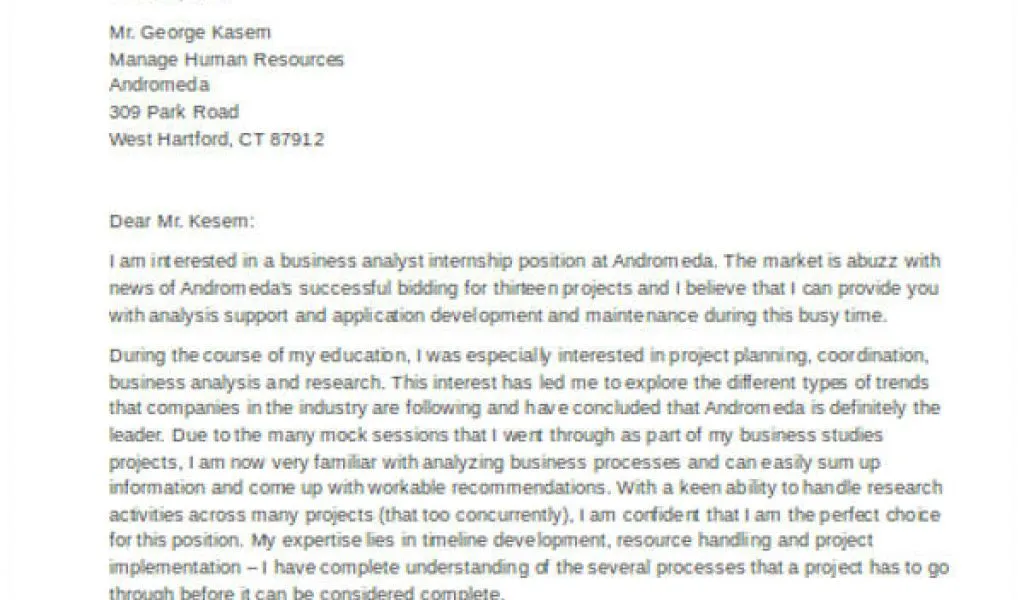
A well-structured cover letter is easy to read and conveys your key qualifications efficiently. Use a clear and organized format, with distinct sections for each part of your message. The standard format includes an opening paragraph, body paragraphs, and a closing paragraph. The opening paragraph should state the purpose of your letter and capture the reader’s attention. Body paragraphs should elaborate on your qualifications and experiences, and the closing paragraph should express your interest and include a call to action. Keep your paragraphs concise and focused, and use headings and bullet points to break up the text and make it more visually appealing. Using a professional font and appropriate spacing will enhance readability. The goal is to make it easy for HR to quickly understand your qualifications and your interest in the internship.
Opening Paragraph
The opening paragraph is your first opportunity to grab HR’s attention. Start by clearly stating the purpose of your letter the internship you’re applying for and where you found the listing. Briefly mention why you’re interested in the company and the role. The opening should be concise, enthusiastic, and tailored to the specific opportunity. If you know the hiring manager’s name, address your letter to them. Otherwise, use a professional greeting, such as “Dear Hiring Manager.” Highlight what initially attracted you to the company and the internship. Keep the opening brief and compelling, and focus on making a strong first impression.
Body Paragraphs

The body paragraphs are where you expand on your qualifications and experiences. Highlight the skills and experiences that are most relevant to the internship. Use specific examples to demonstrate your abilities and quantify your achievements whenever possible. Explain how your skills align with the job requirements and how you can contribute to the company’s goals. Mention any relevant coursework, projects, or volunteer work. Use action verbs to describe your accomplishments and emphasize transferable skills, such as communication, teamwork, and problem-solving. Focus on what makes you stand out from other candidates. Be clear, concise, and ensure each paragraph contributes meaningfully to your overall message. These paragraphs should create a compelling narrative that shows HR why you are the best fit.
Closing Paragraph
The closing paragraph should summarize your interest in the internship and include a call to action. Reiterate your enthusiasm for the opportunity and express your eagerness to learn and contribute. Thank the hiring manager for their time and consideration. Clearly state that you are available for an interview and provide your contact information. Reiterate your excitement about the possibility of joining their team. Express confidence that you are a great match. End with a professional closing, such as “Sincerely” or “Best regards,” followed by your name. This final section should leave a positive impression and encourage HR to take the next step in the hiring process.
Proofreading and Editing Your Internship Cover Letter
Before submitting your cover letter, proofread and edit it carefully to catch any errors. Spelling and grammatical mistakes can create a negative impression, and a polished cover letter demonstrates your attention to detail and professionalism. Review your letter for clarity, conciseness, and coherence. Ask a friend, family member, or career advisor to proofread your letter and provide feedback. Check for any typos, grammatical errors, or awkward phrasing. Ensure that your letter flows smoothly and that your message is clear. Pay attention to the formatting and presentation of your letter, including the font, spacing, and margins. A well-proofread and edited cover letter shows HR that you value accuracy and professionalism, which is a key advantage in the job application process.
Common Mistakes to Avoid

Avoid these common mistakes to improve your chances of success. Don’t send a generic cover letter that is not tailored to the specific internship. Do not simply repeat your resume; instead, provide additional information and demonstrate how your qualifications align with the job requirements. Avoid using jargon or overly formal language, and keep your tone professional yet personable. Avoid negative language or expressing desperation, and refrain from making excuses for any gaps in your experience. Don’t include irrelevant information that does not add value to your application. Always proofread your letter to avoid any spelling or grammatical errors. Avoiding these pitfalls will increase your chances of making a positive impression and getting your application noticed.
Formatting Your Cover Letter for HR
The format of your cover letter is just as important as the content. Use a professional font, such as Times New Roman, Arial, or Calibri, and keep the font size between 10 and 12 points for readability. Use standard margins (1 inch on all sides) and single-space your text. Leave a space between each paragraph for better readability. Use a clear and consistent layout, and use headings and bullet points to break up the text and highlight key information. Include your contact information at the top of the letter, including your name, phone number, email address, and LinkedIn profile URL (if applicable). Ensure your letter is visually appealing and easy to read. A well-formatted cover letter shows HR that you pay attention to detail and present yourself professionally.
Using a Professional Tone
Maintain a professional tone throughout your cover letter. Use clear, concise language and avoid slang, jargon, or overly casual expressions. Address the hiring manager appropriately, using a formal greeting like “Dear Mr./Ms./Mx. [Last Name].” Keep your tone positive, enthusiastic, and confident. Show respect for the company and the role, and avoid any negativity or complaints. Use active voice and strong action verbs to convey confidence and highlight your accomplishments. Proofread your letter carefully to ensure that your tone is professional and appropriate for the workplace. Writing in a professional tone demonstrates your maturity, respect, and understanding of workplace communication, making a good impression.
Including a Call to Action

End your cover letter with a clear call to action to encourage HR to take the next step. Express your enthusiasm for the internship and reiterate your interest in the opportunity. State that you are available for an interview and provide your contact information again. Make it easy for HR to contact you. A call to action provides a clear direction and increases the likelihood of getting a response. Include a specific request, such as “I am eager to discuss my qualifications further and look forward to hearing from you.” This shows initiative and proactive engagement. Be clear about your availability and your preferred method of contact. A strong call to action ensures that you make the best possible impression and keep the momentum going.