What is a Cover Letter?
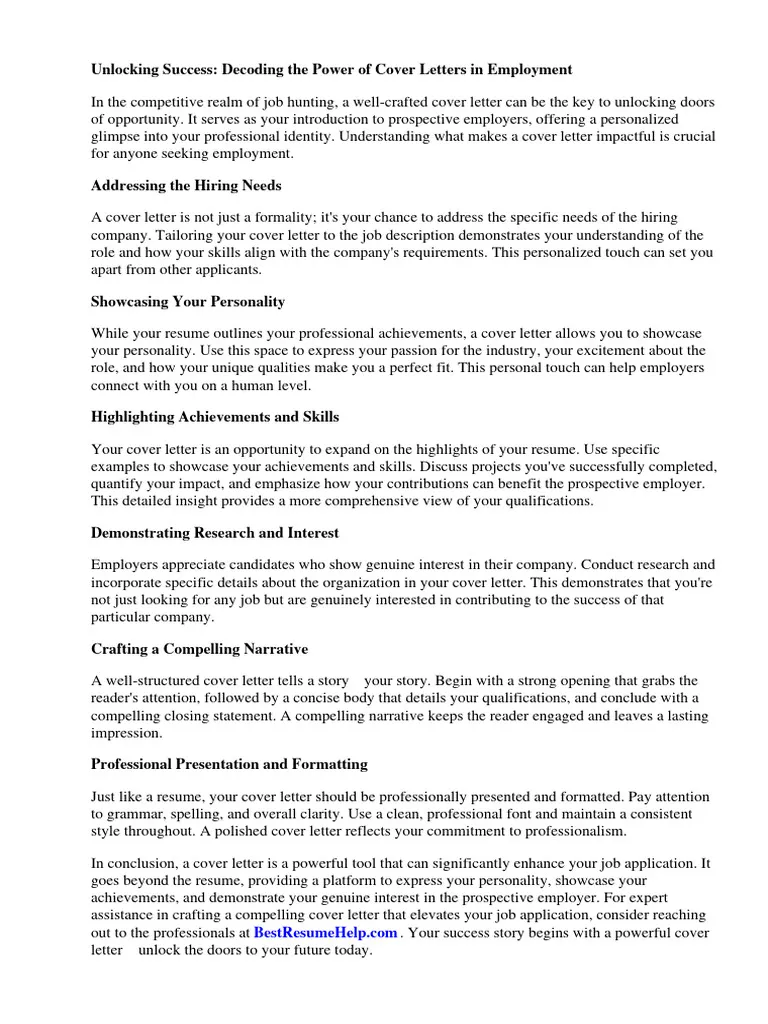
A cover letter is a crucial document that accompanies your resume when applying for a job. It serves as your initial introduction to a potential employer, providing an opportunity to expand on your resume and demonstrate why you are the ideal candidate for the position. Unlike a resume, which provides a factual overview of your skills and experience, a cover letter allows you to express your personality, enthusiasm, and specific interest in the role and the company. A well-crafted cover letter can significantly increase your chances of getting an interview by making a strong first impression and showcasing your unique qualifications.
Key Components of a Cover Letter
A compelling cover letter typically includes several key components that work together to create a persuasive and engaging introduction. These elements include a header with your contact information, a personalized salutation, an introductory paragraph that expresses your interest in the role, body paragraphs that highlight relevant skills and experiences, a closing paragraph with a call to action, and a professional closing. Each section plays a vital role in communicating your qualifications, demonstrating your enthusiasm, and encouraging the hiring manager to consider your application further. Understanding these core components is essential for crafting an effective cover letter that captures attention.
Header and Contact Information

The header of your cover letter is the first thing a recruiter or hiring manager will see, and it should clearly and concisely present your contact information. This includes your full name, address, phone number, and professional email address. Ensure your contact information is accurate and up-to-date, as this is how the employer will reach you to schedule an interview or provide further updates. Proper formatting is key; the header should be neatly organized and easy to read. Using a professional-looking font and layout helps maintain a polished and professional appearance, ensuring your cover letter makes a positive first impression and demonstrates attention to detail.
Salutation and Personalized Greeting
A strong salutation sets the tone for your cover letter and demonstrates your attention to detail. Aim to address the hiring manager or recruiter by name whenever possible. Researching the company and role can often reveal the name of the appropriate contact. If you cannot find a specific name, options include using a professional greeting like ‘Dear Hiring Manager’ or ‘Dear [Department Name] Team.’ Avoid generic greetings like ‘To Whom It May Concern,’ as these can make your letter seem impersonal. A personalized greeting shows that you’ve taken the time to learn about the company and the role, indicating your genuine interest and making a better initial impact.
Body Paragraph 1: Express Your Interest
The first body paragraph is your opportunity to immediately grab the reader’s attention and clearly express your interest in the specific job. Start by stating the position you are applying for and where you found the job posting. Briefly explain why you are excited about the role and the company, showcasing your genuine enthusiasm and passion. Consider including a concise statement about what motivates you professionally or what aspects of the company’s mission resonate with you. This paragraph is your chance to make a strong initial impression and encourage the reader to continue reading, highlighting your keen interest and setting the stage for the rest of your application.
Body Paragraph 2: Highlight Relevant Skills

In the second body paragraph, showcase your skills and experience that are directly relevant to the job requirements. Review the job description carefully and identify the key skills and qualifications the employer is seeking. Provide specific examples from your previous experiences where you have demonstrated these skills and achieved positive outcomes. Quantify your achievements whenever possible by including measurable results, such as percentages, numbers, or specific accomplishments that highlight your contributions. Tailor your examples to match the job description and demonstrate how your skills and experiences align with the company’s needs, positioning yourself as the ideal candidate.
Body Paragraph 3: Showcase Your Enthusiasm
The third body paragraph offers an opportunity to further express your enthusiasm for the role and the company. Explain why you are specifically drawn to this position and what excites you about the opportunity. Research the company’s mission, values, and recent achievements to demonstrate that you understand and appreciate their work. Highlight what you hope to contribute and how your skills and experience can bring value to their team. Showcasing your enthusiasm helps to create a personal connection with the hiring manager and demonstrates that you are not just looking for a job, but you are truly interested in becoming a part of their organization, making you a more memorable candidate.
Call to Action and Closing
The closing paragraph should include a clear call to action. Express your eagerness for an interview and reiterate your interest in the position. Include a concise statement about your availability and how the hiring manager can contact you. Thank the reader for their time and consideration, and end with a professional closing, such as ‘Sincerely,’ ‘Best regards,’ or ‘Thank you.’ Ensure that your contact information is readily available, and proofread your entire cover letter to ensure there are no errors. A strong closing leaves a lasting positive impression and encourages the hiring manager to take the next step in the hiring process.
Formatting and Design

Proper formatting and design are essential for creating a visually appealing and professional cover letter. Choose a clean, easy-to-read font like Times New Roman, Arial, or Calibri, and use a font size between 10 and 12 points. Maintain consistent formatting throughout your letter with clear margins, proper spacing, and consistent paragraph alignment. Break up large blocks of text by using short paragraphs and bullet points when necessary to improve readability. Avoid excessive use of bolding, italics, or underlining, as this can be distracting. A well-formatted cover letter demonstrates attention to detail and respect for the reader’s time, creating a positive impression that enhances your overall application.
Proofreading and Editing
Before submitting your cover letter, thoroughly proofread and edit it to ensure that it is free of any grammatical errors, typos, or inconsistencies. Errors can undermine your professionalism and make a negative impression. Use spell-check and grammar-check tools, but also read the letter carefully yourself to catch any subtle mistakes the software might miss. Consider having a friend, family member, or career advisor review your letter for clarity, accuracy, and overall impact. A polished and error-free cover letter shows that you pay attention to detail, making you a more attractive candidate and reflecting positively on your work ethic and commitment to excellence.
Cover Letter Examples
Reviewing cover letter examples can provide valuable guidance and inspiration when crafting your own. Search online for examples that align with your industry, the specific job you are applying for, and the type of company. Pay attention to how different candidates structure their letters, highlight their skills, and express their enthusiasm. Take note of the tone, language, and overall approach. However, avoid directly copying any example; instead, use them as a template to create a personalized and authentic cover letter that showcases your unique qualities and experiences. Customizing your cover letter based on the job description is crucial for maximizing its impact and demonstrating your suitability for the role.
Common Cover Letter Mistakes to Avoid

Avoiding common mistakes can significantly improve the effectiveness of your cover letter. Ensure you avoid generic templates, and tailor each letter to the specific job and company. Do not repeat information from your resume; instead, use the cover letter to expand on your experiences and provide context. Refrain from using overly casual language or slang, and maintain a professional tone throughout. Do not include irrelevant information or overly long paragraphs that may distract the reader. Always proofread carefully for any grammatical errors or typos. By avoiding these common pitfalls, you can create a compelling cover letter that makes a strong impression and enhances your chances of securing an interview.