Crafting a Winning Job Cover Letter
In the competitive landscape of job applications, a well-crafted cover letter can be your key to unlocking new career opportunities. This essential document serves as your introduction to a potential employer, providing an opportunity to showcase your personality, skills, and enthusiasm for the role. It’s a chance to go beyond the bullet points of your resume and tell a compelling story about why you’re the ideal candidate. A winning cover letter doesn’t just reiterate your resume; it expands upon it, demonstrating your understanding of the job and the company’s needs, and highlighting your unique value proposition. Crafting a winning cover letter is a strategic process that requires careful attention to detail, from understanding the role to presenting yourself in the best possible light.
Understanding the Importance of a Cover Letter
Why is a cover letter so crucial? Simply put, it’s often your first impression. A strong cover letter can set you apart from other applicants by demonstrating your communication skills, your genuine interest in the position, and your understanding of the company’s mission and values. It allows you to provide context for your resume, explaining any gaps in your employment history or highlighting specific achievements that directly relate to the job requirements. Furthermore, it shows that you’ve taken the time to tailor your application, which suggests that you are genuinely interested in the opportunity. Many hiring managers use cover letters to gauge a candidate’s writing skills, attention to detail, and overall professionalism. A well-written cover letter can significantly increase your chances of getting an interview.
Highlighting Your Qualifications

Your cover letter is the perfect platform to showcase how your skills, experience, and accomplishments align with the job requirements. Start by carefully reviewing the job description and identifying the key skills and qualifications the employer is seeking. Then, choose specific examples from your professional or academic background that demonstrate these skills in action. Focus on results-oriented language, using action verbs to describe your accomplishments and quantify your achievements whenever possible. When highlighting your qualifications, think about what makes you unique and how you can bring value to the company. Tailor your cover letter to each specific job, emphasizing the skills and experiences that are most relevant to the role.
Researching the Company and Role
Before you even begin writing, thorough research is paramount. Understanding the company’s mission, values, and recent projects will allow you to tailor your letter to their specific needs. Visit their website, read news articles, and check their social media presence to gain insights. Analyze the job description closely, noting the key responsibilities and required qualifications. This research will help you demonstrate your interest and show the hiring manager that you’ve taken the time to understand the role and the company’s culture. Showcasing your knowledge in the cover letter shows you are prepared and serious about the position. This will make you a more appealing candidate.
Tailoring Your Cover Letter
Generic cover letters are easily spotted and often discarded. The key to a successful cover letter is tailoring it to each job you apply for. This involves customizing your content to match the specific requirements of the role and highlighting the skills and experiences that are most relevant. Use the company’s language and address the specific needs outlined in the job description. Demonstrate that you understand the company’s goals and explain how your skills can help them achieve those goals. Refer to the company by name and, if possible, mention specific projects or initiatives that resonate with you. This level of personalization shows that you’re genuinely interested in the opportunity and have taken the time to prepare a thoughtful application.
Structuring Your Professional Cover Letter

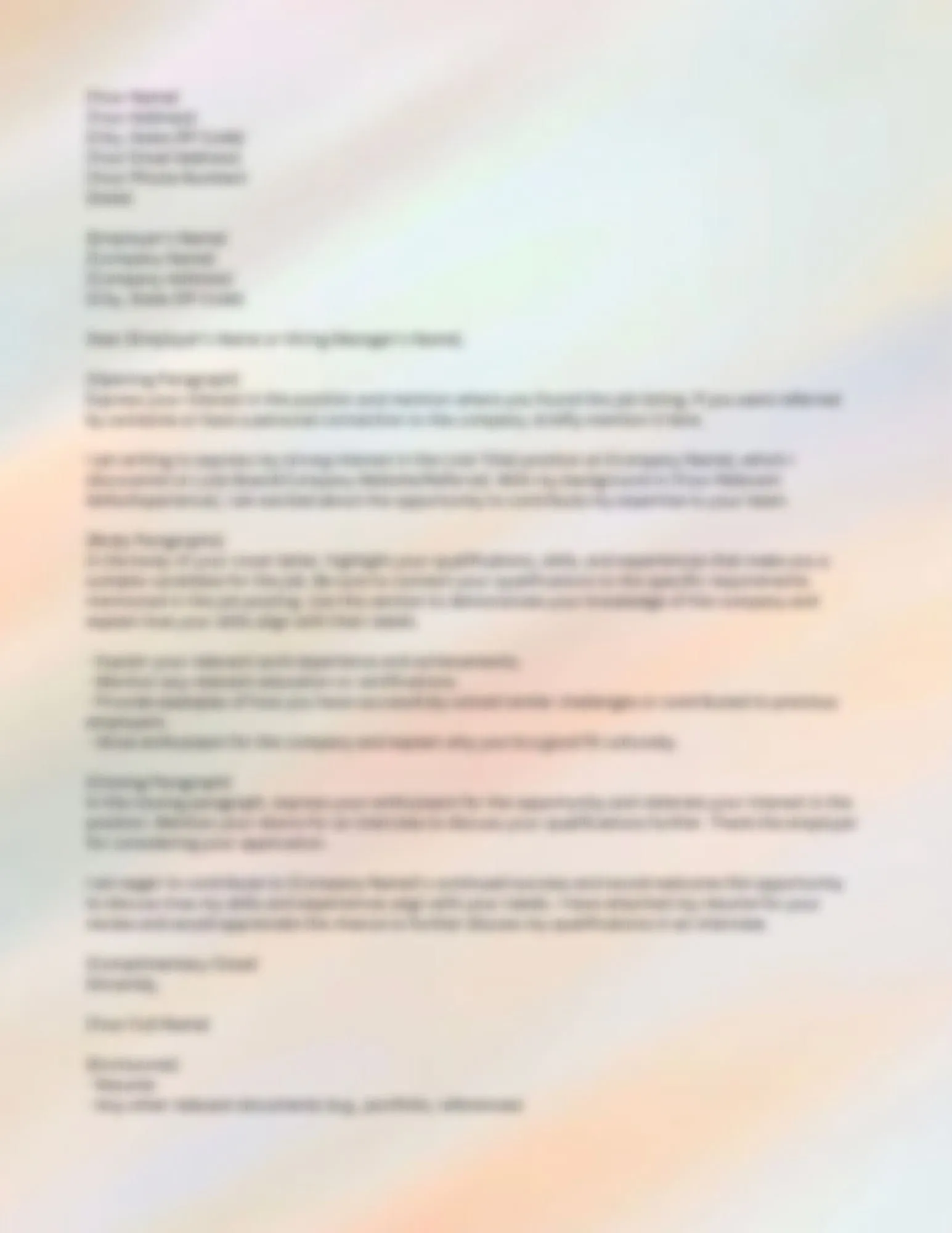
A well-structured cover letter is easy to read and conveys your message effectively. It typically includes a header, a greeting, an opening paragraph, body paragraphs, and a closing paragraph. Each section plays a crucial role in presenting your qualifications and making a strong impression. Strive for clarity, conciseness, and professionalism in every section. Use a logical flow to guide the reader through your key qualifications and demonstrate your interest in the position. Pay attention to the overall tone and ensure it aligns with the company’s culture.
The Header — Contact Information
Your header should include your name, contact information (phone number, email address, and optionally, your LinkedIn profile URL), and the date. Ensure the information is accurate and up-to-date. It is a critical component, allowing the hiring manager to easily contact you. Use a professional font and format to ensure that your header looks clean and organized. Double-check all details to prevent errors. Consistent formatting throughout your cover letter contributes to the overall professionalism of your application.
The Greeting — Addressing the Hiring Manager
Always address the hiring manager or the specific person listed in the job posting. If a name isn’t provided, do your best to find it. If you can’t, use a professional greeting like “Dear Hiring Manager.” Avoid generic greetings like “To Whom It May Concern,” as they indicate a lack of effort. Using the hiring manager’s name creates a personal connection and shows that you have taken the time to research the company and role, which creates a positive first impression and indicates that you are genuinely interested in the role and the company.
The Opening Paragraph — Hooking the Reader

The opening paragraph is your chance to grab the reader’s attention. Start with a strong statement that highlights your interest in the position and the company. Briefly mention where you saw the job posting and why you are excited about the opportunity. Use this paragraph to showcase your enthusiasm and provide a snapshot of your most relevant skills and experience. Make it clear why you are a great fit for the role and the company. Keep it concise and engaging, setting the tone for the rest of your cover letter. Your opening paragraph should make the hiring manager want to keep reading.
The Body Paragraphs — Showcasing Your Skills
The body paragraphs are where you showcase your skills, experience, and accomplishments. Use this section to expand on your resume and provide specific examples that demonstrate your qualifications. Tailor these paragraphs to match the job requirements, highlighting the skills and experiences that are most relevant to the role. Explain how your skills and experiences have prepared you to succeed in this role. Structure your paragraphs logically, using clear topic sentences and supporting details. Use action verbs to describe your achievements and quantify your results whenever possible. This is your opportunity to convince the hiring manager that you are the right fit for the job.
Quantifying Your Achievements
Whenever possible, quantify your achievements to demonstrate your impact. Instead of saying “Improved sales,” state “Increased sales by 15% in Q3 2023.” Using numbers and data makes your accomplishments more concrete and credible. Use metrics to showcase your successes and highlight your value. This helps the hiring manager understand the tangible benefits you can bring to the company. Focus on results-oriented language and provide specific examples of how you have contributed to previous employers. This approach helps you stand out from other candidates who may use vague statements.
The Closing Paragraph — Call to Action

End your cover letter with a strong call to action. Reiterate your interest in the position and express your enthusiasm for the opportunity. Thank the hiring manager for their time and consideration. Indicate your availability for an interview and how they can reach you. A well-crafted call to action demonstrates your professionalism and reinforces your desire for the job. Make it clear that you are eager to discuss your qualifications further. A positive closing statement leaves a lasting impression and increases your chances of getting an interview.
Formatting Your Cover Letter for Readability
A well-formatted cover letter is easier to read and more likely to capture the hiring manager’s attention. Use clear and concise language, and keep your paragraphs relatively short. Avoid jargon and technical terms that the reader might not understand. Proper formatting makes a positive impact on the overall presentation and professionalism of your application. Make sure that your cover letter is visually appealing and easy to scan. It demonstrates attention to detail, which is critical in any profession.
Choosing the Right Font and Size
Select a professional and readable font like Times New Roman, Arial, or Calibri. Stick to a font size between 10 and 12 points. Ensure that the font is consistent throughout the document. Avoid using overly fancy or decorative fonts, as they can be distracting and difficult to read. The font should be clear and the size should be appropriate to prevent eyestrain, ensuring that the document is easy to review. A clean and professional font choice reflects your attention to detail and commitment to professionalism.
Using White Space Effectively

Use white space strategically to improve readability. Leave adequate margins and spacing between paragraphs. Avoid overcrowding the page with text. Use line spacing of 1.15 or 1.5 to make the text easier to read. White space gives your cover letter a clean and organized look, making it easier for the hiring manager to digest the information. A well-formatted cover letter is more likely to be read and understood. Proper use of white space prevents the document from appearing cluttered and overwhelming. It improves the overall visual appeal of your application.
Proofreading and Editing Your Cover Letter
Before submitting your cover letter, proofread it carefully for any errors in grammar, spelling, and punctuation. Read it aloud to catch any awkward phrasing or sentences. A well-proofread cover letter demonstrates your attention to detail and professionalism. Ensure that the tone and language are consistent throughout the document. Check for any inconsistencies in formatting. Proofreading shows you care enough about your application to ensure it is error-free. It is a crucial step in the writing process, helping you present the best version of yourself.
Common Mistakes to Avoid
Avoid common mistakes that can undermine your cover letter. Do not use a generic template without tailoring it to the specific job. Avoid typos and grammatical errors, as they can create a negative impression. Do not use jargon or overly complex language. Avoid being overly formal or informal. Avoid including irrelevant information. Do not simply repeat your resume – provide additional context and insights. Do not make your cover letter too long; keep it concise and focused. By avoiding these common pitfalls, you can create a cover letter that effectively showcases your skills and increases your chances of getting an interview.
In conclusion, a well-crafted cover letter is an invaluable tool in your job search arsenal. By understanding its importance, highlighting your qualifications effectively, structuring it strategically, and avoiding common mistakes, you can create a cover letter that captures the hiring manager’s attention and increases your chances of landing an interview. Take the time to craft a compelling narrative that showcases your value and enthusiasm, and you’ll be well on your way to securing your dream job.