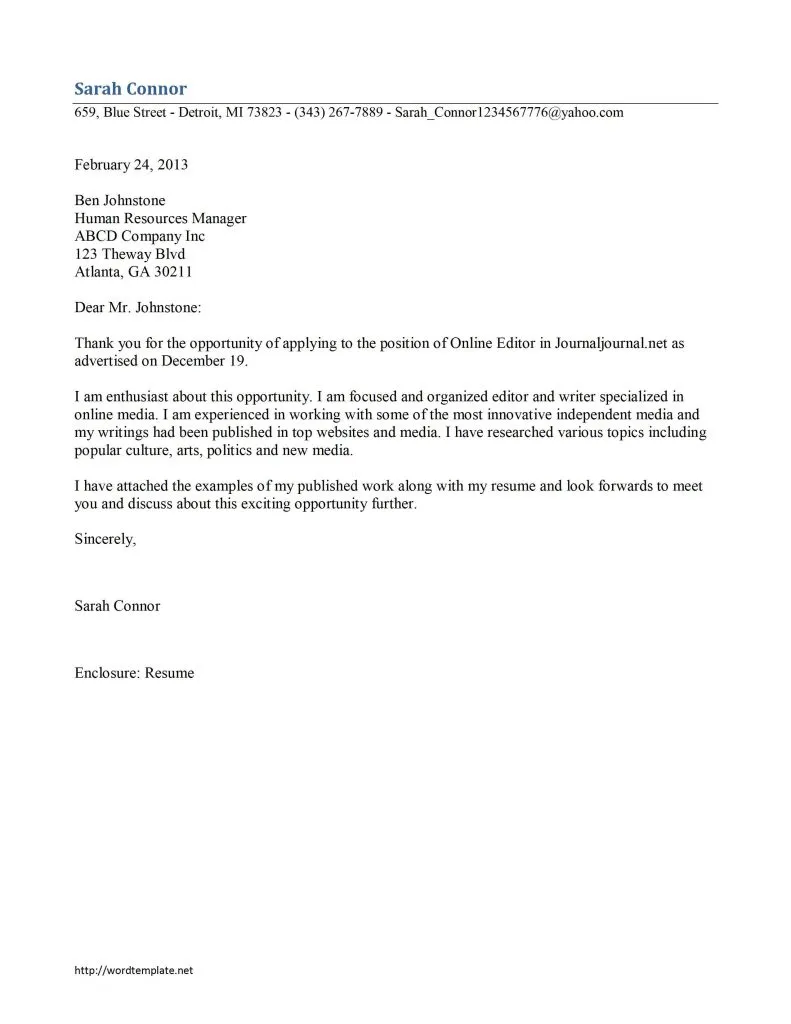
Understanding the Journalist Cover Letter
A journalist cover letter is more than just a formality it’s your first opportunity to make a strong impression on a potential employer. It serves as a crucial introduction, allowing you to showcase your skills, experience, and passion for journalism. Unlike a resume, which provides a factual overview of your background, the cover letter gives you a chance to tell your story, demonstrate your writing style, and explain why you’re the perfect fit for the specific role. This guide provides a comprehensive overview, from understanding its purpose to crafting the perfect closing.
The Purpose of a Journalist Cover Letter
The primary purpose of a journalist cover letter is to convince the hiring manager that you are the ideal candidate for the position. It should highlight your relevant experience, skills, and accomplishments in a compelling way. The cover letter provides context to your resume, explaining how your past experiences align with the specific requirements of the job. It also allows you to express your enthusiasm for the position and the publication or media outlet. A well-written cover letter goes beyond simply listing your qualifications; it tells a story that captures the reader’s attention and demonstrates your understanding of the journalism industry. It allows the employer to understand you and your goals.
Key Components of a Successful Cover Letter

A successful journalist cover letter includes several key components that work together to create a compelling narrative. First, you must include your contact information and a professional salutation. The opening paragraph should grab the reader’s attention by stating the position you’re applying for and quickly summarizing why you’re a good fit. In the body paragraphs, highlight relevant experience, showcasing your skills and achievements with specific examples. Tailor your letter to the specific job and publication, demonstrating your knowledge and interest. Finally, close the letter with a call to action and a professional closing. Proofreading and formatting are also crucial for ensuring professionalism and clarity. Also keep your letter simple and precise.
Contact Information and Salutation
Start your cover letter with your contact information, including your name, address, phone number, and email address. This information should be at the top of the page, easy to find, and properly formatted. Following this, address the hiring manager or the specific person listed in the job posting. If a name is not provided, use a general salutation like “Dear Hiring Manager” or “Dear Editorial Team.” Avoid generic greetings like “To Whom It May Concern,” as they can make your letter feel impersonal. Addressing the hiring manager by name, when possible, shows that you’ve done your research and are genuinely interested in the opportunity. Also verify that the name is correctly spelled.
Crafting the Opening Paragraph
The opening paragraph is your chance to make a strong first impression. Begin by clearly stating the position you’re applying for and where you saw the job posting. Then, in a sentence or two, summarize why you are an excellent candidate. This could include highlighting a key skill, relevant experience, or a particularly impressive achievement. Make sure your opening paragraph is concise, engaging, and tailored to the specific job requirements. Avoid generic phrases or clichés. Instead, showcase your personality and writing style from the outset. Make the hiring manager want to continue reading and learning more about you. If you can’t hook them in the first paragraph, the rest of the letter may not matter.
Highlighting Relevant Experience

The body of your cover letter should highlight your relevant experience, demonstrating how your past roles and projects align with the job requirements. Instead of merely listing your responsibilities, provide specific examples of your accomplishments. Use the STAR method (Situation, Task, Action, Result) to illustrate your achievements. Describe the situation you were in, the task you were assigned, the actions you took, and the results you achieved. Quantify your results whenever possible using numbers or percentages to show the impact of your work. For example, instead of saying, “Increased social media engagement,” say, “Increased social media engagement by 30% through strategic content planning.” This level of detail and specificity adds credibility to your claims.
Showcasing Your Skills and Achievements
In addition to highlighting your experience, your cover letter should showcase your key skills and achievements. Think about the skills most relevant to the job, such as writing, editing, research, interviewing, and multimedia production. Provide examples of how you’ve successfully used these skills in the past. Include any awards, recognitions, or positive feedback you’ve received. If you have a portfolio, mention it and include a link if appropriate. The goal is to provide concrete evidence of your capabilities and demonstrate how you can add value to the organization. Tailor the skills you highlight to the specific requirements of the job, using keywords from the job description to make your application more relevant.
Tailoring Your Cover Letter to the Job
One of the most important aspects of a successful cover letter is tailoring it to the specific job and publication. Generic cover letters are easy to spot and often end up in the rejection pile. Before you start writing, carefully read the job description and identify the key skills, experience, and qualifications the employer is seeking. Then, customize your letter to address these requirements directly. Highlight your relevant experience and skills, and explain how they align with the job description. Show that you understand the publication’s mission, style, and target audience by mentioning specific articles or content you admire. Demonstrating this level of research and attention to detail makes a strong impression on hiring managers.
Demonstrating Your Writing Style

Your cover letter is an opportunity to showcase your writing style and personality. Write in a clear, concise, and engaging manner that reflects your journalistic skills. Use active voice, strong verbs, and varied sentence structures to keep the reader interested. Avoid jargon and clichés, and proofread your letter carefully for any grammatical errors or typos. Your cover letter should be a reflection of your writing abilities, demonstrating your ability to craft compelling narratives, communicate effectively, and engage your audience. Also, your tone should be professional, yet authentic, allowing your personality to shine through.
Formatting and Proofreading Your Letter
Proper formatting and meticulous proofreading are essential for a professional cover letter. Choose a clean and easy-to-read font, such as Times New Roman, Arial, or Calibri, and use a standard font size (11 or 12 points). Ensure your letter is well-spaced, with clear margins and paragraph breaks. Proofread your letter multiple times, checking for any spelling, grammar, or punctuation errors. It can be helpful to have someone else review your letter as well, as a fresh pair of eyes can often catch mistakes you might miss. A polished, error-free cover letter demonstrates attention to detail and professionalism. Make sure the file format is compatible with the employer’s requirements; a PDF is usually a safe bet.
Closing Your Cover Letter
Your closing paragraph should reiterate your interest in the position and the organization. Thank the hiring manager for their time and consideration. Include a call to action, such as expressing your willingness to discuss your qualifications further in an interview. You can also mention how you plan to follow up or when you will be available. End with a professional closing, such as “Sincerely” or “Best regards,” followed by your typed name. Ensure the closing is polite, professional, and leaves a positive final impression. Make sure your tone is enthusiastic, yet professional, and reflects your genuine interest in the opportunity.
Contact Information

Always include your contact information at the top of your cover letter. This should include your full name, phone number, email address, and any relevant links, such as your online portfolio or LinkedIn profile. This ensures that the hiring manager can easily contact you if they are interested in scheduling an interview. Double-check that the information is current and accurate, and that your email address is professional. Your contact information is crucial for a smooth hiring process, so make sure it is prominent and easily accessible. Also, ensure your phone’s voicemail is set up and ready to receive messages.
Review and Revision
Before submitting your cover letter, take the time to review and revise it thoroughly. Read the letter multiple times, checking for clarity, accuracy, and flow. Make sure your tone is appropriate for the job and publication. Ensure all the key components are included and that you have tailored the letter to the specific requirements of the position. Revise any unclear or awkward phrasing. Consider having a trusted friend, mentor, or career counselor review your letter as well; a second opinion can often catch errors you might have missed. Make revisions until you are confident that the cover letter is polished and effectively represents your skills, experience, and enthusiasm.
Formatting and Presentation
The formatting and presentation of your cover letter are just as important as the content. Use a professional font like Times New Roman, Arial, or Calibri, and keep the font size between 11 and 12 points. Maintain consistent margins and spacing throughout the letter. Use clear headings and bullet points to break up large blocks of text and make the letter easier to read. Ensure your letter is properly aligned, with the contact information at the top and a professional closing. Present a well-formatted and visually appealing cover letter to demonstrate attention to detail and professionalism. These factors add a professional touch, and it allows for better readability.