Understanding the Library Assistant Role
A library assistant plays a vital role in ensuring the smooth and efficient operation of a library. They are the friendly faces assisting patrons, managing resources, and contributing to the overall positive experience. This guide will help you craft a compelling cover letter that highlights your qualifications and demonstrates your understanding of the library assistant role. A well-written cover letter is your first opportunity to impress a potential employer and secure an interview, so it’s essential to get it right. Think of this guide as your comprehensive tool kit to success. Make sure that the cover letter reflects the specific requirements outlined in the job description.
Key Skills to Highlight
Library assistants require a diverse set of skills to excel in their roles. Your cover letter should spotlight these key skills. Remember to provide specific examples where you’ve demonstrated these skills in action. These examples are crucial to capture the attention of the hiring manager and showcase your real-world abilities, not just generic claims. Tailor your descriptions to each job application. By making adjustments, you show your understanding of the specific needs of the library, which significantly increases your chances of being selected for an interview.
Customer Service Skills

Customer service is paramount in a library setting. Library assistants interact with patrons daily, assisting with inquiries, resolving issues, and ensuring a welcoming environment. Highlight your ability to communicate effectively, listen attentively, and provide helpful solutions. Provide examples such as handling complaints, assisting patrons with finding resources, or offering technical support.
Organizational Skills
Libraries rely on efficient organization. Demonstrate your ability to manage tasks, prioritize responsibilities, and maintain order. Mention experience with shelving books, processing new materials, or maintaining library databases. Showcase instances where you have successfully managed multiple tasks or projects simultaneously, staying organized under pressure.
Technical Skills
Many libraries utilize computer systems, databases, and other technologies. Highlight your proficiency in relevant software, such as library management systems, Microsoft Office Suite, or other digital tools. Mention your experience with online research, using library catalogs, or troubleshooting basic technical issues. Include specific examples of how you’ve used these tools to improve efficiency or assist patrons.
Crafting Your Cover Letter

Now that you know which skills to highlight, let’s delve into the structure and content of your cover letter. A well-crafted cover letter is structured logically, with each section serving a specific purpose. Following a clear format ensures that the hiring manager can quickly grasp your qualifications and how you align with the role. The aim is to create a persuasive narrative that showcases your value. Always tailor your cover letter to match the specific job description.
Header and Contact Information
Begin your cover letter with your contact information. Include your full name, address, phone number, and professional email address. Also, add the date and the hiring manager’s name and title, if known, and the library’s address. Ensure the information is current and accurately reflects how the hiring manager can reach you. This demonstrates professionalism and attention to detail. Always use a professional email address.
Personalized Salutation
Address your cover letter to a specific person whenever possible. Research the hiring manager’s name and title. A personalized salutation, such as “Dear Mr. / Ms. [Last Name],” shows that you’ve taken the time to learn about the organization and the role. If you’re unable to find the hiring manager’s name, use a professional greeting like “Dear Hiring Manager” instead of a generic greeting.
Opening Paragraph

Start your cover letter with a strong opening paragraph that grabs the reader’s attention. State the position you’re applying for and briefly explain why you’re interested in the role and the library. Mention where you found the job posting. Highlight one or two key skills or experiences that make you a strong candidate. This initial paragraph is your opportunity to make a positive first impression.
Body Paragraphs
The body paragraphs form the core of your cover letter. Use them to elaborate on your skills, experience, and qualifications. Explain how your skills align with the job requirements. Provide specific examples that demonstrate your abilities. Focus on the most relevant aspects of your background. This section should address how you will add value to the library. Show how your previous work or volunteer experience makes you uniquely qualified for the role.
Highlighting Relevant Experience
When discussing your experience, focus on the responsibilities and accomplishments that are most relevant to the library assistant role. Provide details about your previous positions or volunteer experiences. Focus on how your duties match the requirements of the job description. Include the names of the organizations, the dates of your employment or volunteer work, and a brief description of your duties and achievements. Focus on transferable skills.
Quantifying Accomplishments

Whenever possible, quantify your accomplishments to demonstrate your impact. Use numbers and data to illustrate your achievements. For example, instead of saying “Improved customer service,” say “Improved customer satisfaction scores by 15% through implementing a new training program.” This approach makes your claims more concrete and credible. Highlighting specific results adds weight to your claims.
Showcasing Skills
In your body paragraphs, showcase the skills you previously identified. Provide examples of how you’ve used those skills in previous roles. If the job description requires experience with a specific software, explain your proficiency with it. If customer service is a priority, provide examples of how you’ve handled difficult situations. These examples will help the hiring manager see the value you can bring to the role.
Closing Paragraph
End your cover letter with a strong closing paragraph. Reiterate your interest in the position and your enthusiasm for the library. Thank the hiring manager for their time and consideration. Include a call to action. State that you are available for an interview and look forward to hearing from them. Include your contact information once more.
Proofreading and Formatting

Proofreading and formatting are critical steps that can significantly impact the effectiveness of your cover letter. Errors and a poorly formatted letter can negatively impact your application. Take the time to ensure that your cover letter is free of errors. Following these guidelines will increase your chances of getting noticed by potential employers.
Ensuring Clarity and Conciseness
Use clear, concise language throughout your cover letter. Avoid jargon, overly complex sentences, and unnecessary details. Make every word count. A clear and concise cover letter is easy to read and understand, allowing the hiring manager to quickly grasp your qualifications. Keep your sentences and paragraphs brief, and get straight to the point. The goal is to communicate your value in a way that is straightforward and engaging.
Formatting for Readability
Format your cover letter for readability. Use a professional font, such as Times New Roman or Arial, in a standard size (11 or 12 points). Use single spacing and leave a space between each paragraph. Use a clear heading and consistent formatting throughout. Ensure the layout is visually appealing and easy on the eyes. Organize your content logically with clear headings and subheadings. Ensure the document is well-structured to present your information in a clear and easily digestible format.
Common Mistakes to Avoid

Avoiding common mistakes can significantly improve the quality of your cover letter. Be aware of the potential pitfalls and take steps to address them before you submit your application. Taking the time to proofread, tailor the content, and ensure the cover letter is professional will increase your chances of success. Avoiding these errors will help you stand out and make a positive impression on the hiring manager.
Generic Cover Letters
Avoid using a generic cover letter. Tailor each cover letter to the specific job and the organization. Customize your cover letter to demonstrate your understanding of the library and the role. Show that you’ve done your research and are genuinely interested in the position. Generic letters often fail to highlight your unique skills and experiences. Always address the needs of the hiring library.
Typos and Grammatical Errors
Typos and grammatical errors can undermine your credibility. Proofread your cover letter carefully before submitting it. Consider using spell-check and grammar-check tools. Ask a friend or family member to review your cover letter. Errors can give the impression that you are not detail-oriented or that you lack professionalism. These errors can reflect poorly on your attention to detail and your communication skills.
Failing to Tailor to the Job

Always tailor your cover letter to the specific job description. Review the job requirements and highlight the skills and experiences that match. Use the same keywords and phrases from the job description. By tailoring your cover letter, you demonstrate that you understand the role and are a good fit for the library. Customization shows your genuine interest in the specific opportunity and the organization.
Cover Letter Examples
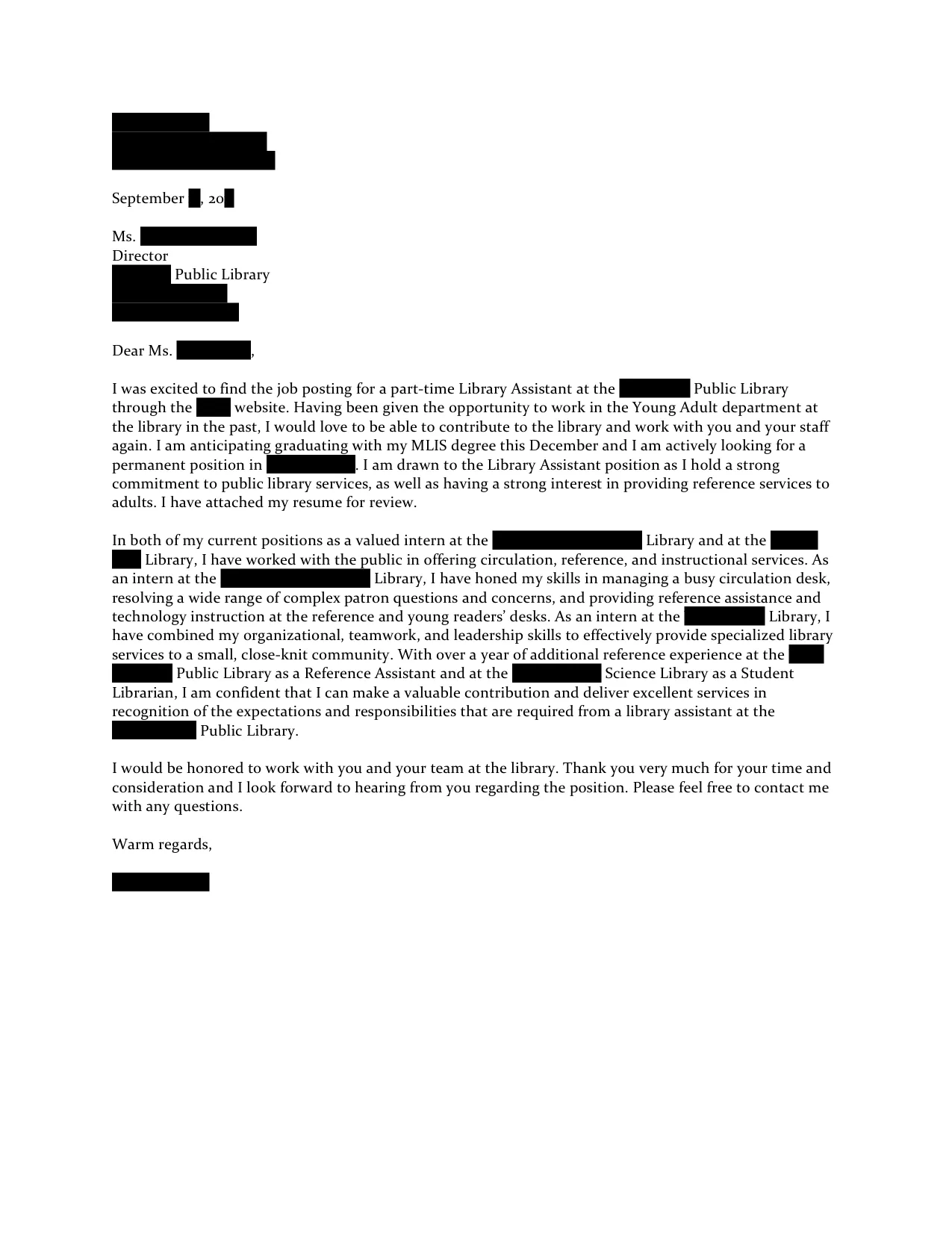
Refer to the examples to guide you in structuring and writing your cover letter. Remember, these are templates, so personalize them to showcase your unique experience and skills. Use them as a starting point and tailor the content. Adapt the examples to fit your particular background, skills, and the requirements of the job. Good cover letter examples give you an idea of what a strong and effective cover letter looks like, helping you to create your own successful application.