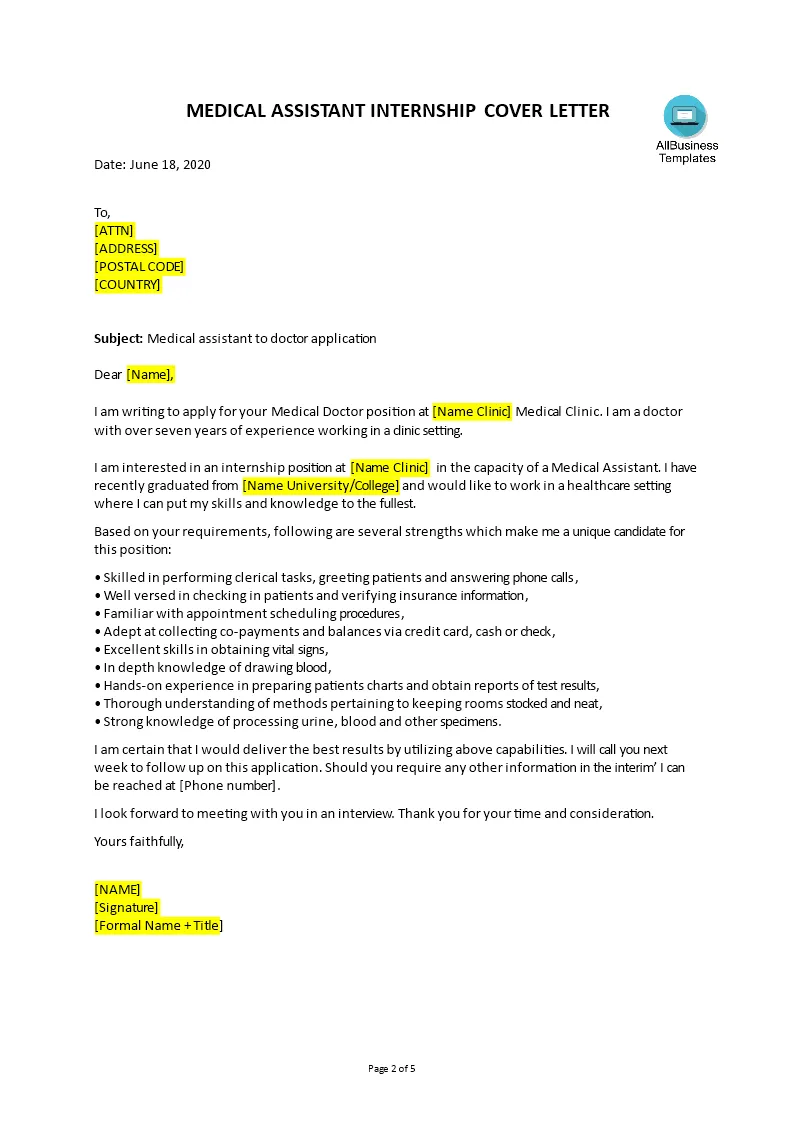
Why a Medical Assistant Cover Letter is Essential
A well-crafted medical assistant cover letter is more than just a formality; it’s your initial introduction to a potential employer and a vital tool in securing your dream job. In a competitive job market, a cover letter offers you the chance to stand out from other applicants and highlight your unique qualifications, skills, and experiences. It’s your opportunity to go beyond the confines of a resume and showcase your personality, enthusiasm, and genuine interest in the position. This guide is designed to walk you through the crucial steps of creating a compelling cover letter that will capture the attention of hiring managers and increase your chances of getting an interview. By following these guidelines, you can confidently present yourself as the ideal candidate and make a lasting impression. A good cover letter is crucial to getting your application read, so spend the time to write it right.
Key Components of a Strong Medical Assistant Cover Letter
A strong cover letter is structured logically, presents information clearly, and is free of errors. It should include several key components to ensure it effectively communicates your qualifications and enthusiasm. The components consist of your contact information, the date, the recipient’s information, a professional greeting, the body paragraphs, and a closing statement. Each of these sections plays a critical role in creating a cohesive and persuasive document. As you craft your cover letter, pay close attention to each part and customize it to reflect the specific requirements of the job and the values of the employer. Remember, the goal is to make a positive first impression and secure an interview. Make sure that your cover letter looks appealing and has no mistakes. It is a representation of you, so it must be well-crafted.
Contact Information Section

This section at the top of your cover letter should include your full name, address, phone number, and email address. Ensure this information is accurate and up-to-date, as it’s how the employer will contact you. Your contact information should be easily accessible and prominently displayed at the top left or right corner of the document. Using a professional email address is a must. If you have a LinkedIn profile, you can include the URL here as well. This section is a fundamental element, enabling the employer to quickly reach out to you regarding the job application. Do not leave this information out, and always double-check for accuracy to prevent any communication issues during the hiring process. Make sure all the information is current, so you can be reached.
Applicant’s Information
This section should include your full name, address, phone number, and email address. Ensure that all information is accurate and current. This allows potential employers to easily reach you for further steps in the hiring process. You can also consider adding a link to your LinkedIn profile to further showcase your professional background. Keep this section at the top of your cover letter, clearly visible to the reader. It is best practice to put this section in a professional and easy-to-read format, usually aligned left or right. The use of a professional email address is highly recommended to avoid any unprofessional appearance. Ensure that your contact details are up to date and easily accessible, as this is the primary way potential employers will contact you.
Date
Immediately following your contact information, include the date the cover letter is written. This is essential for establishing the timeliness of your application. The date should be formatted correctly, typically as Month, Day, Year. Ensure this date is accurate to avoid any confusion. The date is important for the employer’s record keeping and demonstrates when you applied for the position. This simple detail helps the reader understand how recently your application was submitted. The standard format is Month, Day, Year. It’s a small detail, but it contributes to the overall professionalism of your cover letter and application. Always double-check to confirm that you have the correct date.
Recipient’s Information

This section identifies the person you are addressing the cover letter to, along with their title and the name of the healthcare facility or clinic. Whenever possible, address your cover letter to a specific person, such as the hiring manager or the practice administrator. This demonstrates that you have taken the time to research the organization and are genuinely interested in the position. If you can’t find a specific name, you can use a general greeting, such as ‘Dear Hiring Manager.’ Finding the correct person to address your cover letter to shows your attention to detail and professionalism. If you’re unable to find the contact information, a general greeting is acceptable, but personalizing your cover letter is always recommended. This effort can significantly increase the likelihood of your application getting noticed. Ensure that you spell the recipient’s name and title correctly.
Greeting Section
Start your cover letter with a professional greeting. The most common and recommended greeting is ‘Dear Mr./Ms./Dr. [Last Name],’ if you know the name of the hiring manager. If you don’t have a specific name, you can use ‘Dear Hiring Manager’ or ‘To Whom It May Concern.’ Avoid using overly casual greetings such as ‘Hi’ or ‘Hello.’ The greeting sets the tone for the entire letter, so it’s important to be professional and respectful. A well-chosen greeting can immediately establish a positive rapport with the reader. Always address the hiring manager by name if possible; it shows that you have put in the effort to research the company and the role. If you are unsure of the gender, use their full name, such as ‘Dear [First Name] [Last Name].’
Body Paragraphs of the Cover Letter
The body paragraphs are the core of your cover letter, where you highlight your qualifications, skills, and enthusiasm for the medical assistant position. This section should consist of several paragraphs, each serving a specific purpose. The main parts of this section are the opening paragraph, where you express your interest in the position; the paragraphs where you showcase your relevant skills and experiences, demonstrating how you meet the job requirements; and the closing paragraph, where you summarize your interest and include a call to action. Tailor each paragraph to the job description and the specific needs of the employer. Use this opportunity to show why you are the best candidate for the job and explain how you can contribute to the organization’s success. Take the time to craft a well-written and compelling body that will resonate with the hiring manager.
First Paragraph Expressing Interest

Start your cover letter with an engaging first paragraph that immediately grabs the reader’s attention. Clearly state the specific medical assistant position you are applying for and how you found the job posting. Express your enthusiasm for the role and the healthcare organization. Briefly mention one or two key skills or experiences that make you a strong candidate, creating a sense of value right from the start. This paragraph sets the tone for your application, making the hiring manager want to read the rest of your letter. This also indicates that you are genuinely interested in the specific job and are not just sending a generic cover letter. This paragraph is your chance to make a great first impression, so make sure it’s compelling and informative, highlighting your interest and matching it to the role.
Highlighting Relevant Skills and Experience
The main part of your cover letter should showcase your relevant skills and experience. Analyze the job description carefully and identify the key requirements. Then, provide specific examples of how your skills and experiences align with those requirements. Use bullet points or short paragraphs to highlight your accomplishments. Quantify your achievements whenever possible. For instance, mention the number of patients you assisted, the percentage by which you improved efficiency, or any specific tasks you’ve mastered. Tailor your examples to match the needs of the employer, and provide evidence of how you can contribute to the organization. This is the section where you need to prove to the hiring manager that you have the expertise needed to excel in the medical assistant role and bring value to their healthcare practice.
Showcasing Skills and Qualifications
In this section, provide a clear and concise overview of the skills and qualifications that make you an ideal candidate. Include both hard and soft skills relevant to the medical assistant position. Give specific examples to demonstrate your ability to perform the required tasks. Tailor your skills to the requirements outlined in the job description, showing the employer you have what it takes. Focus on skills the healthcare facility or clinic requires, such as taking patient histories, measuring vital signs, assisting physicians, and performing basic laboratory tests. Describe how you have successfully performed those tasks in past roles and how you can bring those skills to their team. Highlighting your skills shows the employer that you have the knowledge and abilities necessary to perform the job duties effectively, immediately capturing the hiring manager’s attention.
Soft Skills

Soft skills are essential for medical assistants, so make sure to highlight these in your cover letter. These include communication, empathy, teamwork, problem-solving, and time management. Provide specific examples of how you’ve demonstrated these skills in previous roles. For instance, describe a time you successfully communicated with a difficult patient, resolved a conflict with a coworker, or effectively managed multiple tasks under pressure. Soft skills are crucial for providing excellent patient care and working efficiently in a healthcare setting. Highlighting these abilities demonstrates your ability to work well with others, manage your time effectively, and handle challenging situations professionally. Demonstrating these skills will allow you to prove you can bring these essential skills to their healthcare setting. Showing examples is more effective than simply listing your abilities.
Technical Skills
Include a section dedicated to your technical skills relevant to the medical assistant role. These skills often include proficiency in electronic health records (EHR) systems, medical billing and coding, phlebotomy, and other clinical procedures. Mention any specific software or equipment you are familiar with, such as specific EHR platforms (e.g., Epic, Cerner), or any medical equipment operation you are skilled at. Provide brief descriptions of your experience using these skills. Demonstrate your technical skills by highlighting the systems you’ve used and the equipment you have experience with. If you have any certifications or licenses related to these technical skills, mention them here. Providing this information shows employers that you possess the necessary hands-on knowledge to handle critical tasks and processes in a healthcare setting.
Quantifying Achievements
Quantifying your achievements adds significant value to your cover letter. Instead of just saying you are organized, state, “Managed and organized an average of 30 patient files per day with 100% accuracy.” Use numbers to demonstrate the impact of your contributions in previous roles. For example, include the percentage of patient satisfaction you helped to achieve, the number of patients you assisted daily, or how you contributed to streamlining processes. This not only makes your statements more credible but also provides tangible proof of your abilities. Whenever possible, use data to show the value you brought to previous employers. Quantifiable achievements prove your abilities, highlighting the positive impact of your efforts in past medical assistant roles and emphasizing the value you can provide to a potential employer. This helps you stand out.
Addressing the Employer’s Needs

Tailor your cover letter to specifically address the needs and requirements of the employer. Carefully review the job description and highlight the skills and experiences most relevant to the advertised position. Explain how your qualifications align with their needs and how you can contribute to the success of their practice. Do some research on the healthcare organization to show your interest in the company. Emphasize your understanding of their mission, values, and services. By customizing your letter to fit their specific needs, you demonstrate your genuine interest in the position and increase your chances of getting noticed. This personalized approach proves that you have taken the time to understand their requirements and have what it takes to excel in the medical assistant role.
Closing the Cover Letter
The closing paragraph should summarize your interest in the medical assistant position and reiterate your enthusiasm for the opportunity. Express your gratitude for their time and consideration, and clearly state your willingness to be interviewed. Include a call to action, such as stating you are available for an interview at their earliest convenience. Provide your contact information again. This closing paragraph provides a professional and confident end to your cover letter, leaving the employer with a positive final impression. A well-crafted closing strengthens your application and increases the likelihood of the employer reaching out. The closing paragraph should reflect your confidence in your abilities and your genuine interest in the position. Proofread this section very carefully to ensure it’s free of errors.
Expressing Gratitude and Next Steps
In your closing, express your gratitude to the hiring manager for considering your application. Thank them for their time and attention, showing respect for their efforts. Then, clearly state your willingness to be interviewed and provide your contact information again. This closing demonstrates your professionalism and helps the hiring manager know what steps to take next. This provides a final reminder of your contact information. Make sure to proofread your cover letter carefully before submitting it. Reiterate your enthusiasm for the opportunity, and make it easy for the employer to reach you. The closing section is your final chance to make a strong impression and encourage the next steps. It should show your excitement about the role and thank them for their consideration, improving the chances of moving forward in the application process.
Proofreading and Editing for Perfection

Before submitting your cover letter, carefully proofread and edit it for any grammatical errors, typos, or inconsistencies. Errors can reflect negatively on your professionalism and attention to detail. Use spell-check and grammar-check tools to identify and correct any mistakes. Have a friend, family member, or career counselor review your cover letter for a second opinion. A fresh set of eyes can catch errors you might have missed. Make sure that your cover letter is easy to read, with clear and concise language, and that the formatting is consistent throughout. A well-written and error-free cover letter will significantly enhance your application and increase your chances of securing an interview. Ensure your cover letter is polished, professional, and reflects your best self. Remember, every detail contributes to the overall impression you make on the hiring manager.
Common Mistakes to Avoid
Several common mistakes can undermine the effectiveness of a medical assistant cover letter. Avoid generic cover letters that are not tailored to the specific job or employer, as they make it appear that you are not genuinely interested in the position. Another mistake is including excessive information; keep the letter concise and focus on the most relevant skills and experiences. Ensure your cover letter is free of grammatical errors and typos. Do not use slang or unprofessional language. Make sure you haven’t exceeded the proper length, with a cover letter of about one page in length. By avoiding these common mistakes, you can create a cover letter that highlights your qualifications and increases your chances of getting hired. These points can help you avoid pitfalls and create a powerful, impactful letter.
Cover Letter Examples Medical Assistant
Reviewing sample cover letters for medical assistants can provide valuable insights into how to structure and write your own. Search online for cover letter examples tailored to the medical assistant role. Pay attention to the layout, format, and language used in successful cover letters. Examples can give you ideas for the types of skills and experiences to highlight. While using these examples as a guide, ensure your cover letter is original and reflects your unique qualifications and personal touch. It can also help you improve the language of your letter and the format. Adapting examples to your experiences ensures you write a letter that’s personalized, effective, and tailored to the job you’re applying for. This approach will help you create a more persuasive cover letter.
Adapting the Cover Letter to Different Job Types
It is important to adapt your cover letter to each specific job type and healthcare setting. A cover letter for a clinic will differ from one for a hospital. Tailor your cover letter to match the requirements and expectations of the healthcare practice. Highlight the skills and experiences most relevant to the job description. For example, if you are applying for a position in a dermatology clinic, emphasize any experience with dermatological procedures. Tailoring your cover letter will make it more relevant and increase its impact. Make sure to adjust the examples and highlight your experiences for each job type. Customizing your cover letter for each application shows your attention to detail and shows your interest in that specific role. Each adjustment will enhance your application and reflect the requirements of the role.