Crafting Your New Nurse Cover Letter
As a new nurse graduate, your cover letter is your first opportunity to make a lasting impression on potential employers. It is your chance to showcase your skills, experiences, and passion for nursing, setting you apart from other applicants. A well-crafted cover letter goes beyond simply listing your qualifications; it tells a compelling story about who you are and why you are the perfect fit for the role. This guide will provide you with five essential tips to help you create a standout cover letter that grabs the attention of hiring managers and increases your chances of landing your dream job. Remember, your cover letter is your personal marketing tool; make it count.
Highlighting Your Nursing Education
Your nursing education is the foundation of your professional career. When writing your cover letter, be sure to highlight key aspects of your academic background. Mention the name of your nursing school, the degree you obtained (e.g., Bachelor of Science in Nursing, Associate Degree in Nursing), and your graduation date. Include any relevant honors, awards, or scholarships you received. Furthermore, briefly describe any specialized coursework or clinical rotations that align with the job you are applying for. For instance, if the position is in a cardiac unit, emphasize your experience in cardiovascular nursing. Demonstrating a strong educational background shows potential employers that you possess the necessary knowledge and skills to succeed in the role.
Showcasing Clinical Experience

Clinical experience is a crucial element of your nursing education and a significant selling point in your cover letter. Describe your clinical rotations and the types of patients you cared for. Specify the healthcare settings where you gained experience, such as hospitals, clinics, or long-term care facilities. Detail your responsibilities and the skills you utilized. Use action verbs to describe your tasks, such as “assessed,” “administered,” “monitored,” and “educated.” Whenever possible, quantify your experience by including the number of patients you cared for or the types of procedures you performed. Showing that you have practical experience can significantly boost your application. Highlight any leadership roles or special projects you undertook during your clinical rotations. These details will give the employer a clear picture of your capabilities and experience.
Quantifying Accomplishments
Whenever possible, quantify your accomplishments to make your cover letter more impactful. Instead of saying, “I improved patient care,” try “I improved patient care by implementing a new fall prevention protocol, resulting in a 15% reduction in patient falls.” Numbers and percentages provide concrete evidence of your skills and the value you brought to your clinical experiences. For example, you might mention the number of patients you assisted daily, the efficiency of your tasks, or the positive outcomes you achieved. This evidence offers the hiring manager clear and tangible evidence that you know what you are doing. This approach is particularly important for new graduates, as it helps to demonstrate the value you bring to the organization, even with limited work experience.
Emphasizing Soft Skills
Soft skills, such as communication, teamwork, problem-solving, and empathy, are essential for nurses. Be sure to highlight these skills in your cover letter. Provide specific examples of how you have demonstrated these skills in your clinical experiences. For example, you can describe how you resolved a conflict with a patient, collaborated with a multidisciplinary team, or provided emotional support to a patient and their family. Explain how you handle stressful situations and adapt to new environments. Recruiters seek candidates with a strong grasp of critical thinking, time management, and organizational skills. Demonstrating your soft skills helps to convey that you are not only a skilled nurse but also a valuable team member.
Tailoring to the Specific Role

Customizing your cover letter to each job application is a crucial step. Do not use a generic cover letter for every position. Carefully review the job description and identify the key requirements and qualifications. Then, highlight the skills and experiences that align with the specific needs of the role. Use the same keywords and phrases as the job description to demonstrate that you are a good match. By tailoring your letter, you show the hiring manager that you have taken the time to understand the role and are genuinely interested in the position. Tailoring your cover letter will increase your chances of moving on to the interview phase.
Formatting and Structure of the Cover Letter
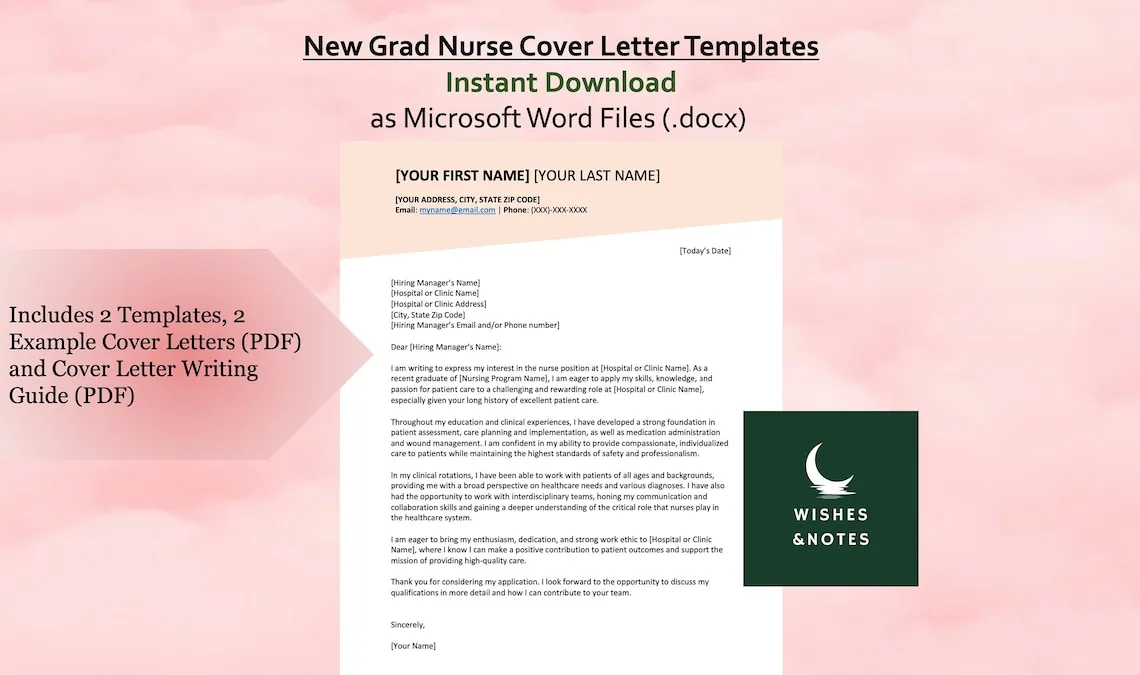
A well-structured and formatted cover letter makes a positive impression on the reader. Your cover letter should follow a standard business letter format. This includes your contact information, the date, the employer’s contact information, a professional salutation (e.g., “Dear Hiring Manager”), and a concise and well-organized body. Keep your letter to one page, as employers are typically very busy. Use clear and concise language and use headings, bullet points, and white space to make your letter easy to read. Make sure that the font is professional and easy on the eyes, and make sure you maintain consistency in your formatting throughout the entire document. The overall presentation of your cover letter is a reflection of your attention to detail and professionalism.
Using a Professional Tone
Maintain a professional tone throughout your cover letter. Use formal language and avoid slang, jargon, or overly casual language. Be respectful and polite in your interactions. Demonstrate confidence in your skills and abilities without being arrogant. Ensure that your writing style reflects your professionalism. A well-written letter conveys a strong professional image and leaves a positive impression on the reader. The tone of your cover letter should match the workplace culture. Using a professional tone is critical for establishing credibility and helping the hiring manager to assess your communication skills.
Formatting Best Practices

Follow specific formatting guidelines for a professional cover letter. Use a standard font such as Times New Roman, Arial, or Calibri, with a font size between 10 and 12 points. Use 1-inch margins on all sides of the document. The spacing of the paragraphs should be single-spaced within each paragraph and double-spaced between paragraphs. Use a clear heading with your contact information at the top of the page, including your name, address, phone number, and email address. Avoid using excessive formatting, such as bolding too many words or using multiple fonts. Maintain consistent formatting throughout the document to ensure readability. Following these best practices helps the recruiter easily read and evaluate your cover letter.
Proofreading and Editing
Proofreading and editing your cover letter is crucial to ensuring it is free of errors. Typos, grammatical errors, and formatting inconsistencies can make you appear unprofessional and can immediately disqualify your application. Always proofread your cover letter carefully before submitting it. Check for spelling errors, grammatical errors, and punctuation mistakes. Ask a friend, family member, or career counselor to review your cover letter for any mistakes you might have missed. Proofreading should be completed at least twice to catch any mistakes that have been missed during the initial proof. A polished cover letter can greatly improve your chances of getting hired by showing that you pay attention to details.
Demonstrating Enthusiasm
Showcasing your enthusiasm is an essential element. Let your passion for nursing shine through your cover letter. Express your genuine interest in the specific position and the organization. Mention what excites you about the opportunity and what you hope to achieve in the role. Show that you are eager to learn and grow as a nurse. Your enthusiasm will help you stand out from other applicants and demonstrate your passion for the profession. Demonstrate your research on the facility, mention positive feedback, and talk about its contributions to the community. By including these details, you show that you have taken the time to understand the facility and what makes it a good fit for you.
Expressing Your Passion for Nursing

Your passion for nursing is at the core of your career. Use your cover letter to communicate your enthusiasm for caring for patients and making a difference in their lives. Reflect on what drew you to nursing, your motivations for the profession, and the values that guide your practice. Share your personal experiences, such as moments when you felt a strong connection with a patient or when you overcame a challenging clinical situation. By conveying your passion, you create an emotional connection with the hiring manager and make your application more memorable. Expressing your passion can make your application stand out from other applicants and show the recruiter that you are a great fit for the role.
Concluding with a Strong Call to Action
End your cover letter with a strong call to action. Express your interest in an interview and mention that you are available for an interview at their earliest convenience. Thank the hiring manager for their time and consideration. Provide your contact information again and reiterate your excitement about the opportunity. A call to action gives the hiring manager clear instructions on the next step and reinforces your eagerness to join the team. Conclude your cover letter by expressing your appreciation for the opportunity and by providing your contact information. If the employer’s contact information is not provided, look it up on their website and mention that you are looking forward to hearing from them.