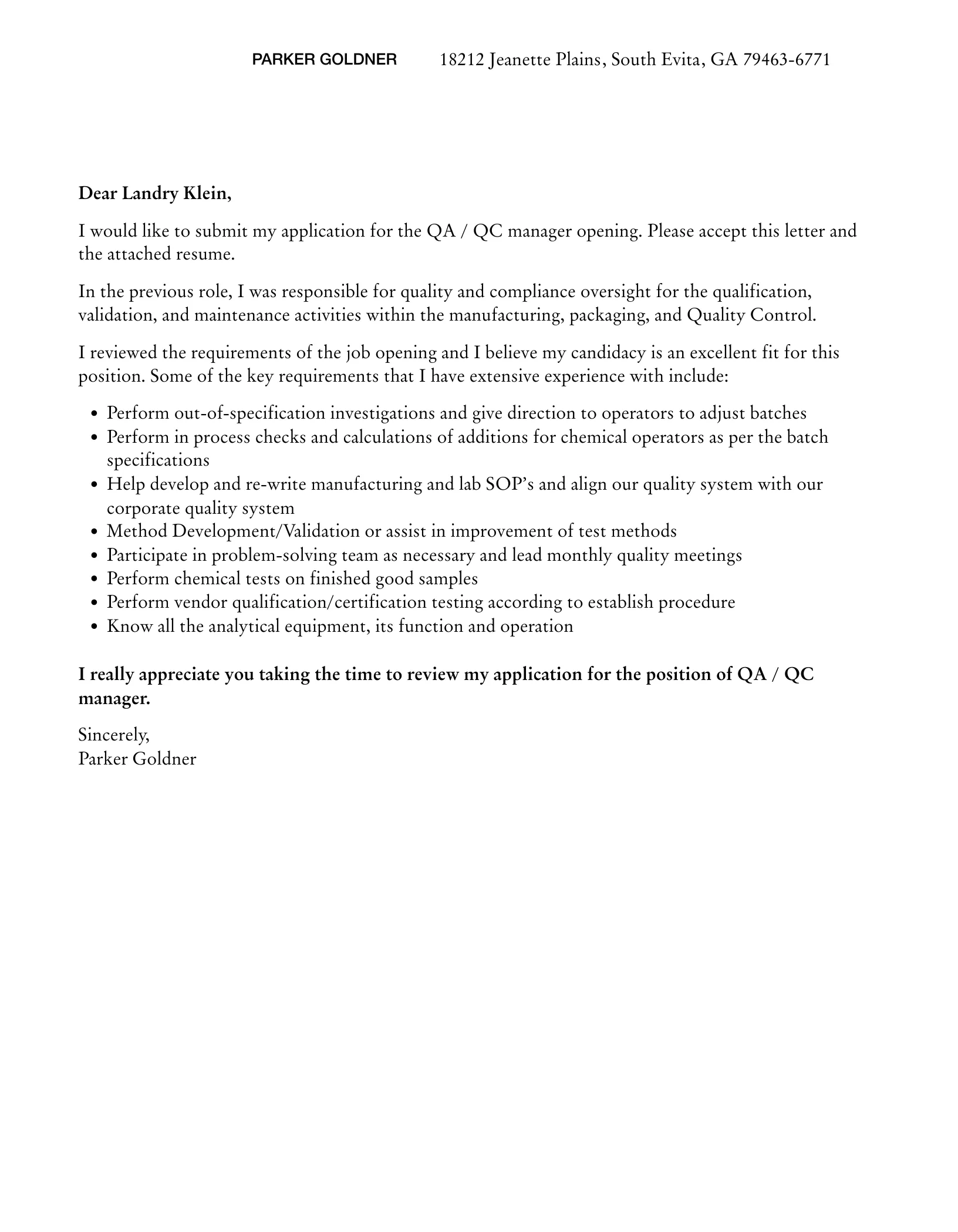
Crafting a Winning QA Manager Cover Letter
Landing your dream QA Manager role starts with a compelling cover letter. This document is your first impression and a crucial opportunity to showcase your skills, experience, and passion for quality assurance. A well-crafted cover letter doesn’t just reiterate your resume; it tells a story, highlighting your key accomplishments and demonstrating why you’re the perfect fit for the company and the specific position. This guide unveils the secrets to writing a cover letter that grabs the attention of hiring managers and sets you apart from other candidates. It’s about more than just listing your qualifications; it’s about making a connection and proving your value.
Understanding the Role of a QA Manager
Before you start writing, it’s essential to understand the core responsibilities and skills required of a QA Manager. This understanding informs the language and examples you use in your cover letter, ensuring you address the specific needs of the role and the company. A QA Manager is a leader, a problem-solver, and a champion for quality. They oversee the testing process, ensuring that software, products, or services meet the required standards and that the customer receives a product they can trust. The QA Manager needs to understand not just the technical aspects of testing, but also the team dynamics, project management, and the overall business goals.
Key Responsibilities of a QA Manager

The responsibilities of a QA Manager are vast and varied. They typically include developing and implementing quality assurance strategies, managing the testing team, designing and executing test plans, analyzing test results, identifying and reporting defects, and collaborating with developers and other stakeholders to ensure the highest quality product. They may also be involved in the creation of test environments, automation of testing processes, and the continuous improvement of testing methodologies. Your cover letter should reflect your awareness of these responsibilities and showcase your experience in these areas.
Essential Skills for a QA Manager
A successful QA Manager possesses a unique blend of technical, interpersonal, and leadership skills. These skills are what make the difference in your cover letter and will determine how successful it is. Strong technical skills include proficiency in testing methodologies (such as black box, white box, and grey box testing), knowledge of test automation tools, and experience with different software development lifecycles. Interpersonal skills are equally crucial, including communication, collaboration, and the ability to motivate and manage a team. Leadership qualities, such as the ability to make decisions, solve problems, and drive continuous improvement, are also essential.
Highlighting Your QA Manager Experience
Your cover letter is your opportunity to showcase your experience in a way that makes it directly relevant to the specific QA Manager role you’re applying for. Don’t just list your past jobs and duties; instead, focus on the impact you made in each role. Use action verbs to describe your accomplishments, and provide specific examples that demonstrate your ability to handle the responsibilities outlined in the job description. The goal is to show the hiring manager that you not only possess the necessary skills but also have a proven track record of success.
Quantifying Your Achievements

Numbers speak louder than words, so wherever possible, quantify your achievements. Instead of saying “Improved testing efficiency,” state “Improved testing efficiency by 20% by implementing automated testing.” Instead of saying “Managed a team,” state “Managed a team of 10 testers, successfully delivering projects on time and within budget.” Quantifiable results give the hiring manager a clear picture of your impact and demonstrate your value. Use metrics like time saved, cost reduction, error rate reduction, or project completion rates.
Showcasing Relevant Projects
Provide brief descriptions of relevant projects you have managed or been involved in. Highlight your role, the challenges you faced, and the solutions you implemented. This helps the hiring manager understand your experience in a practical context. For example, you could describe a project where you implemented a new testing framework, streamlined the testing process, or reduced the number of production defects. When describing projects, focus on the results achieved and how they benefited the company. Include specific examples of how your actions led to improvements in product quality, customer satisfaction, or cost savings.
Tailoring Your Cover Letter to the Job
A generic cover letter is unlikely to make a strong impression. Tailoring your cover letter to each job is a critical step in the application process. This involves carefully reading the job description, researching the company, and identifying the specific skills and experiences that are most relevant to the role. The more you demonstrate that you understand the company’s needs and can contribute to its success, the more likely you are to be invited for an interview.
Researching the Company

Before writing your cover letter, thoroughly research the company. Visit their website, read their mission statement, and learn about their products or services. Understanding the company’s culture, values, and goals will help you tailor your cover letter to align with their needs. Look for information about their quality assurance processes, the technologies they use, and any recent projects they’ve undertaken. This information will help you demonstrate that you understand the company’s needs and that you can contribute to its success.
Matching Skills to Requirements
Carefully review the job description and identify the key requirements. Then, in your cover letter, specifically mention the skills and experiences that match those requirements. Use keywords from the job description to highlight your qualifications. This shows the hiring manager that you have taken the time to understand their needs and that you possess the skills they are looking for. Don’t just list the skills; provide examples of how you have used them in the past to achieve positive results. Demonstrate how your experience aligns with the company’s specific needs and how you can contribute to its success.
Structuring Your QA Manager Cover Letter
A well-structured cover letter is easy to read and makes a strong impression. Follow a standard format that includes an introduction, body paragraphs, and a closing. Each section should serve a specific purpose and contribute to the overall effectiveness of your letter. Make sure the layout is clean and professional, using clear headings, concise paragraphs, and appropriate formatting. The structure should guide the reader through your qualifications and leave them with a clear understanding of why you are the best candidate for the job.
The Introduction

The introduction is your chance to grab the hiring manager’s attention. Start by clearly stating the position you are applying for and how you learned about the opportunity. Briefly mention your relevant experience and highlight your most impressive qualification. Your introduction should be concise, enthusiastic, and designed to encourage the reader to continue. State your interest in the company and the position, and then briefly mention why you’re an excellent fit. The goal is to make a strong first impression and encourage the reader to continue reading.
The Body Paragraphs
The body paragraphs are where you elaborate on your skills, experience, and achievements. Use these paragraphs to provide specific examples of how you have successfully performed the duties of a QA Manager. Highlight your key accomplishments, quantify your results, and demonstrate your ability to solve problems and lead teams. Organize your paragraphs logically, using clear topic sentences and supporting details. Address the specific requirements outlined in the job description, and show how your skills and experience align with the company’s needs. Explain your relevant experiences, including the projects and the outcomes.
The Closing
The closing should summarize your key qualifications and reiterate your interest in the position. Thank the hiring manager for their time and consideration, and express your enthusiasm for the opportunity to discuss your qualifications further. Include a call to action, such as requesting an interview or stating your availability. End on a positive and confident note, leaving the reader with a strong impression of your suitability for the role. Reiterate your eagerness to contribute to the company’s success and express your anticipation of hearing back soon.
Proofreading and Editing

Before submitting your cover letter, carefully proofread and edit it for any errors in grammar, spelling, and punctuation. Errors can create a negative impression and undermine your credibility. Read your letter aloud to catch any awkward phrasing or unclear sentences. Ask a friend or colleague to review your letter and provide feedback. Ensure the letter is formatted correctly, with a professional appearance. A polished and error-free cover letter demonstrates attention to detail and professionalism, and increases your chances of getting an interview.