Understanding the Receptionist Role and Why it Matters
The receptionist role is the front line of any organization, often the first point of contact for clients, customers, and visitors. Receptionists are crucial to creating a positive first impression and ensuring smooth daily operations. This role demands a unique blend of interpersonal skills, organizational abilities, and technical proficiency. A well-crafted cover letter is the initial step in showcasing your suitability for this vital position, demonstrating your understanding of the role’s importance and your commitment to excellence. Understanding this significance is the first step in crafting an effective cover letter that highlights your qualifications and enthusiasm.
Key Components of a Receptionist Cover Letter
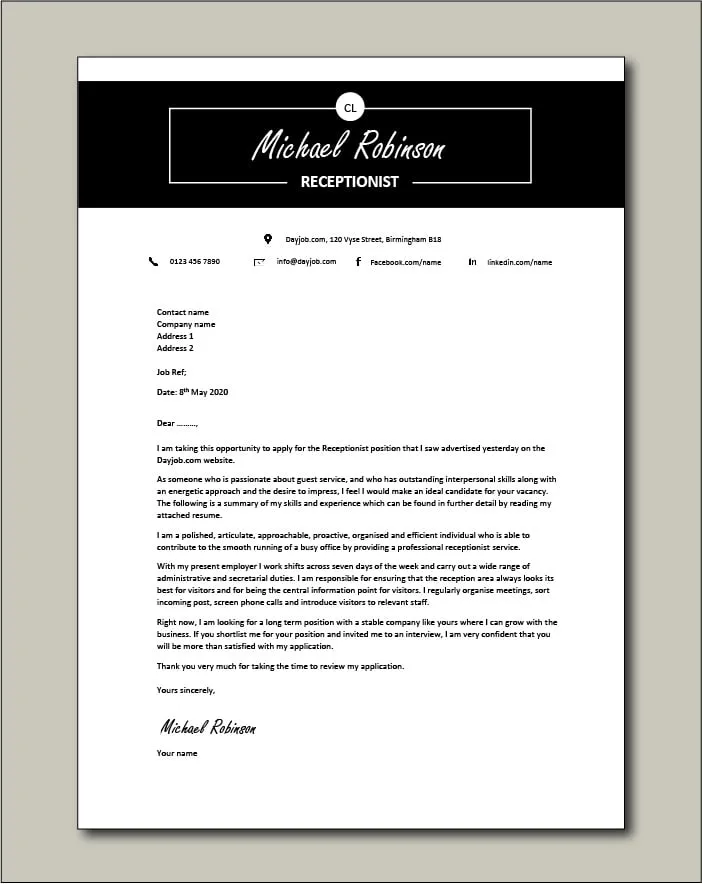
A successful receptionist cover letter consists of several essential components that work together to present you as a well-rounded candidate. From the initial greeting to the final closing, each element plays a role in capturing the employer’s attention and demonstrating your suitability. A strong cover letter includes your contact information, a compelling introduction, a detailed discussion of your skills and experience, and a confident closing. The content should be tailored to the specific job requirements, using clear, concise language. By including these key components, you create a document that effectively communicates your qualifications and motivates the employer to invite you for an interview.
Contact Information

Begin your cover letter with your full name, address, phone number, and email address at the top. This information should be easy to find and clearly formatted. Ensure that the email address is professional and appropriate. By presenting your contact details clearly, you make it easy for the employer to reach out to you for further communication. Accuracy is paramount, as any error can lead to lost opportunities. Always double-check your information before submitting your application.
The Introduction: Making a Strong First Impression
Your introduction is your opportunity to grab the hiring manager’s attention. Start by stating the position you are applying for and how you learned about the opportunity. Briefly mention why you are interested in the role and the company. Use this initial paragraph to highlight your most relevant skills or experiences, making a positive and confident first impression. Avoid generic opening lines, and instead, craft a statement that demonstrates your personality and enthusiasm for the role. This sets the tone for the rest of your letter and encourages the reader to continue.
Highlighting Your Skills and Experience
The main body of your cover letter should delve into your skills and experience. Provide specific examples of how you have successfully performed the duties of a receptionist. Use the job description as a guide to identify the key skills and experiences the employer is seeking and tailor your responses accordingly. Quantify your achievements whenever possible. For instance, mention the number of calls you handle daily, the efficiency with which you manage schedules, or any improvements you made to existing office procedures. This demonstrates that you are a proactive and results-oriented individual.
Communication and Interpersonal Skills

As a receptionist, exceptional communication and interpersonal skills are fundamental. Showcase your ability to interact professionally with clients, colleagues, and visitors, both in person and over the phone. Give examples of how you have handled difficult situations, resolved customer issues, or built positive relationships. Highlight your active listening skills, empathy, and ability to communicate clearly and concisely. This section should underscore your aptitude for creating a welcoming and efficient environment.
Administrative and Technical Proficiency
Receptionists often handle various administrative tasks, so demonstrate your proficiency in relevant software, such as Microsoft Office, email management systems, and appointment scheduling tools. Mention any experience with phone systems, data entry, and other office equipment. If the job description mentions specific software or tasks, be sure to address those in your cover letter. Be specific about your experience and knowledge, and if possible, include any training or certifications you’ve obtained.
Showcasing Your Achievements
Don’t just list your job duties; demonstrate how you excelled in previous roles. Describe specific accomplishments, such as improving office efficiency, reducing customer wait times, or implementing a new organizational system. Use the STAR method (Situation, Task, Action, Result) to provide context and showcase your skills effectively. For example, describe a challenging situation, the task you faced, the actions you took, and the positive outcome. This approach provides tangible evidence of your abilities and makes your cover letter more impactful.
Tailoring Your Cover Letter to the Specific Job

Avoid using a generic cover letter. Tailor each letter to the specific job and company. This shows that you have researched the role and understand the employer’s needs. Carefully review the job description and identify the key requirements. Then, highlight the skills and experiences that align with those requirements. Use the company’s name and the specific job title throughout the letter. This personalization demonstrates your genuine interest in the opportunity and increases your chances of getting noticed.
Researching the Company
Before writing your cover letter, research the company to understand its values, mission, and culture. This information will help you tailor your letter to resonate with the hiring manager. Visit the company’s website, review its social media profiles, and read news articles to learn about its recent activities and achievements. Mentioning something specific about the company in your introduction or body can show your enthusiasm and demonstrate that you have taken the initiative to learn about the organization. This personalization sets you apart from other applicants.
Addressing the Key Requirements
The job description will often list the key skills and qualifications the employer is seeking. Make sure to address these requirements in your cover letter. Use keywords from the job description and provide specific examples of how you have demonstrated those skills in the past. This targeted approach makes it easy for the hiring manager to see that you are a good fit for the role. If the job description emphasizes experience with a specific software or task, be sure to highlight your relevant experience in your cover letter.
Writing a Compelling Closing

Your closing should leave a positive lasting impression. Express your enthusiasm for the position and reiterate your interest in the company. Thank the hiring manager for their time and consideration. Make a clear statement about your availability for an interview and how they can contact you. This shows confidence and professionalism. A well-written closing completes your narrative and encourages the employer to move forward with your application.
Expressing Enthusiasm and Next Steps
In your closing paragraph, express your enthusiasm for the opportunity to work at the company and reiterate your interest in the role. Reiterate that you are eager to learn more about the position and the company. Include a call to action, such as stating that you are available for an interview at their earliest convenience. Provide your contact information again, making it easy for the hiring manager to reach out. End with a professional closing, such as “Sincerely” or “Best regards,” followed by your name.
Proofreading and Formatting
Proofreading and formatting are critical to creating a professional cover letter. Carefully check for any typos, grammatical errors, and formatting inconsistencies. Use a clean, easy-to-read font and maintain consistent spacing throughout the document. Ensure your cover letter is well-organized and easy to follow. Consider having a friend or family member review your cover letter for errors. A well-formatted and error-free cover letter demonstrates your attention to detail and professionalism, which are crucial qualities for a receptionist.
Common Mistakes to Avoid

Avoid common mistakes that can undermine your application. Generic cover letters, riddled with errors, and failing to follow instructions are red flags for hiring managers. Proofread carefully for any spelling or grammatical errors, and avoid using slang or informal language. Make sure your cover letter is customized for each job and that it aligns with the company’s culture and values. By avoiding these pitfalls, you’ll significantly improve your chances of creating a positive first impression.
Formatting and Grammar Errors
Poor formatting and grammatical errors can damage your credibility and detract from your qualifications. Ensure you use proper grammar, punctuation, and spelling throughout your cover letter. Choose a professional font such as Arial or Times New Roman, and maintain consistent formatting. Avoid using overly long paragraphs or dense blocks of text; instead, break up your content with clear headings and subheadings. Always proofread your cover letter thoroughly, or have a trusted friend or family member review it for errors. These details can significantly impact the impression you make on a potential employer.
Generic Language
Using generic language is a common mistake that can make your cover letter sound uninspired and fail to differentiate you from other applicants. Avoid generic phrases such as “I am a hard worker” or “I am a team player.” Instead, provide specific examples to support your claims. Use active verbs and quantify your achievements whenever possible. Showcase your skills, accomplishments, and personality in a way that resonates with the hiring manager and sets you apart from other candidates. Tailor the content to match the specific needs of the job.
Tips for Success

To write a successful receptionist cover letter, focus on showcasing your communication skills, organizational abilities, and attention to detail. Highlight your experience with phone systems, customer service, and office administration. Tailor your letter to each job application, mentioning the company’s values and the specific requirements of the role. Proofread meticulously for any errors, and always include a professional closing. By following these tips, you can create a compelling cover letter that grabs the hiring manager’s attention and helps you land an interview.
Receptionist Cover Letter Examples
Reviewing examples of successful receptionist cover letters can provide valuable insights and inspiration. Look for examples that demonstrate how to effectively highlight skills, experience, and accomplishments. Analyze the format, language, and tone of the examples to understand how to write a compelling cover letter. Pay attention to how the candidate addresses the employer’s needs and expresses enthusiasm for the position. Adapt the best practices from the example to suit your unique background and the specific job requirements.
Receptionist Cover Letter Template
A template can serve as a starting point for crafting your receptionist cover letter. Start with a general template that includes sections for your contact information, a personalized introduction, a discussion of your relevant skills and experience, and a professional closing. Customize the template to reflect your individual experience and the specific requirements of each job you apply for. Ensure the template is well-organized and uses clear, concise language. Remember to tailor the content to each application to showcase your individual qualifications effectively.
Final Thoughts

Writing a successful receptionist cover letter requires careful attention to detail and a strategic approach. By understanding the importance of the role, highlighting your key skills and experience, and tailoring your letter to each job application, you can significantly improve your chances of landing an interview. Remember to proofread your cover letter thoroughly and present yourself in a professional and enthusiastic manner. By following these guidelines, you’ll be well-equipped to create a cover letter that makes a positive impression and opens the door to exciting career opportunities.