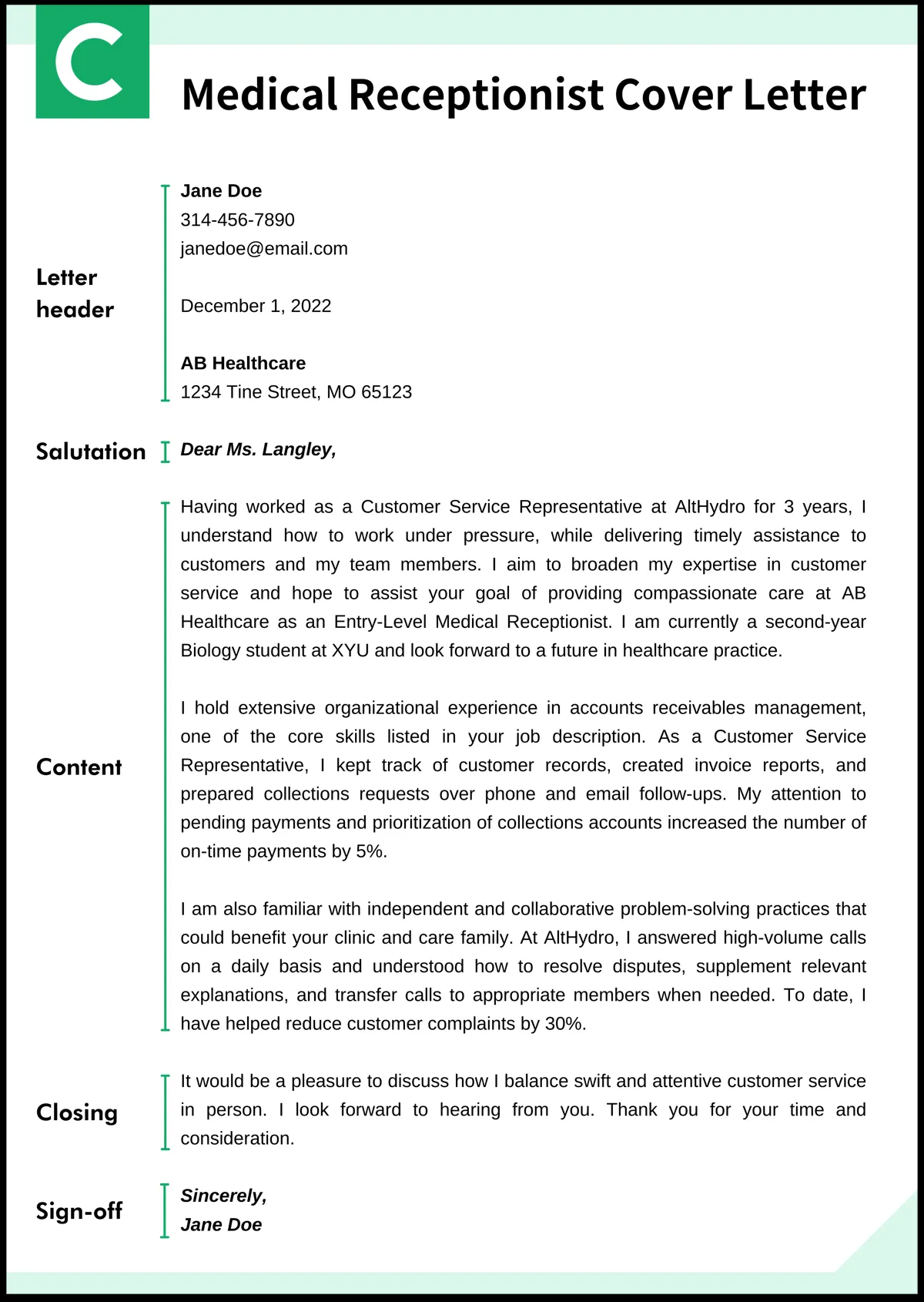
Why a Receptionist Cover Letter is Crucial
In the competitive landscape of job hunting, a well-crafted receptionist cover letter is your first handshake with a potential employer. It’s your opportunity to make a compelling case for why you’re the ideal candidate before they even look at your resume. This document offers more than just a summary of your skills and experience it allows you to showcase your personality, enthusiasm, and understanding of the specific job requirements. A cover letter isn’t merely a formality; it’s a strategic tool that can significantly increase your chances of securing an interview. A standout cover letter demonstrates your ability to communicate professionally, which is a fundamental requirement for any receptionist position. By taking the time to write a thoughtful and personalized cover letter, you demonstrate your genuine interest in the role and the company, setting you apart from applicants who might only submit a resume. This initial effort signals your commitment and attention to detail, both highly valued traits in a receptionist.
Key Elements of a Strong Receptionist Cover Letter
A strong receptionist cover letter is a carefully constructed document, and it’s about more than just listing your past experiences. It’s about highlighting the skills and qualities that make you a great fit for the job. Focus on demonstrating your communication skills, organizational abilities, and technical proficiency. Be sure to tailor your letter to each specific job description, which shows that you’ve taken the time to understand the employer’s needs. A compelling cover letter isn’t just a summary of your resume; it’s an opportunity to highlight achievements and quantify your accomplishments whenever possible. Remember, the goal is to make a memorable and positive impression, so proofread carefully for any errors in grammar or spelling. Consider the visual appeal of the document; it should be clean, easy to read, and professional in appearance.
Contact Information and Salutation

Start your cover letter with your contact information, including your name, phone number, email address, and optionally, your LinkedIn profile link. Then, address the hiring manager by name whenever possible. Research the company to find out the correct person, and if you can’t, use a professional salutation like ‘Dear Hiring Manager.’ This personalized approach shows that you’ve done your homework and are genuinely interested in the position. It sets a tone of professionalism and respect from the outset, immediately demonstrating your attention to detail.
Opening Paragraph Make a Great First Impression
Your opening paragraph is your chance to grab the reader’s attention. Start with a strong statement that immediately communicates your interest in the position and the company. Mention where you saw the job posting and briefly state why you’re an excellent fit. Avoid generic phrases, and instead, show your enthusiasm and understanding of the role. State your key qualification concisely and show your personality to capture the employer’s interest immediately. This paragraph should be short, sweet, and to the point. You want the reader to continue reading and learn more about you, so it’s about making a good first impression.
Highlighting Relevant Skills for Receptionist Jobs
Receptionist positions require a diverse set of skills. Your cover letter should highlight the skills that match the job requirements. Focus on those skills the employer has listed and demonstrate them with specific examples. It’s not enough to state you have these skills, you need to show how you have used them in previous experiences. Quantify your achievements whenever possible to provide concrete proof of your abilities. This approach helps you stand out from other applicants, so be sure to choose the skills most relevant to the job and use that information to craft a compelling narrative.
Communication and Interpersonal Skills

Excellent communication and interpersonal skills are critical for receptionists. Highlight your ability to interact professionally with visitors and colleagues. Provide examples of how you have resolved conflicts or handled difficult situations with diplomacy and courtesy. Showcase your active listening skills, and your ability to communicate clearly and concisely. Receptionists act as the face of the company, so it’s vital to highlight your ability to create a welcoming and positive environment for all. Use specific examples from your past experiences to illustrate your strengths, such as how you managed customer inquiries or mediated between colleagues. These examples demonstrate your ability to handle various communication challenges.
Organizational and Administrative Abilities
Receptionists must have strong organizational and administrative skills. Mention your experience managing schedules, coordinating meetings, and handling paperwork. Highlight your ability to multitask and prioritize tasks efficiently. Showcase any experience you have with managing databases, filing systems, and other organizational tools. Demonstrate your attention to detail and your ability to maintain accurate records. When describing your organizational abilities, provide specific examples of tasks and achievements. This information shows employers that you are a reliable and organized candidate.
Technical Proficiency and Software Knowledge
Receptionists often use various software and technical tools. List any software and technical skills relevant to the job description, such as proficiency in Microsoft Office, Google Suite, or specific office equipment. Demonstrate your ability to learn new software quickly and adapt to new technologies. Mention any experience with phone systems, appointment scheduling software, or other relevant systems. Provide specific examples of how you’ve used these tools in the past. It’s important to note any experience using specific software that the employer mentions in the job description, as that shows you have experience in the exact area they are looking for.
Showcasing Your Achievements and Experience

In your cover letter, don’t just list your job duties, focus on your accomplishments and how you have exceeded expectations. Quantify your achievements with data whenever possible to provide concrete evidence of your impact. Use the STAR method (Situation, Task, Action, Result) to describe your experiences. The STAR method helps you structure your examples and highlight your skills and achievements. This approach gives employers a clear understanding of what you’ve achieved in the past, providing a good indication of what you can bring to their company. Use your cover letter to demonstrate your value to the company.
Quantifying Accomplishments with Data
Whenever possible, quantify your accomplishments to provide tangible evidence of your skills. Instead of saying ‘managed phone calls,’ say ‘handled an average of 50 phone calls per day.’ Instead of saying ‘improved customer service,’ say ‘increased customer satisfaction scores by 15%.’ These specific details make your achievements more compelling and memorable. Use data to provide context and demonstrate the impact of your actions. This approach shows that you are results-oriented and capable of driving positive outcomes for the company. For instance, if you are explaining your experience with managing data and information, then providing the amount of information that you handled shows exactly what you are capable of.
Tailoring Your Cover Letter to the Job Description
One of the most common mistakes is sending a generic cover letter. To stand out, tailor your cover letter to each specific job description. Carefully read the job posting and identify the key skills and requirements. Highlight the skills and experiences that align with the job requirements. Customize your cover letter to reflect the specific needs of the company and position. This personalization shows that you’ve taken the time to understand the role and are genuinely interested in the opportunity. Use keywords from the job description to demonstrate your understanding and show that you are a good fit.
Researching the Company and Addressing Specific Needs

Show your interest and enthusiasm by researching the company before writing your cover letter. Understand the company’s mission, values, and culture. Reference specific aspects of the company that resonate with you. Addressing the company’s specific needs demonstrates that you’ve done your homework and are a good fit for their organization. Mentioning a recent company achievement or project can also show your genuine interest and attention to detail. Demonstrating your understanding of the company’s needs shows that you’ve considered their challenges and can bring value to the company.
Structuring Your Cover Letter
A well-structured cover letter is easy to read and helps convey your message effectively. Use a clear and concise format. Divide your letter into distinct paragraphs. Use headings to separate different sections. Maintain a professional tone and style throughout. Proofread carefully for any errors in grammar or spelling. A well-structured letter is easier for the hiring manager to read. It also increases your chances of getting your key qualifications noticed, increasing your chances of getting an interview.
Paragraph 1 Introduction and Purpose
Start with a strong opening that immediately grabs the reader’s attention. State your intention to apply for the receptionist position and mention where you saw the job posting. Briefly highlight your key qualifications. Briefly state your enthusiasm for the position. Keep it short and to the point. The opening paragraph sets the tone for the rest of the letter. If you can capture the hiring manager’s attention, it will encourage them to read the rest of the cover letter.
Paragraph 2 Skills and Experience

In the second paragraph, highlight your relevant skills and experience. Mention your skills and experience that match the job description. Use examples to demonstrate your abilities and provide concrete proof of your skills. Focus on a few key skills, such as communication, organization, and technical proficiency. Quantify your achievements whenever possible. This part of the cover letter provides the hiring manager with more details about your experience and how it aligns with the job requirements.
Paragraph 3 Company Alignment and Enthusiasm
In the final body paragraph, demonstrate your interest in the company. Show that you have researched the company and understand their mission and values. Explain why you’re a good fit for the company culture. Express your enthusiasm for the opportunity. Mention a specific project or achievement that you admire. This paragraph allows you to connect with the hiring manager on a personal level. It gives you the opportunity to express your genuine interest in working for their company.
Concluding Your Cover Letter
Your conclusion should leave a positive and lasting impression. Summarize your key qualifications and express your enthusiasm for the position. Restate your interest in the opportunity and thank the reader for their time and consideration. Make sure to include a call to action. Concluding your cover letter professionally is important. You want to reiterate your interest and show your appreciation. Keep your conclusion short and concise, and proofread carefully for any errors.
Expressing Gratitude and Call to Action

End your cover letter by expressing your gratitude. Thank the hiring manager for their time and consideration. Reiterate your interest in the position. Include a call to action, such as ‘I look forward to hearing from you soon’ or ‘I am available for an interview at your earliest convenience.’ Provide your contact information again. A strong closing reinforces your professionalism and enthusiasm. It also encourages the hiring manager to contact you.
Common Mistakes to Avoid in Your Cover Letter
Avoiding common mistakes can significantly improve your chances of getting noticed. Be sure to focus on quality and attention to detail. Proofreading is critical, and a generic cover letter will cause a negative impression. Ensure that you format your cover letter in a way that looks professional. Avoid using slang or jargon, and maintain a consistent tone throughout. The cover letter should be a reflection of your professionalism, and by avoiding the common mistakes, you’ll demonstrate your attention to detail and your desire for the job.
Grammatical Errors and Typos
Errors in grammar and typos can undermine your credibility. Proofread your cover letter carefully for any mistakes. Use spell-check and grammar-check tools. Ask someone else to review your letter before sending it. Errors and typos are a sign of carelessness and can create a negative impression. Take the time to ensure your cover letter is polished and error-free. This attention to detail demonstrates your professionalism and shows your commitment to the job.
Generic Cover Letters
Generic cover letters don’t make a positive impression. Avoid using a template without customizing it to the job. Tailor your cover letter to each specific job and highlight your relevant skills and experience. Research the company and address their specific needs. Generic letters show a lack of interest and a lack of effort. Your cover letter should demonstrate your understanding of the role and your genuine interest in the opportunity. Personalization shows employers that you’ve taken the time to read the job description and that you are truly interested in their organization.
Unprofessional Tone and Formatting
Maintain a professional tone and formatting throughout your cover letter. Avoid using slang, casual language, or emojis. Use a clear and concise writing style. Choose a professional font and formatting. Ensure that your cover letter is easy to read and visually appealing. Your cover letter represents you professionally, so it’s essential to present yourself in a positive and polished manner. A professional tone and formatting will show the hiring manager that you are serious about the job and that you possess the communication skills necessary for the role.