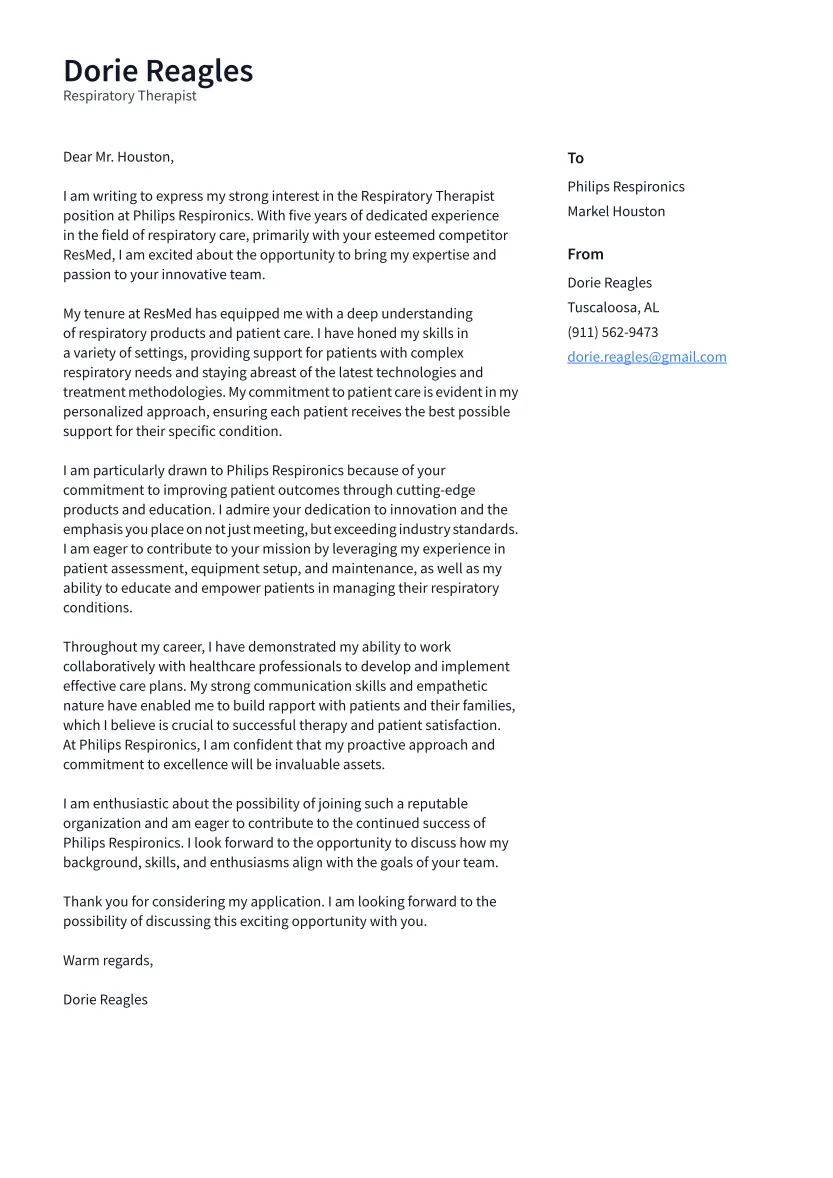
Crafting a Compelling Respiratory Therapy Cover Letter
A well-crafted respiratory therapy cover letter is your first opportunity to make a strong impression on potential employers. It’s more than just a formality; it’s a crucial tool to showcase your qualifications, skills, and passion for respiratory care. This guide will walk you through the essential steps to create a cover letter that highlights your strengths and increases your chances of landing an interview. Focusing on a professional and tailored approach will set you apart in a competitive job market, and get you on the path to a successful career. The key is to present yourself as a confident and competent professional, ready to contribute to a healthcare team.
Understanding the Purpose of a Cover Letter
The primary goal of a cover letter is to introduce yourself and your interest in a specific respiratory therapy position. It provides context for your resume, allowing you to elaborate on your key skills, experiences, and achievements. Use the cover letter to demonstrate your understanding of the role, the facility, and the specific requirements outlined in the job description. It gives you the opportunity to make a personal connection with the hiring manager, showcasing your personality, enthusiasm, and commitment to providing excellent patient care. By understanding the purpose of the cover letter, you can strategically tailor its content to align with the employer’s needs and expectations.
Highlighting Your Skills and Qualifications

Your respiratory therapy cover letter should prominently feature your relevant skills and qualifications. Begin by listing your key skills, such as patient assessment, ventilator management, administering respiratory treatments, and performing pulmonary function tests. Highlight any certifications or licenses you hold, such as Registered Respiratory Therapist (RRT) or Certified Respiratory Therapist (CRT). Furthermore, detail your experience with various patient populations, including adults, children, and neonates, and emphasize any specialized training you possess, like advanced cardiac life support (ACLS) or neonatal resuscitation program (NRP). The goal is to provide concrete examples of your abilities, demonstrating your readiness to excel in the role and ensuring that you are the perfect fit. (Image: respiratory-therapist-skills.webp)
Researching the Facility and the Role
Before writing your cover letter, thoroughly research the healthcare facility and the specific respiratory therapy role. Understand the facility’s mission, values, and the services they provide. Review the job description carefully, noting the required and preferred qualifications, responsibilities, and any specific technologies or equipment used. Demonstrate your genuine interest in the role by mentioning how your skills and experience align with the facility’s needs and the specific requirements outlined in the job description. Customize your cover letter to address the facility’s priorities, showing that you’ve taken the time to understand their needs and are genuinely interested in joining their team. (Image: researching-healthcare-facility.webp)
Formatting Your Respiratory Therapy Cover Letter
The formatting of your cover letter is as important as the content itself. A well-formatted letter demonstrates professionalism and attention to detail. Choose a clean, easy-to-read font, such as Times New Roman or Arial, with a font size between 10 and 12 points. Use standard one-inch margins and single-space the body of the letter, leaving a blank line between paragraphs. Ensure your letter is free of grammatical errors and typos. A well-formatted cover letter ensures a positive first impression and makes your qualifications easier to read and understand. (Image: respiratory-therapy-cover-letter-formatting.webp)
Contact Information and Header

Begin your cover letter with your contact information, including your name, address, phone number, and email address. Place this information at the top of the letter, either on the left or right side. Include the date, and then the hiring manager’s name, title, and the facility’s address. If you don’t know the hiring manager’s name, research the facility’s website or call the human resources department to find out. Addressing the letter to a specific person shows that you have taken the initiative to personalize your application.
Salutation and Introduction
Start your cover letter with a professional salutation, such as “Dear Mr./Ms./Mx. [Last Name].” Avoid generic salutations like “To Whom It May Concern.” In the introduction, clearly state the position you are applying for and how you found the job posting. Briefly mention your key qualifications and why you are interested in the role. Make a strong first impression by expressing your enthusiasm and highlighting your relevant experience. Ensure your introduction captures the hiring manager’s attention and encourages them to continue reading.
Body Paragraphs and Content
The body of your cover letter is where you showcase your skills, experiences, and accomplishments in detail. Use one or two paragraphs to describe your relevant qualifications and how they align with the job requirements. Provide specific examples of your achievements, such as successful patient outcomes, improvements in efficiency, or contributions to team projects. Highlight any specialized skills or experiences that make you a strong candidate. Focus on demonstrating your ability to meet the facility’s needs and contribute to their success. Tailor your content to match the specific requirements outlined in the job description.
Closing the Letter

In the closing paragraph, reiterate your interest in the position and express your eagerness for an interview. Thank the hiring manager for their time and consideration. Provide a clear call to action, such as stating that you look forward to hearing from them soon. Include your contact information again to make it easy for the hiring manager to reach you. End with a professional closing, such as “Sincerely” or “Best regards,” followed by your typed name.
Proofreading and Editing
Before submitting your cover letter, meticulously proofread and edit it for any errors in grammar, spelling, and punctuation. Ensure that the content is clear, concise, and easy to understand. Ask a friend or colleague to review your letter for a second opinion. They can provide valuable feedback on clarity, structure, and overall impact. Correcting any errors ensures that your cover letter reflects professionalism and attention to detail. A polished cover letter is essential for making a positive impression and setting yourself apart from other applicants.
Showcasing Your Respiratory Therapy Achievements
To make your cover letter stand out, highlight your key achievements in respiratory therapy. Go beyond listing your responsibilities and instead, focus on quantifiable results and accomplishments. Show how you have improved patient outcomes, increased efficiency, or contributed to a positive work environment. Use specific examples to demonstrate your ability to make a difference. This approach helps potential employers understand the value you bring to their team and increases your chances of getting an interview. (Image: respiratory-therapist-achievements.webp)
Quantifying Accomplishments

Whenever possible, quantify your accomplishments to provide concrete evidence of your success. Instead of saying “Improved patient care,” state “Improved patient outcomes by 15% through implementing a new respiratory protocol.” Use numbers, percentages, and specific data to demonstrate the impact of your contributions. This approach makes your achievements more compelling and demonstrates your ability to achieve tangible results. Quantifying your accomplishments gives the hiring manager a clear understanding of your capabilities and the value you bring.
Using Action Verbs
Use strong action verbs to describe your responsibilities and achievements. Verbs like “managed,” “implemented,” “developed,” “achieved,” “led,” and “improved” create a dynamic and engaging narrative. Instead of saying “Responsible for patient assessment,” say “Performed comprehensive patient assessments to identify and address respiratory needs.” Action verbs make your cover letter more compelling and show that you are a proactive and results-oriented professional. This technique will help you stand out as a strong candidate. Additionally, these verbs give hiring managers a concise picture of your skills and expertise.
Tailoring the Letter to the Job Description
Customize your respiratory therapy cover letter to match the specific requirements of the job description. This demonstrates your attention to detail and genuine interest in the position. Review the job description carefully and identify the key skills, qualifications, and experiences that the employer is seeking. Align your cover letter content to address these specific requirements, highlighting relevant examples from your work history. Tailoring your letter shows that you have taken the time to understand the employer’s needs and are committed to meeting their expectations. (Image: tailoring-cover-letter.webp)
Matching Skills to Requirements

Carefully match your skills and qualifications to the requirements listed in the job description. Use keywords and phrases from the job posting to demonstrate that you possess the necessary skills and experience. Provide specific examples of how you have utilized these skills in previous roles. If the job description emphasizes ventilator management, highlight your experience with different ventilator modes and your ability to troubleshoot related issues. By clearly demonstrating your alignment with the job requirements, you increase your chances of being selected for an interview.
Addressing Specific Employer Needs
Address the specific needs and priorities of the employer in your cover letter. This can involve highlighting any specialized skills or experiences that align with the facility’s mission or the patient population they serve. Research the healthcare facility and understand their values, the services they provide, and any recent initiatives. Tailor your cover letter to demonstrate how you can contribute to their success. Show that you understand the challenges and opportunities they face. This approach makes you a more attractive candidate.
Finalizing and Submitting Your Cover Letter
Once you’ve completed your cover letter, take the time to finalize it and prepare it for submission. This includes careful review, proofreading, and proper formatting. Ensure you have included all necessary information, and that your letter effectively showcases your qualifications and interest in the role. A well-finalized cover letter will demonstrate your professionalism and increase your chances of success. After proofreading the document, double-check all contact information and the name of the hiring manager before submission. (Image: reviewing-application.webp)
Reviewing Before Submission

Before submitting your cover letter, carefully review the entire document to ensure it is free of errors. Check for typos, grammatical mistakes, and formatting inconsistencies. Verify that all contact information is correct and up-to-date. Ensure that your letter is tailored to the specific job description and addresses the employer’s needs. Consider having a friend or career counselor review your letter for feedback. A final review ensures that your cover letter is polished, professional, and ready to make a positive impression.
Submitting Your Application
Follow the instructions in the job posting carefully when submitting your application. Submit your cover letter and resume in the required format, such as PDF or Word document. Make sure the file names are professional. If the job posting specifies a particular method of submission, adhere to those instructions. After submitting your application, keep a copy of your cover letter and resume for your records. Following these steps will help you make a positive impression. (Image: submitting-application.webp)