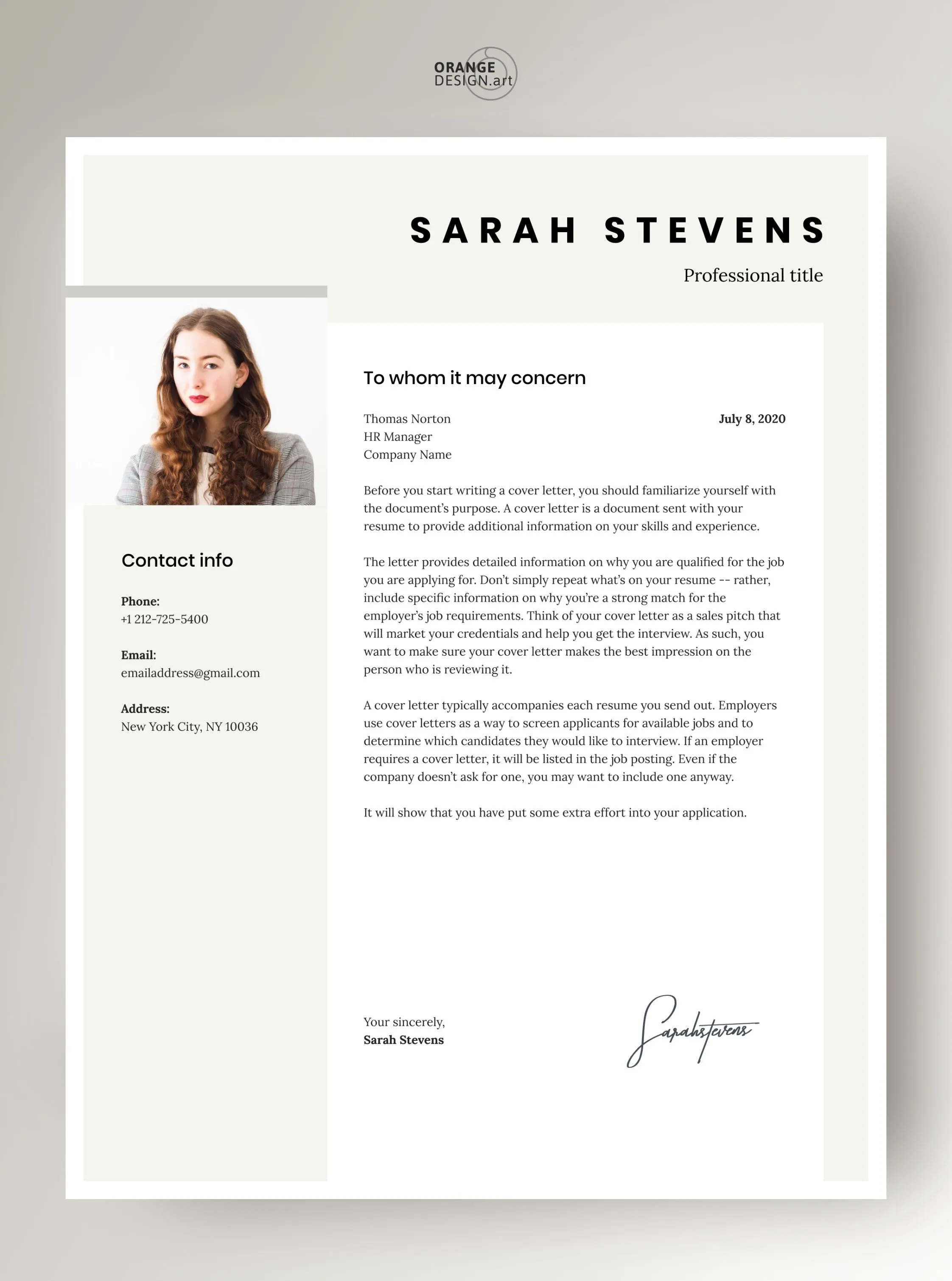
Crafting an Effective Cover Letter
A cover letter serves as your introduction to a potential employer, offering a crucial opportunity to make a strong first impression. It allows you to go beyond the confines of your resume and communicate your personality, enthusiasm, and unique value proposition. A well-crafted cover letter significantly increases your chances of landing an interview, as it demonstrates your genuine interest in the position and the company. By effectively showcasing your skills and experience, you can persuade the hiring manager to delve deeper into your qualifications and consider you for the role. Remember, your cover letter is your chance to tell your story and illustrate why you are the perfect fit for the job.
Understanding the Purpose of a Cover Letter
The primary purpose of a cover letter is to highlight your relevant skills and experience in a way that aligns with the specific requirements of the job. It’s not merely a repetition of your resume; instead, it’s an opportunity to elaborate on your qualifications and demonstrate your understanding of the company’s needs. Furthermore, a cover letter provides a platform to express your enthusiasm for the position and the organization. By clearly articulating your career goals and how they align with the role, you can make a compelling case for why you’re the ideal candidate. Think of it as a personalized marketing document that sells your abilities and convinces the reader to take action - to invite you for an interview.
Highlighting Relevant Skills and Experience

When highlighting your skills and experience, focus on the aspects that directly relate to the job description. Carefully review the requirements outlined in the job posting and identify the key skills and qualifications the employer is seeking. Use the cover letter to provide specific examples of how you’ve demonstrated these skills in previous roles or projects. Quantify your achievements whenever possible, using data and metrics to illustrate your impact. For instance, instead of stating ‘Managed a team,’ you could say, ‘Managed a team of 10, increasing productivity by 15%.’ This level of detail strengthens your claims and makes your application more persuasive. Always tailor your language to mirror the job description’s keywords and phrases, demonstrating your attention to detail and understanding of the role.
Customizing Your Cover Letter
Generic cover letters are easily spotted and often discarded. To stand out, personalize each cover letter to the specific job and company. Research the organization, its mission, and its values, and demonstrate your understanding of their work. Address the hiring manager by name, if possible, as this shows that you’ve taken the time to learn about the company. Customize the content of your letter to showcase your relevant skills and how they align with the company’s needs. Tailor your tone and language to match the company culture and the role’s requirements. Proofread carefully to ensure there are no errors, and make sure the letter reflects your professionalism and enthusiasm.
Writing a Compelling Resume
Your resume is a concise snapshot of your professional background, skills, and accomplishments. It’s a critical document that employers use to quickly assess your qualifications. A well-written resume is clear, organized, and easy to read, allowing hiring managers to quickly grasp your relevant experience. The format should be consistent, with clear headings, bullet points, and ample white space. Emphasize your accomplishments rather than just listing your responsibilities. Use action verbs to describe your contributions and quantify your achievements whenever possible. Your resume is a powerful marketing tool that should be regularly updated and tailored to each job application to highlight your most relevant skills and experience.
Formatting Your Resume for Readability

The format of your resume is just as important as its content. A clean, easy-to-read format ensures that your information is easily accessible and makes a positive first impression. Use a professional font like Arial, Calibri, or Times New Roman in a readable size (11-12 points). Employ clear headings and consistent formatting throughout your resume. Utilize bullet points to highlight key achievements and responsibilities. Create ample white space to avoid a cluttered appearance. This helps the reader quickly scan the document and identify the most important information. Consider using a template or seeking feedback from a career counselor to ensure your format is polished and professional. Ensure your resume is easily readable by Applicant Tracking Systems (ATS) by avoiding complex formatting.
Showcasing Your Achievements
Instead of just listing your job duties, focus on showcasing your accomplishments. Employers are more interested in what you’ve achieved than what you were simply responsible for. Use the STAR method (Situation, Task, Action, Result) to structure your achievements. Describe the situation, the task you were assigned, the action you took, and the result you achieved. Quantify your accomplishments whenever possible, using numbers and metrics to demonstrate the impact of your work. For example, instead of ‘Improved customer service,’ write ‘Improved customer service scores by 20% through the implementation of a new training program.’ Highlighting your achievements is a powerful way to differentiate yourself from other candidates and demonstrate your value.
Tailoring Your Resume to the Job Description
Customizing your resume for each job application is crucial for increasing your chances of success. Carefully review the job description and identify the key skills and qualifications the employer is seeking. Then, tailor your resume to highlight the experiences and skills that align with those requirements. Use keywords from the job description throughout your resume, including in your summary, skills section, and descriptions of your previous roles. This helps ensure that your resume is selected by Applicant Tracking Systems (ATS). Even small adjustments can significantly improve your chances of being noticed by the hiring manager. Be mindful to maintain the integrity of your resume by only including relevant information and avoiding exaggerations.
Including References in Your Application

References are a vital component of the hiring process, providing potential employers with insights into your professional character and work ethic. Employers typically contact references to gain a better understanding of your skills, experience, and suitability for the role. Therefore, carefully consider who you choose as references and ensure they are individuals who can speak positively about your abilities and work habits. Always inform your references that you have listed them and provide them with information about the job you are applying for. Having strong references can significantly boost your chances of securing an interview and ultimately landing the job.
Preparing a List of References
Prepare a separate document containing your references. Typically, you will include 3-5 references. Provide their full names, job titles, company names, phone numbers, and professional email addresses. Choose references who can speak to your skills, accomplishments, and work ethic. These may include former supervisors, managers, or colleagues. Ensure that your references know you well and are prepared to provide a positive recommendation. It’s also a good idea to provide them with a copy of your resume and the job description so they can tailor their feedback appropriately. Keep your reference list up-to-date and inform your references when you’ve listed them for a job.
Formatting Your References
When formatting your list of references, maintain consistency with the overall style of your resume. Use the same font and font size. Clearly label the section as ‘References.’ List each reference with their full name, title, company, and contact information (phone number and email address). Ensure that the information is accurate and up-to-date. It is generally acceptable to write, ‘References available upon request’ on your resume to save space. However, be ready to provide your references promptly when requested during the hiring process. Proofread your reference list to ensure that there are no errors.
When and How to Provide References

Unless specifically requested in the job application, it’s generally best to include ‘References available upon request’ on your resume. This saves space and allows you to control when your references are contacted. When you are asked for references, provide your list promptly. Always inform your references beforehand, and provide them with the job description and any other relevant information. This allows them to prepare and provide a more informed recommendation. If you’re unsure about the employer’s preferences, it’s always safe to ask the hiring manager if they prefer a list of references or if they will contact them directly. Keep your references updated about your job search progress.
Finalizing Your Application
Before submitting your cover letter, resume, and reference list, take the time to review and finalize all the elements. This includes proofreading your documents, ensuring that all information is accurate and up-to-date, and confirming that the format is consistent and professional. Pay close attention to the details, such as grammar, spelling, and punctuation, as these elements can significantly impact the impression you make on potential employers. A polished and well-organized application package demonstrates your attention to detail and professionalism and significantly increases your chances of success. Take a final moment to review the application instructions and make sure you’ve followed all the steps correctly.
Proofreading for Errors
Proofreading your cover letter, resume, and reference list is crucial to ensure there are no errors that could undermine your application. Carefully check for any grammatical errors, spelling mistakes, and inconsistencies in formatting. It’s helpful to read your documents aloud or have a friend or family member review them. Another pair of eyes can often catch errors you might miss. Pay attention to the small details, like the correct use of punctuation and the consistency of your formatting. Errors, no matter how small, can give the impression that you are careless or inattentive. Proofreading is a critical step in making sure that your application is professional and presents you in the best possible light.
Submitting Your Application

Once you have finalized your cover letter, resume, and reference list, you are ready to submit your application. Carefully review the application instructions to ensure that you are following all the requirements. If the job posting specifies a particular file format or method of submission, adhere to those instructions. Send your application promptly, within the application deadline. Send a thank-you note to the hiring manager if you have their contact information. After submitting, follow up within a reasonable timeframe (usually within a week or two) to inquire about the status of your application. A well-crafted and timely application can significantly increase your chances of securing an interview and ultimately landing the job. Good luck with your job search!