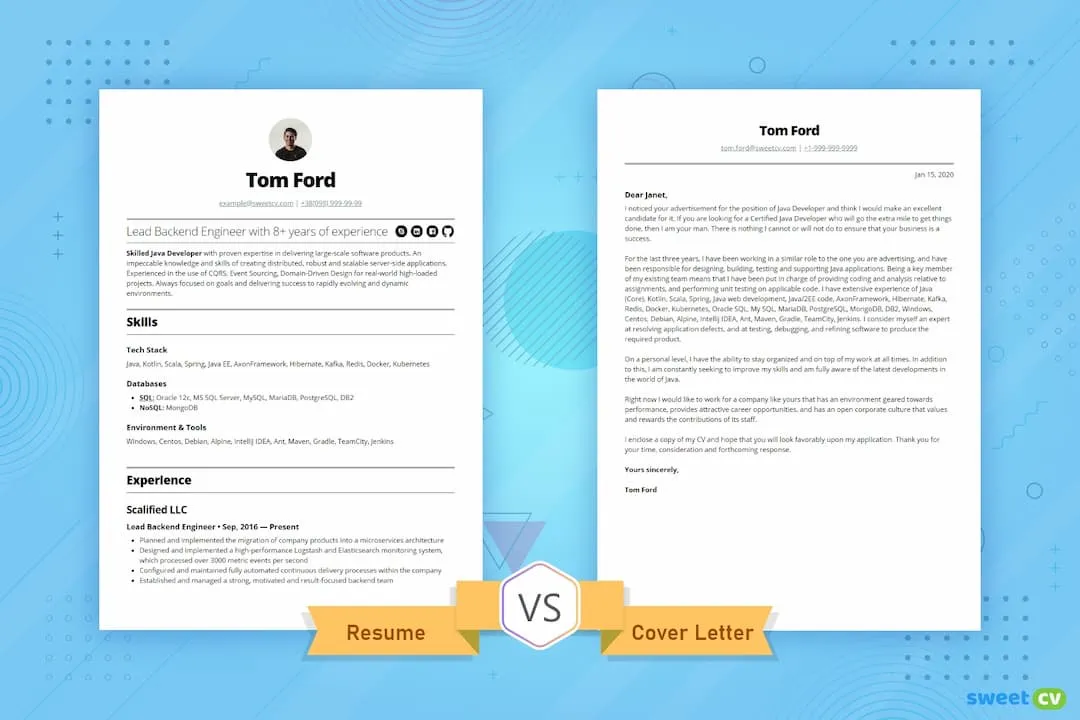
Resume vs Cover Letter An Overview
Navigating the job market can feel like traversing a complex maze, and two crucial tools that will guide you are the resume and the cover letter. These documents are essential components of any job application, but they serve distinct purposes and should be crafted with specific goals in mind. Understanding the key differences between a resume and a cover letter is paramount for effectively presenting your qualifications and making a strong impression on potential employers. This guide will break down the nuances, helping you leverage both documents to increase your chances of landing your dream job. This knowledge will empower you to create compelling and effective applications, setting you apart in a competitive field.
Resume What It Is
A resume is a concise summary of your professional and academic history. Think of it as a snapshot of your skills, experiences, and accomplishments relevant to the job you’re applying for. The primary goal of a resume is to provide a clear and easily digestible overview of your qualifications, enabling employers to quickly assess your suitability for a role. Resumes are typically structured to highlight your work history, education, skills, and any other relevant information. It’s a fact-based document, aiming to present a clear picture of your professional profile. The resume is the first introduction to a potential employer, so making a strong first impression is crucial. Tailoring your resume for each job application will increase your chances of success. Remember to keep it concise and easy to read, focusing on the most important details that support your application.
Resume Key Components

Resumes generally include the following key components: contact information, a summary or objective statement, work experience (including job titles, company names, dates of employment, and responsibilities), education (degrees earned, institutions attended, and dates of attendance), skills (both hard and soft skills), and potentially sections for awards, certifications, or volunteer experience. It’s important to customize these sections to align with the specific job requirements. For example, when describing your work experience, focus on accomplishments rather than just listing job duties. Use action verbs to showcase your achievements and quantify your results whenever possible. Ensure that the information is presented in a clear, organized, and easy-to-read format. Consider including a skills section to highlight the specific abilities that make you a strong candidate. Proofread your resume carefully to catch any errors before submitting it.
Resume Purpose & Focus
The main purpose of a resume is to secure an interview. Its focus is primarily on providing a concise and factual representation of your qualifications. It serves as a quick reference for an employer to determine if your skills and experience align with the job requirements. Therefore, the focus is on showcasing your relevant experience, skills, and education. It aims to make a strong case for your candidacy by providing essential information in a straightforward manner. It highlights your professional journey in a way that is easily scanned and quickly understood. By providing a clear and well-organized account of your qualifications, a resume gives the employer the information needed to decide whether to invite you for an interview.
Cover Letter What It Is
A cover letter is a personalized introduction to your resume. It provides an opportunity to elaborate on your qualifications, express your interest in the position, and highlight why you are a good fit for the company. It’s a chance to show your personality and communication skills, and to demonstrate your understanding of the role and the organization. Cover letters are more flexible in format than resumes, allowing you to provide a narrative that connects your skills and experiences to the job requirements. It’s a place where you can articulate your career goals and explain why you are enthusiastic about the specific opportunity. Use the cover letter to make a more personal connection with the hiring manager, showing that you are not just a qualified applicant, but a thoughtful and enthusiastic candidate.
Cover Letter Key Components

A cover letter typically includes the following key components: a header with your contact information and the date, a greeting (addressed to a specific person if possible), an introductory paragraph stating the position you are applying for, a body paragraph or two highlighting your qualifications and relevant experiences, and a closing paragraph expressing your interest and thanking the employer for their time. It’s essential to tailor each cover letter to the specific job and company. Research the company and the role to understand their needs and demonstrate how you can meet them. Make sure to proofread the cover letter to avoid any grammatical errors or typos. A well-written cover letter provides a clear indication that you’ve done your research and care about the opportunity. Use the cover letter to demonstrate your communication skills and enthusiasm for the position.
Cover Letter Purpose & Focus
The primary purpose of a cover letter is to introduce you and your resume, express your interest in a specific job, and persuade the hiring manager to read your resume and consider you for an interview. It’s an opportunity to demonstrate your writing skills, personality, and your understanding of the company and the position. The cover letter enables you to connect your experiences to the job requirements and articulate your career goals. Its focus is to complement the resume by providing additional context, storytelling, and personalization. A good cover letter should not just reiterate information from your resume, but should offer added value, explaining why you are a good fit for the company and what you can bring to the role. The ultimate goal is to secure an interview by making a memorable and positive impression.
Difference 1 Purpose & Goal
The fundamental difference lies in their purpose. A resume’s primary goal is to provide a snapshot of your qualifications and secure an interview. It is a factual document designed to present your skills, experience, and education in a concise format. On the other hand, the cover letter’s main purpose is to introduce you, express your interest in the job, and persuade the hiring manager to read your resume and consider you for an interview. The cover letter offers the space for personalization and explanation, using it to tell a compelling narrative that complements the resume. These documents have distinct goals, one to inform and the other to persuade, making both essential components of a successful job application.
Difference 2 Content & Scope

The content and scope of a resume and cover letter also vary significantly. A resume focuses on presenting a concise summary of your work history, skills, education, and accomplishments. The focus is on factual information, providing a quick overview of your qualifications. A cover letter, however, allows for more narrative and detail. It enables you to elaborate on your experiences, explain your interest in the position, and showcase your personality and communication skills. The cover letter provides context to your resume, enabling you to connect your skills and experiences to the specific requirements of the job. This difference allows you to tailor your application, offering the company specific details about how you are suited for the position.
Difference 3 Format & Style
Resumes adhere to a more structured format, typically including sections for contact information, summary or objective, work experience, education, and skills. The formatting is standardized to ensure easy readability and quick scanning by employers. Cover letters are more flexible in format and style, allowing for a personalized approach. This document has an introductory paragraph, body paragraphs, and a closing paragraph, the format allows for a more narrative and persuasive approach. The format reflects its purpose, as it enables you to express your interest in the role and articulate your qualifications in a more engaging way. Understanding the format difference of these two documents can help you in showcasing your capabilities effectively.
Difference 4 Target Audience
Resumes primarily target recruiters and hiring managers who are quickly screening candidates. The goal is to provide essential information to determine if a candidate meets the basic requirements. The resume is a screening tool, and the target audience is those making initial assessments. Cover letters are often directed to the hiring manager or the person responsible for the specific role. This gives the candidate an opportunity to make a more personal connection, emphasizing the importance of tailoring the content to suit the specific needs of the company and the role. A resume is geared towards a general audience, and the cover letter is targeted towards a specific individual to add more personality.
Difference 5 Length & Detail

Resumes are generally concise, typically one to two pages long, providing a brief overview of your qualifications. The focus is on key details and achievements, presented in a clear and easily digestible format. Cover letters, while also concise, allow for more detail and length. They typically range from a half to a full page, providing an opportunity to elaborate on your experiences, explain your interest in the position, and showcase your personality and communication skills. The length allows you to craft a more persuasive narrative. A cover letter offers the room to explain your qualifications, which is not readily available in a resume.
Conclusion Choosing the Right One
Both resumes and cover letters are critical tools in your job search, and understanding their differences is key to creating effective applications. While your resume provides a factual overview of your qualifications, a cover letter allows you to add context, express your enthusiasm, and make a personal connection with the hiring manager. Crafting these documents effectively will help you stand out and improve your chances of landing interviews. Always tailor both documents to the specific job and company, and proofread carefully for any errors. By mastering both the resume and cover letter, you will be well-equipped to navigate the job market and achieve your career goals. Remember to review both of these important documents often to keep them fresh, and best represent your goals.