Why a Retail Sales Associate Cover Letter is Crucial
In the competitive world of retail, a well-crafted cover letter can be your golden ticket to landing your dream job as a Sales Associate. It serves as your first introduction to a potential employer, offering you a unique opportunity to showcase your personality, skills, and enthusiasm. Unlike a resume, which is a factual summary of your work history, a cover letter allows you to tell your story, connect with the hiring manager on a personal level, and highlight why you’re the perfect fit for the role and the company. A strong cover letter demonstrates your genuine interest in the position and provides specific examples of your accomplishments, setting you apart from other applicants who may only submit a resume. It’s not just about listing your qualifications; it’s about painting a picture of who you are and what you can bring to the team. Remember, it’s your chance to make a lasting first impression and increase your chances of getting an interview.
Highlighting Your Skills
When writing your cover letter, the key is to spotlight the skills that align with the job requirements. Retail sales positions thrive on individuals with a diverse skill set, so it’s crucial to focus on those areas where you excel. Consider what makes you a standout candidate and how you can translate your abilities into tangible benefits for the employer. This involves providing specific examples from your past experiences to back up your claims. Avoid generic statements and instead, show how you’ve successfully applied these skills in real-world situations to drive sales, improve customer satisfaction, or contribute to a positive team environment. The stronger the evidence, the more compelling your cover letter will be. Remember, the goal is to convince the hiring manager that you possess the necessary capabilities to excel in the role and add value to their team.
Customer Service Skills

Customer service is at the heart of any successful retail environment, so highlighting your customer service skills is paramount. Illustrate your ability to handle customer inquiries, resolve complaints, and create a positive shopping experience. Provide examples of how you have gone above and beyond to assist customers, turning challenging situations into positive outcomes. Consider describing how you’ve built rapport with customers, remembered their preferences, or provided personalized service that led to repeat business. Demonstrate your empathy, patience, and ability to communicate effectively, as these qualities are essential for building lasting customer relationships. When showcasing your customer service prowess, it’s not just about being friendly; it’s about demonstrating how you can enhance customer satisfaction and loyalty, ultimately contributing to the store’s success.
Sales and Persuasion Skills
Retail is fundamentally a sales-driven industry. Your cover letter must emphasize your sales and persuasion skills. Discuss your ability to understand customer needs, recommend products, and close sales. Mention any sales targets you’ve exceeded, highlighting the strategies you employed to achieve those results. Did you implement upselling or cross-selling techniques? Did you participate in sales promotions? Detail how you’ve increased sales, improved average transaction values, or contributed to overall revenue growth. Provide quantifiable achievements whenever possible. For instance, you could state that you increased sales by a specific percentage during a particular period or consistently exceeded your sales targets. The more concrete your examples, the more persuasive your cover letter will be. Also, articulate your understanding of sales principles, customer psychology, and persuasive communication.
Communication and Interpersonal Skills
Effective communication and strong interpersonal skills are vital in a retail environment. Highlight your ability to communicate clearly and concisely with both customers and colleagues. Discuss your experience in handling difficult conversations, resolving conflicts, and working as part of a team. Share instances where you’ve collaborated with others to achieve a common goal. This might include coordinating with colleagues to manage inventory, organizing promotional displays, or assisting with store operations. Show how you build positive relationships with others, provide constructive feedback, and contribute to a collaborative work environment. Moreover, explain how you adapt your communication style to suit different audiences and situations, demonstrating versatility and adaptability. Make sure to emphasize your active listening skills, your ability to empathize with others, and your overall capacity to contribute to a positive and productive workplace.
Showcasing Relevant Experience

Even if you’re new to the retail industry, it is important to showcase your relevant experience. This doesn’t necessarily mean you need to have worked in a retail store previously. Consider transferable skills from other jobs, volunteer work, or even personal experiences that have equipped you with the necessary skills for the role. If you’ve worked in customer service, hospitality, or any role involving direct interaction with the public, highlight those experiences. Think about the duties and responsibilities that align with the retail sales associate position. Did you handle cash transactions, manage inventory, or resolve customer issues? Quantify your achievements whenever possible. For example, “Managed cash register, processing an average of 50 transactions per shift.” Or, “Resolved an average of 10 customer complaints per week.” By connecting your past experiences to the job requirements, you can demonstrate that you’re a strong candidate, even without direct retail experience.
Tailoring Your Cover Letter to the Job Description
One of the biggest mistakes applicants make is sending out generic cover letters. Tailoring your cover letter to each job application is crucial, as it demonstrates that you’ve taken the time to understand the specific requirements of the position and the values of the company. This shows the hiring manager that you’re genuinely interested in the role and not just applying to any available job. Carefully read the job description and identify the key skills and qualifications the employer is seeking. Then, highlight your relevant experiences and abilities, directly addressing the requirements mentioned in the job posting. Use the same keywords and phrases from the job description to align your cover letter with their needs. This will not only make your application more appealing, but also help it pass through applicant tracking systems (ATS).
Researching the Company
Before you begin writing your cover letter, take some time to research the company. Visit their website, social media pages, and any online reviews to get a better understanding of their brand, values, and culture. This information will allow you to tailor your cover letter to demonstrate your genuine interest in the company. Identify the company’s mission, their target customers, and what sets them apart from competitors. Then, weave this knowledge into your cover letter, explaining why you want to work for them and how your skills align with their values. For instance, if you’re applying to a company known for excellent customer service, emphasize your customer service skills. Mentioning specific products, initiatives, or values that resonate with you shows the hiring manager that you’ve done your homework and are truly interested in joining their team. It can also help you identify what unique value you can bring to the company.
Matching Skills to Requirements

Once you’ve researched the company, the next step is to match your skills and experience to the specific requirements outlined in the job description. Carefully analyze the job posting and identify the key skills, qualifications, and experience the employer is seeking. Then, review your own skills and experience, selecting the most relevant examples to highlight in your cover letter. Be specific. Instead of simply saying you’re “good at customer service,” describe situations where you successfully handled customer issues or exceeded expectations. Use the same keywords and phrases from the job description to demonstrate that you possess the skills they are looking for. Tailor your cover letter to the particular needs of each job. It’s not enough to have the skills; you must demonstrate that you understand what the employer is looking for and that you can meet their specific needs. This will help you stand out from other applicants.
Quantifying Achievements and Results
Instead of simply stating your responsibilities, make sure to quantify your achievements and results. Use numbers and data to demonstrate the impact you’ve had in previous roles. This is one of the most effective ways to make your cover letter stand out. Quantifiable results give hiring managers a clear understanding of your capabilities. If you’re mentioning sales targets, provide the actual figures. Did you increase sales by 15% in a quarter? Mention it. Did you consistently exceed your sales goals? Provide the specifics. If you improved customer satisfaction scores, state by how much. Did you reduce the number of customer complaints? Give the percentage. This level of detail not only makes your claims more credible, but also demonstrates your ability to deliver tangible results. Quantifying your achievements provides concrete evidence of your value. Always focus on the positive impact you made. This shows the employer the benefits of hiring you. Use metrics whenever possible.
Using Action Verbs
To make your cover letter more engaging and impactful, use strong action verbs to describe your accomplishments and responsibilities. Action verbs will breathe life into your writing and convey your skills more effectively. For example, instead of saying, “Responsible for managing inventory,” you might say, “Managed inventory, resulting in a 10% reduction in stock loss.” Instead of “Assisted customers,” try “Assisted over 50 customers daily, resolving issues and ensuring satisfaction.” Action verbs create a sense of dynamism and demonstrate your active role in previous jobs. When describing your accomplishments, select verbs that highlight your achievements, leadership skills, and ability to contribute to a positive work environment. It’s beneficial to start each sentence with a strong verb to immediately grab the reader’s attention and provide a clear sense of the action you took. This simple strategy can make a big difference in the overall impact of your cover letter. Choose verbs carefully.
Providing Specific Examples
One of the best ways to demonstrate your skills and experience is by providing specific examples. Instead of simply listing your skills, illustrate them with concrete instances from your past work or volunteer experiences. For example, if you want to highlight your customer service skills, describe a situation where you went above and beyond to assist a customer. Detail the issue, the steps you took to resolve it, and the positive outcome. If you’re discussing your sales skills, provide a specific example of a successful sale, detailing the techniques you used to persuade the customer. When providing these examples, be sure to use the STAR method (Situation, Task, Action, Result). Briefly describe the situation, the task you were assigned, the actions you took, and the result. This structured approach makes your examples clear, concise, and compelling. The more specific examples you provide, the more memorable your cover letter will be. It gives the hiring manager a clear picture of your capabilities.
Formatting and Presentation Tips
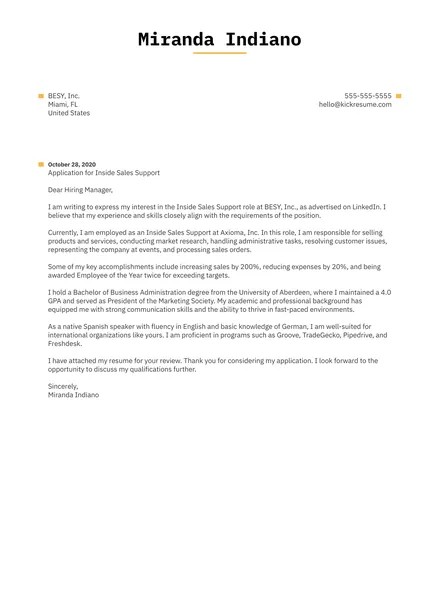
The presentation of your cover letter is just as important as the content. A well-formatted cover letter is easy to read and makes a positive impression on the hiring manager. A cluttered or poorly formatted letter can detract from the quality of your writing and can make it difficult for the reader to absorb the information. Use a professional-looking font, such as Times New Roman or Arial, and maintain a consistent font size throughout the document. Use appropriate spacing between paragraphs and sections to create visual separation. Ensure your contact information is clearly displayed at the top of the letter, including your name, phone number, email address, and any relevant links (e.g., LinkedIn profile). If you’re sending your cover letter as an email, use a clear and concise subject line, such as “Retail Sales Associate Application – Your Name.” Keep the overall length of your cover letter concise. Ideally, it should be no more than one page long. Adhering to these formatting guidelines ensures that your cover letter is professional, easy to read, and visually appealing, maximizing your chances of making a positive impression.
Keep it Concise and Readable
Hiring managers are busy, so it’s essential to keep your cover letter concise and easy to read. Avoid long, rambling paragraphs. Instead, break up your text into short, well-structured paragraphs that are easy to scan. Use clear and concise language, and avoid unnecessary jargon or overly complex sentences. Stick to the point and focus on the most relevant information. Get straight to the key points, and make sure your writing flows smoothly. Use bullet points to highlight key skills or accomplishments. Keep your paragraphs short and to the point. Edit your letter carefully, removing any unnecessary words or phrases. If you’re unsure whether a sentence is necessary, it’s best to remove it. Remember, the goal is to make your cover letter easy to read and to convey your key qualifications as quickly as possible.
Proofread Carefully

Proofreading is an essential step in the cover letter writing process. Errors, typos, and grammatical mistakes can undermine your credibility and create a negative impression. Thoroughly proofread your cover letter multiple times. Check for spelling errors, grammatical errors, punctuation mistakes, and inconsistencies in formatting. Read your cover letter aloud to catch any awkward phrasing or unclear sentences. Consider using a grammar and spell-checking tool to help you identify any potential errors. Ask a friend, family member, or career counselor to review your cover letter for you. Fresh eyes can often spot errors you may have missed. Pay attention to the details, such as the company name, the job title, and the name of the hiring manager. Even small mistakes can create a negative impression. A well-proofread cover letter demonstrates your attention to detail and your commitment to presenting yourself in a professional manner.
Concluding with a Strong Call to Action
The conclusion of your cover letter is your final chance to make a lasting impression. End with a strong call to action, expressing your enthusiasm for the position and indicating your next steps. Reiterate your interest in the role and why you believe you are a good fit for the company. Thank the hiring manager for their time and consideration. Make it clear that you’re eager to learn more about the opportunity. State your availability for an interview and provide your contact information again. Avoid generic phrases such as “Thank you for your consideration.” Instead, personalize your closing by reiterating your excitement about the opportunity or mentioning something specific you learned about the company during your research. A strong call to action should be clear, concise, and leave the hiring manager with a positive impression. This can be the determining factor for getting an interview.