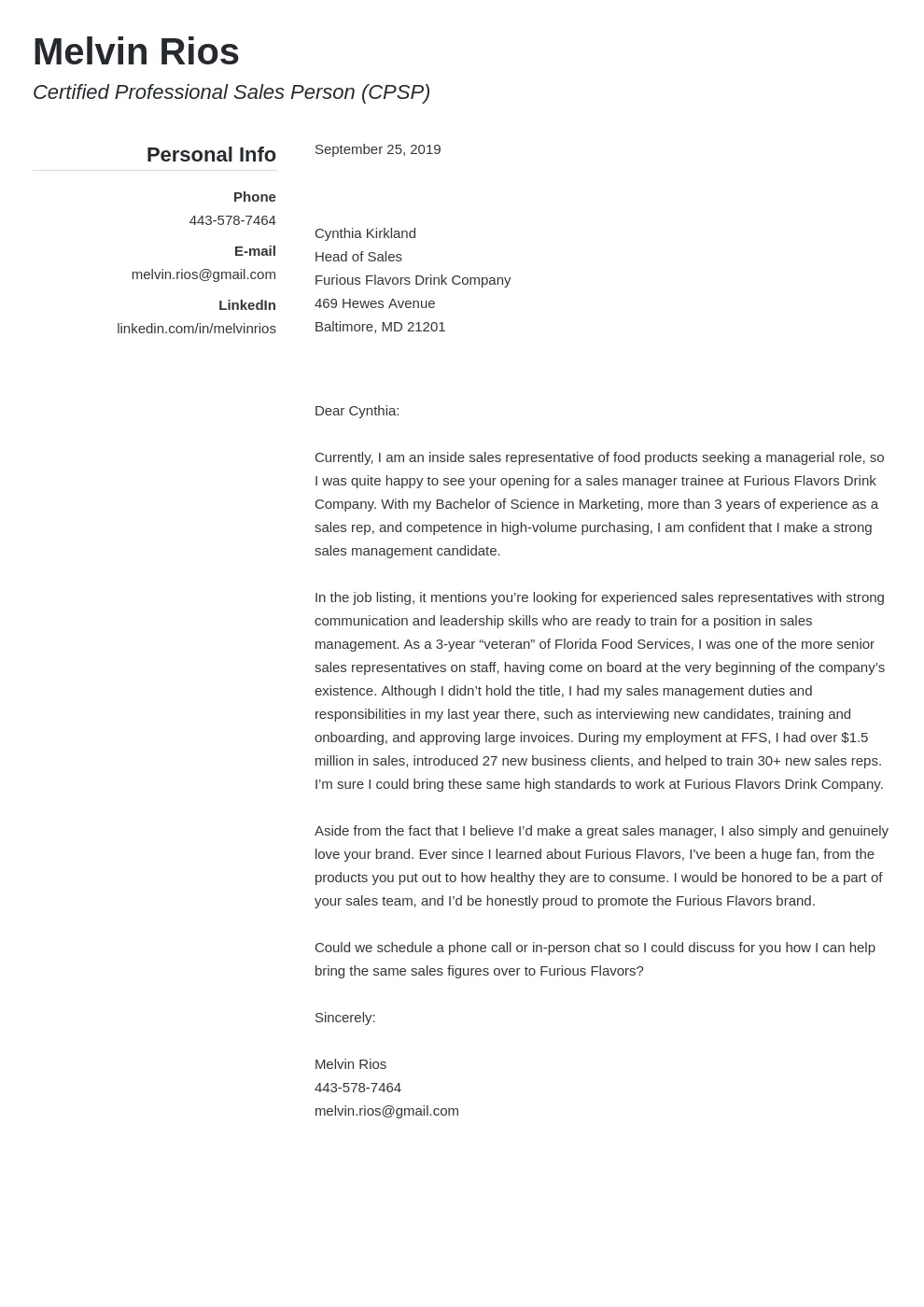
Why Your Sales Cover Letter Matters
In the competitive world of sales, a compelling cover letter is your first opportunity to make a strong impression. It’s not just a formality; it’s your chance to showcase your personality, enthusiasm, and unique value proposition. Think of it as a concise sales pitch directed at the hiring manager. A well-crafted cover letter immediately sets you apart from other applicants by demonstrating your understanding of the role and your genuine interest in the company. It allows you to go beyond your resume, providing context and highlighting specific achievements and skills that align with the job requirements. Ignoring the cover letter is a missed opportunity, and a poorly written one can be detrimental. It’s often the determining factor in whether your application lands in the ‘yes’ or ’no’ pile. Make sure to make a good first impression.
Highlighting Your Sales Achievements
Your cover letter is the perfect platform to spotlight your sales achievements. Instead of simply listing your responsibilities, focus on concrete results and quantify your successes. Did you exceed sales targets? Were you recognized for outstanding performance? Did you acquire new clients or increase revenue within a specific timeframe? These are the types of achievements that instantly grab a hiring manager’s attention. When describing your accomplishments, always provide specific details. For instance, instead of saying ‘Increased sales,’ state ‘Increased sales by 20% in Q3 2023, surpassing the quarterly target by 10%.’. This level of detail not only demonstrates your success but also proves your ability to analyze and understand sales performance metrics. It’s not just about what you did, but the impact you had on the business. Use your sales cover letter to show the recruiter what you are made of.
Quantify Your Successes (Show, Don’t Tell)

One of the most effective ways to make your cover letter stand out is by quantifying your successes. This involves using numbers, percentages, and specific figures to illustrate your impact in previous sales roles. Avoid vague statements like ‘achieved high sales numbers.’ Instead, provide measurable data, such as ‘Consistently exceeded sales quotas by an average of 15% each quarter.’ Or ‘Generated $500,000 in revenue within the first year in a new territory’. Quantifying your achievements transforms generic claims into compelling evidence of your abilities. Consider the impact you had in previous roles. Did you increase the customer base, reduce customer churn, or improve the sales cycle? Each of these points can be quantified and presented in your cover letter. This strategy demonstrates your analytical skills, your understanding of sales metrics, and your ability to drive tangible results. It’s about showing the recruiter what you’ve accomplished, rather than just telling them.
Using Action Verbs
Action verbs are the building blocks of a dynamic and engaging cover letter. They inject energy into your writing and vividly portray your accomplishments and skills. Instead of passive phrases, use strong action verbs to describe your contributions. Begin sentences with words like ‘achieved,’ ’exceeded,’ ’negotiated,’ ‘developed,’ ’launched,’ ‘managed,’ ‘persuaded,’ and ‘closed.’ These verbs immediately grab the reader’s attention and make your achievements more compelling. They demonstrate your proactive approach and your ability to take initiative. For example, instead of ‘responsible for managing client relationships,’ write ‘Managed and cultivated relationships with key clients, resulting in a 25% increase in repeat business.’ The action verb ‘managed’ conveys activity, while ‘cultivated’ hints at relationship-building skills. Incorporate a variety of action verbs throughout your letter to avoid monotony and keep the hiring manager engaged. Using the right verbs will help you sell yourself to the recruiter.
Tailoring Your Letter for Each Job
Generic cover letters rarely make a lasting impression. To truly stand out, you must tailor each cover letter to the specific job and the company. Review the job description carefully, noting the key skills, experience, and qualifications the employer is seeking. Then, customize your letter to highlight the relevant aspects of your background. Address the specific requirements of the role and demonstrate how your skills align with the company’s needs. Research the company’s mission, values, and recent achievements to show that you understand their business and are genuinely interested in working there. Mentioning specific projects, products, or initiatives that resonate with the company is a great way to demonstrate your interest. The goal is to convince the hiring manager that you are not just sending a generic application, but that you have thoughtfully considered the role and the company and that you’re the best fit for the sales position.
Showcase Your Sales Skills

Your sales cover letter is the perfect place to showcase your sales skills. Highlight the skills most relevant to the job. Consider these key areas; communication skills, active listening, persuasion, negotiation, closing deals, and customer relationship management. Provide examples of how you have used these skills to achieve success in the past. Did you excel at building rapport with clients? Did you use persuasive techniques to close a major deal? Did you successfully negotiate favorable terms? The more specific you are, the more credible your claims will be. Think of your cover letter as a sales pitch for yourself. You are the product, and the hiring manager is your potential client. Use compelling language to demonstrate your skills and persuade them that you are the ideal candidate. Remember, the objective is to convince the hiring manager that you are the best person to fill the role. Showing your abilities and sales skills, will help you make a good impression.
Focusing on the Employer’s Needs
While it’s important to highlight your achievements, always remember to focus on the employer’s needs. Instead of simply listing your past successes, explain how your skills and experience will benefit the company. The hiring manager wants to know what you can do for them, not just what you’ve done in the past. Frame your accomplishments in terms of the value you can bring to the role. Mention specific challenges the company faces and explain how you can help solve them. For example, if the job description emphasizes customer acquisition, highlight your experience in generating leads, closing deals, and building customer relationships. If the company is looking to increase market share, demonstrate your ability to identify new opportunities and develop effective sales strategies. By shifting the focus from yourself to the employer’s needs, you show that you understand their business goals and are committed to contributing to their success. Your goal is to make the hiring manager’s job easier by demonstrating how you can solve their problems and help them achieve their objectives.
Use the Right Tone
The tone of your sales cover letter should be professional, enthusiastic, and confident. It’s a delicate balance; you want to demonstrate your skills and achievements without sounding arrogant. Use a positive and upbeat tone that reflects your passion for sales. Avoid sounding overly formal or stiff, but always maintain a professional demeanor. Tailor your tone to align with the company’s culture. Research the company to get a feel for their communication style, and mirror that style in your letter. A friendly, approachable tone is often appropriate for sales roles, but always prioritize professionalism. Remember that your cover letter is a reflection of your personality and communication style. Use it to showcase your ability to connect with others, build rapport, and convey your enthusiasm for the opportunity. The right tone will help you make a positive impression and position yourself as a valuable asset.
Proofread Your Sales Cover Letter

Proofreading is a critical step that you should never skip. Before submitting your sales cover letter, carefully review it for any grammatical errors, spelling mistakes, or typos. These errors can undermine your credibility and make you look unprofessional. Take your time and read the letter slowly. Use a grammar checker and spell checker, but don’t rely on them completely. Have a friend, colleague, or mentor review your letter as well. A fresh pair of eyes can often catch mistakes that you might miss. Ensure that the formatting is consistent and that the layout is visually appealing. Check that your contact information is accurate and up-to-date. Proofreading isn’t just about correcting errors; it’s about demonstrating attention to detail and a commitment to quality. It’s also about leaving a good impression on the person reading the sales cover letter. By taking the time to proofread your cover letter, you show that you are meticulous, professional, and dedicated to presenting your best self. This attention to detail can make all the difference in securing an interview and landing the job.