Crafting a Winning Social Work Cover Letter
A well-crafted social work cover letter is your first opportunity to make a strong impression on a potential employer. It’s more than just a formality; it’s a crucial tool for showcasing your skills, experience, and passion for the field. Unlike a resume, which provides a factual overview, a cover letter allows you to tell your story, explaining why you’re the perfect fit for the specific social work job you’re applying for. Therefore, investing time and effort into writing a compelling cover letter is essential for increasing your chances of landing an interview and ultimately, securing your dream social work position. The aim of the cover letter is to get the reader’s attention and encourage them to review your resume.
Highlighting Your Skills and Experience
Your social work cover letter should explicitly highlight the skills and experiences that align with the job description. Begin by carefully reviewing the job posting and identifying the key requirements and qualifications. Then, use your cover letter to demonstrate how your skills and experiences meet those specific needs. Don’t just list your skills; provide concrete examples of how you’ve utilized them in the past. For example, instead of simply stating that you have “excellent communication skills,” describe a situation where you effectively communicated with clients, colleagues, or other stakeholders to achieve a positive outcome. Make sure to address the requirements of the job in the same order they are mentioned on the job post. This demonstrates that you pay attention to detail.
Quantifying Your Achievements

Whenever possible, quantify your achievements to demonstrate the impact of your work. Use numbers, statistics, and specific data to illustrate your accomplishments. For example, instead of saying you “helped many clients,” state that you “assisted 50+ clients in securing housing within six months.” Quantifiable achievements add credibility to your claims and provide concrete evidence of your ability to deliver results. This helps to show your accomplishments and prove to the employer that you are a valuable asset to their organization. It provides an objective measure of your performance and showcases your ability to make a difference in a tangible way.
Tailoring Your Letter to the Job
Generic cover letters are easily recognizable and often discarded. To make a strong impression, tailor each cover letter to the specific job and organization. This means carefully reviewing the job description and addressing the specific requirements and qualifications outlined. Research the organization’s mission, values, and culture to demonstrate your genuine interest and understanding. Customize your letter to reflect your understanding of their work and explain how your skills and experience align with their needs. The more personalized the letter, the greater the impact. This shows that you have taken the time to learn about the position and the organization and that you are truly interested in the opportunity.
Researching the Organization
Before you start writing, conduct thorough research on the organization. Visit their website, read their mission statement, and explore their recent projects or initiatives. Understanding the organization’s values, goals, and the population they serve allows you to tailor your cover letter to resonate with their specific needs. This demonstrates your commitment to the role and your understanding of their unique context. Mention specific programs, services, or initiatives that align with your interests or experience. This level of preparation shows the hiring manager that you are serious about the position.
Demonstrating Passion and Commitment

Social work is a field driven by passion, and your cover letter should reflect your genuine commitment to helping others. Share your motivations for pursuing social work and what inspires you to make a difference in people’s lives. Explain why you are drawn to this particular role or organization. Convey your enthusiasm for the work, the population they serve, and the opportunity to contribute to their mission. This passion will demonstrate your commitment and create a strong connection with the hiring manager. Highlight any personal experiences, volunteer work, or academic pursuits that fueled your desire to become a social worker.
Showcasing Your Understanding of Social Work Principles
Demonstrate your understanding of core social work principles, such as empathy, cultural competence, ethical practice, and client empowerment. Incorporate these principles into your examples and explanations. For example, you can share how you have approached a challenging client situation with empathy or how you ensured cultural sensitivity in your interactions. Mention any specific frameworks or theoretical approaches you are familiar with, such as strengths-based practice or trauma-informed care. Highlighting your knowledge of these principles indicates your understanding of the field’s ethical and professional standards. This will help you stand out among the other applicants.
Formatting and Structure for Impact
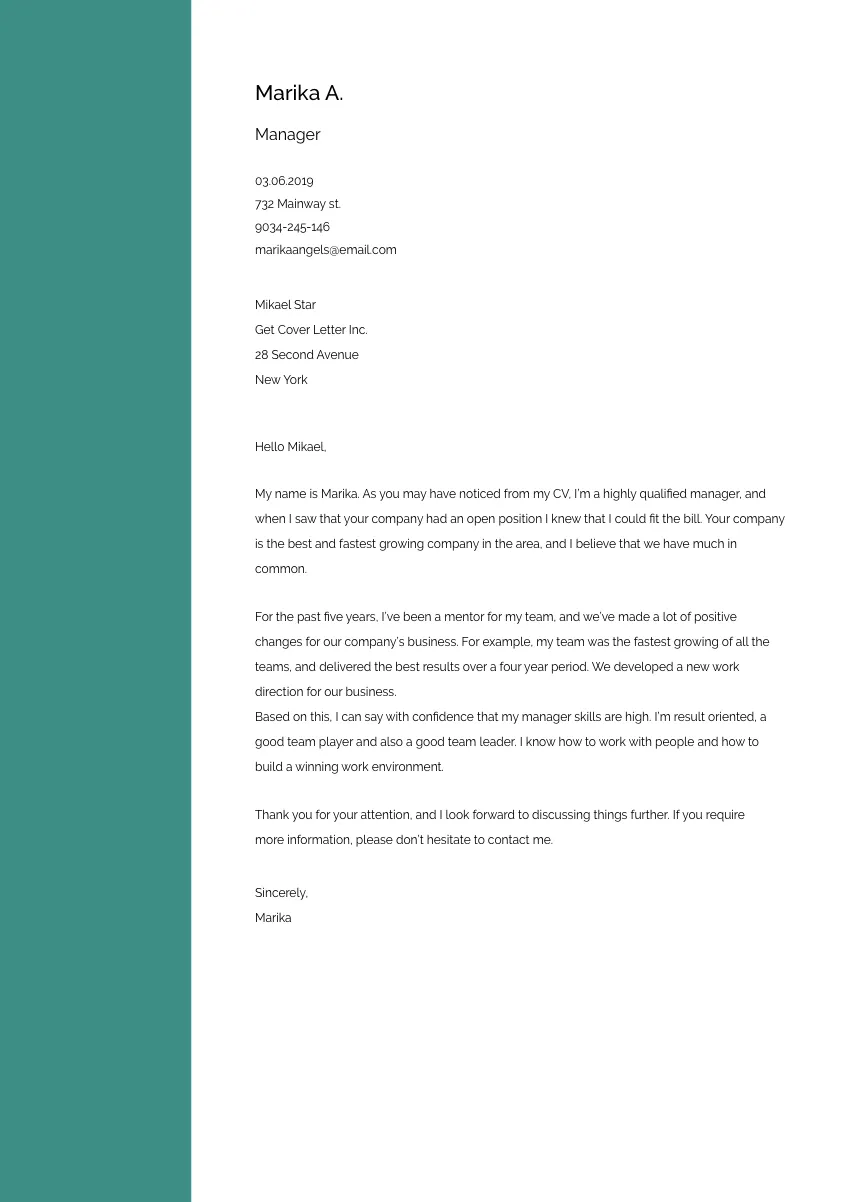
The formatting and structure of your cover letter play a significant role in its overall impact. Use a professional and easy-to-read format with clear headings, concise paragraphs, and ample white space. Keep the letter to one page, focusing on the most relevant information. Use a professional font and ensure consistent formatting throughout. Consider using bullet points or numbered lists to highlight key skills or achievements. Organize your letter with a clear introduction, body paragraphs that showcase your skills and experience, and a strong conclusion with a call to action. A well-structured cover letter is easier to read and more likely to engage the reader.
Using a Professional Tone

Maintain a professional and respectful tone throughout your cover letter. Avoid slang, jargon, or overly casual language. Use formal language and proper grammar and punctuation. Proofread your letter carefully to eliminate any errors. Address the hiring manager by name, if possible, and use a polite and courteous salutation and closing. Be positive and enthusiastic in your writing, but avoid exaggeration or making unsubstantiated claims. Projecting a professional tone demonstrates your respect for the organization and the position, leaving a positive impression on the hiring manager.
Proofreading and Editing
Proofreading and editing are essential steps in the cover letter writing process. Errors can detract from your professionalism and make a negative impression. Carefully proofread your cover letter for any spelling, grammar, or punctuation errors. Read the letter aloud to identify any awkward phrasing or unclear sentences. Ask a friend, family member, or career counselor to review your letter for feedback. Ensure the content is clear, concise, and accurately reflects your skills and experience. A polished and error-free cover letter demonstrates attention to detail, a crucial skill in social work.
Ensuring Accuracy and Clarity
Accuracy and clarity are paramount in a cover letter. Ensure all information, including dates, job titles, and contact details, is correct. Double-check the spelling of the organization’s name and the hiring manager’s name. Avoid vague or ambiguous language. Use clear and concise sentences to communicate your message effectively. Make sure your letter is easy to read and understand. The easier it is to read, the higher the chance of the hiring manager getting your message. If you are applying for more than one job, be sure to customize it to match the different companies and different positions.
Making a Strong First Impression

Your cover letter is the first impression you make on a potential employer, so make it count. Aim to capture the reader’s attention from the start with a compelling introduction. Highlight your most relevant skills and experiences, and demonstrate your passion for social work. Tailor your letter to the specific job and organization, showcasing your understanding of their needs and values. Use a professional and easy-to-read format, and proofread your letter carefully to eliminate any errors. A well-crafted cover letter significantly increases your chances of landing an interview and securing your dream job.
Opening with Impact
Your introduction should immediately grab the reader’s attention and set the tone for the rest of your letter. Avoid generic openings such as “I am writing to apply for the position of…” Instead, start with a strong statement that highlights your most relevant skills or experience or a compelling reason why you are interested in the position. Mention a specific achievement or project that demonstrates your abilities. Express your enthusiasm for the opportunity and the organization. By opening with impact, you capture the reader’s attention and motivate them to continue reading your cover letter.
Closing with a Call to Action
End your cover letter with a strong call to action. Clearly state your interest in the position and your availability for an interview. Thank the hiring manager for their time and consideration. Reiterate your enthusiasm for the opportunity and express your confidence in your ability to make a positive contribution to the organization. Provide your contact information and encourage the hiring manager to reach out to you. A well-crafted call to action helps to move the application process forward and increases your chances of getting hired.