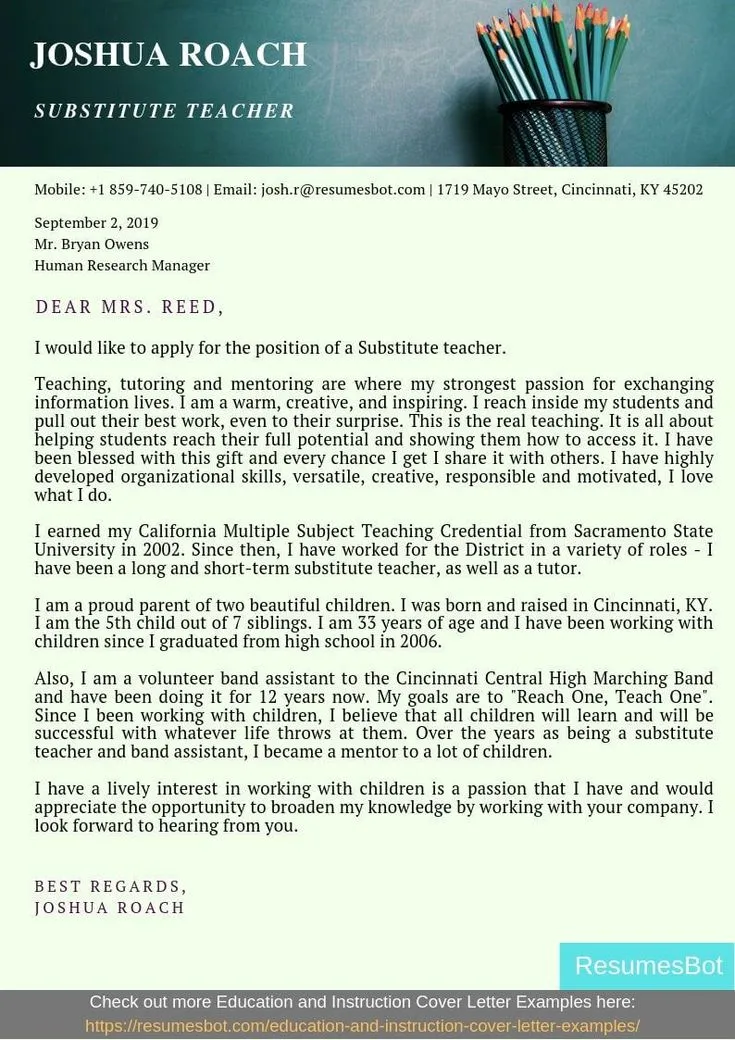
Understanding the Importance of a Cover Letter
A cover letter is your first introduction to a potential employer, making it a crucial element in your job application. For substitute teachers, it’s an opportunity to showcase your skills, experience, and enthusiasm beyond what’s listed on your resume. A well-crafted cover letter can significantly increase your chances of securing an interview and ultimately, a substitute teaching position. It allows you to demonstrate your understanding of the school’s needs and how you can meet them. Moreover, it provides a platform to explain any gaps in your employment history or unusual circumstances, presenting you as a well-rounded and thoughtful candidate. A compelling cover letter showcases your personality, making you more memorable to the hiring committee. Therefore, investing time in crafting a personalized and professional cover letter is paramount for aspiring substitute teachers. Use it to highlight your unique qualities and make a strong first impression.
Highlighting Relevant Skills for Substitute Teaching
Substitute teaching requires a unique blend of skills. It’s not just about filling in; it’s about stepping into a classroom and maintaining a positive and productive learning environment. Focus on skills that demonstrate your ability to manage a classroom effectively, communicate clearly, and adapt to different teaching styles and student needs. Consider highlighting specific experiences where you successfully handled challenging situations, managed diverse groups of students, or implemented effective lesson plans. Quantify your achievements whenever possible, such as the number of students you’ve worked with or the positive feedback you’ve received from teachers or administrators. Be specific and provide concrete examples to illustrate your abilities. This approach will make your cover letter more persuasive and demonstrate that you’re a strong candidate. Always tailor your skills to match the specific requirements and values of the school district or individual school you’re applying to.
Transferable Skills to Showcase

Many skills gained in other roles are directly transferable to substitute teaching. These skills are not always obvious. For example, previous customer service experience can translate to effective communication with parents and school staff. Experience in leadership roles, such as team leadership or project management, demonstrates your ability to take charge and manage a classroom. Even volunteer work or extracurricular activities can highlight skills like organization, time management, and problem-solving. When writing your cover letter, take time to identify all the skills you have that are useful to substitute teaching. Then, give examples of how you used those skills in previous jobs or roles. This way, you show the hiring manager how valuable your experience can be. This approach can help substitute teachers who are new to the profession show they have the tools needed to succeed.
Classroom Management Expertise
Classroom management is critical for any substitute teacher’s success. Highlight your experience and strategies for maintaining order, engaging students, and creating a positive learning environment. If you have experience with specific classroom management techniques, such as positive reinforcement, restorative practices, or behavior modification strategies, be sure to mention them. Describe how you handle disruptive behavior, encourage student participation, and ensure all students feel safe and respected. Show the hiring committee you can handle various situations, from managing transitions between activities to de-escalating conflicts. Emphasize your ability to adapt your management style to suit the specific needs of the students and the classroom setting. Give specific examples of how you’ve handled situations in the past, using evidence to support your claims. Illustrating your classroom management expertise can set you apart from other candidates.
Communication and Interpersonal Abilities
Communication is key to being a successful substitute teacher. You must communicate effectively with students, teachers, parents, and school administrators. Showcase your strong verbal and written communication skills, highlighting your ability to explain complex concepts clearly and concisely, listen actively, and adapt your communication style to different audiences. Give examples of successful communication in various situations, like communicating with parents about a student’s behavior, or working with a special education teacher. Describe how you handle difficult conversations or conflicts. Your ability to establish rapport with students and create a positive and respectful classroom environment is crucial. Demonstrate your interpersonal skills by showcasing your ability to collaborate with colleagues, show empathy, and build trust with students. Explain how these communication skills contribute to a positive learning atmosphere.
Structuring Your Substitute Teacher Cover Letter

The structure of your cover letter is just as important as its content. A well-organized letter is easy to read and conveys professionalism. Typically, a cover letter consists of several key sections: a header, a professional greeting, an introductory paragraph that explains your interest and the position, body paragraphs that highlight your relevant skills and experiences, and a closing paragraph with a call to action. Each section should flow logically into the next, creating a cohesive narrative that showcases your qualifications. Using clear and concise language will help you make your points effectively. Avoid jargon and clichés, and make sure your letter is tailored to the specific school or district you’re applying to. Also, a well-formatted cover letter will impress the hiring manager. Ensure the font is easy to read, and the spacing is consistent.
Header and Contact Information
Start with a professional header that includes your name, address, phone number, and email address. The header should be clear and easy to read, usually placed at the top of the document. If you know the name of the hiring manager, include their name and title. If not, you can use a general title, such as ‘Hiring Manager’. The header should also include the date. Ensure your contact information is accurate and up-to-date, as this is how the school will reach you to schedule an interview. Double-check your email address to make sure it is professional and appropriate for a job application. It is helpful to have your address and phone number visible to make it easy to contact you.
Professional Greeting
The greeting sets the tone for your cover letter. Use a formal and professional greeting, such as ‘Dear Mr./Ms./Mx. [Last Name]’. If you don’t know the hiring manager’s name, use a general greeting like ‘Dear Hiring Manager’ or ‘Dear Substitute Teaching Coordinator’. Avoid informal greetings like ‘Hi’ or ‘Hello’. Make sure you spell the hiring manager’s name correctly, as this shows attention to detail and respect. If you are unsure about the name, it’s always best to do a little research, maybe checking the school’s website or calling the school office to inquire. A well-chosen greeting shows respect and sets a professional tone for your application.
Body Paragraph 1 Why Substitute Teaching

Your first body paragraph should clearly state your purpose for writing, explaining why you are interested in a substitute teaching position at that particular school or district. Express your enthusiasm for teaching and your desire to work with students. If you have a specific teaching philosophy or approach, briefly mention it here. Show your knowledge of the school’s mission and values and explain how you can contribute to their goals. Mention what attracts you to the school, such as its focus on a specific subject, its commitment to student success, or its positive reputation. Make sure that your first paragraph grabs the reader’s attention and creates a positive impression. Explain why you chose substitute teaching as a career path, perhaps mentioning your love of working with children, your passion for education, or your interest in contributing to the community. Conclude this paragraph with a clear statement about your interest in the position.
Body Paragraph 2 Highlighting Your Skills
In your second body paragraph, highlight the skills and experiences that make you a strong candidate. Refer to the job description and focus on the skills and qualifications the school is looking for. Provide specific examples from your past experiences that showcase your ability to meet these requirements. Quantify your achievements whenever possible. For example, you might mention how you improved student engagement, or the positive feedback you received from teachers or administrators. Use action verbs to describe your accomplishments, such as ‘managed’, ‘implemented’, ‘collaborated’, or ‘developed’. This paragraph is where you convince the hiring manager that you are the right person for the job. Tailor your skills to match the specific needs of the school. If the job description mentions a focus on technology, for example, you can show how you use technology effectively in the classroom. This is an opportunity to make a strong connection with the hiring committee.
Body Paragraph 3 Demonstrating Your Enthusiasm
The third body paragraph is the place to demonstrate your genuine enthusiasm for teaching and your eagerness to contribute to the school’s mission. Express your passion for working with students and your commitment to creating a positive learning environment. Mention any specific programs or initiatives at the school that interest you. For example, you could say how you admire the school’s commitment to inclusive education. Show how you are committed to creating a positive learning environment. Briefly mention how you will maintain a positive classroom climate. Mention how you plan to communicate effectively with parents and staff. Demonstrating your enthusiasm can make you a more memorable candidate, making the hiring manager more eager to interview you. Make sure your enthusiasm is genuine and reflect your passion for teaching. Conclude the paragraph by expressing your eagerness to learn more about the opportunity and contribute to the school community.
Closing and Call to Action

The closing paragraph should reiterate your interest in the position and include a call to action. Thank the hiring manager for their time and consideration. State your availability for an interview and provide your contact information again. Express your enthusiasm for discussing your qualifications further. Use a professional closing, such as ‘Sincerely’ or ‘Best regards’. Avoid overly casual phrases like ‘Thanks’ or ‘See you soon’. Proofread your closing to ensure there are no errors, then sign your name (if you are sending a physical letter). Make sure your contact information is accurate and includes a phone number and an email address. This paragraph should leave the hiring manager with a clear understanding of your interest and the next steps. Keep the tone enthusiastic and professional to leave a positive impression.
Tailoring Your Cover Letter to Specific Schools
Tailoring your cover letter to each school is essential. Generic letters will not be as effective as those that demonstrate a genuine interest in the specific school and its values. Customize your letter for each application. Research the school, its mission, its programs, and its values. Incorporate this information into your letter to show your genuine interest. Mention the specific grade levels or subjects you’re interested in teaching. Highlight any relevant experience or skills related to the school’s focus. Demonstrate your knowledge of the school’s programs. This can make a difference in your application. Show you are not just sending out the same letter to every school but showing genuine interest.
Researching the School’s Values and Needs
Before you start writing, research the school’s values, mission, and any specific needs. This information helps you tailor your cover letter to the school’s priorities. Visit the school’s website to learn about its mission, vision, and values. Review any recent news or press releases to understand the school’s current initiatives and challenges. If possible, talk to current or former teachers or staff members to learn more about the school culture. Identify the specific needs of the school. This information can be obtained by reviewing the job description carefully. The job description will likely mention any specific skills, experiences, or qualifications the school is looking for in a substitute teacher. Mention your interest in the school’s values. This will help you show the hiring committee that you share their goals. Incorporate this knowledge into your cover letter. Show the hiring committee that you understand their values and how you can meet their needs.
Customizing Your Letter for Different Grade Levels

When applying for substitute teaching positions, consider customizing your cover letter to reflect the specific grade level you’re interested in working with. Adapt your language, examples, and skills to match the age group. For elementary school positions, highlight your patience, enthusiasm, and ability to create a fun and engaging learning environment. Mention experience working with young children, such as your experience with after-school programs or volunteer work. For middle school positions, emphasize your ability to manage a classroom, communicate effectively, and support students through their social and emotional development. Highlight any experience working with this age group, such as coaching or tutoring. For high school positions, focus on your subject matter expertise and your ability to connect with older students. Mention any experience teaching specific subjects, or working with this age group. This will show the hiring manager you are a suitable candidate for the position. Customizing your cover letter shows the hiring committee you are serious about the position and have what it takes to be a substitute teacher.
Addressing Specific Requirements
Carefully review the job description to identify any specific requirements or qualifications. Address these requirements directly in your cover letter. For example, if the job description specifies a need for experience with a specific technology or curriculum, highlight your relevant experience. Mention any certifications or licenses required for the position. If there are specific skills or qualifications, show you have them. If the job description mentions experience with a specific type of student, like special education students, highlight any relevant experience or training. Show how you will meet the needs. For example, show that you are patient, or you can adapt your teaching style to suit various student needs. Customize your cover letter to match each job description. Use the same keywords and phrases from the job description to show that you are a good fit. This will increase your chances of getting an interview and getting the job.
Proofreading and Formatting Best Practices
Proofreading and formatting your cover letter is essential to show attention to detail and professionalism. Errors can damage your application, so take your time to review the document carefully. Use grammar-checking software. This will help you catch any spelling or grammar mistakes. Ask a friend or family member to proofread your cover letter. A fresh pair of eyes can catch errors that you may have missed. Ensure your letter is well-formatted and easy to read. Use a professional font and spacing, and break up long paragraphs into shorter ones. Make sure your formatting is consistent throughout the document. Use clear and concise language to avoid confusion. The cover letter is your first impression on a hiring manager.
Grammar and Spelling Check

Check for grammar and spelling errors. Use grammar-checking software, such as Grammarly, to identify errors. Double-check your work for common errors, such as subject-verb agreement, punctuation, and capitalization. Pay close attention to the spelling of names, job titles, and the school’s name. Misspelled words can undermine your professionalism and make you appear careless. If you are unsure of the spelling of a word, look it up in a dictionary. Consider asking a friend or family member to proofread your cover letter. A second pair of eyes can catch errors that you may have missed. Proofread your letter several times, and read it aloud to catch any mistakes. Pay attention to tone. Make sure the letter’s tone is appropriate and professional. A grammar and spelling check can help you make a good impression and ensure your application is taken seriously.
Formatting for Readability
Formatting your cover letter for readability is just as important as the content. A well-formatted letter is easy to read and makes a good impression. Use a professional font, such as Times New Roman, Arial, or Calibri, and keep the font size between 11 and 12 points. Use consistent spacing throughout the document. Use single spacing within paragraphs and double spacing between paragraphs. Break up long blocks of text into shorter paragraphs to make the letter easier to read. Use bullet points or numbered lists to highlight your skills and accomplishments. Avoid using excessive formatting, such as bolding or underlining, as it can make your letter look cluttered. Keep the margins consistent, typically one inch on all sides. Make sure the format is consistent. Ensure the header, greeting, body paragraphs, and closing are clearly separated. A well-formatted cover letter will make your application stand out, making the hiring manager more likely to read it and consider your application.
Review and Revision
After you’ve written your cover letter, review and revise it multiple times. Put the letter away for a day or two and then review it with a fresh perspective. Read your cover letter aloud. This will help you catch any awkward phrasing or sentences that don’t flow smoothly. Get feedback from a trusted friend or career advisor. Ask them to review your letter and provide feedback on the content, formatting, and overall impact. Make sure your cover letter is tailored to each job application. Use the same keywords and phrases as the job description. Make the needed revisions. Ensure that all revisions are consistent. Proofread your final draft to check for any errors. Reviewing and revising your cover letter is a critical step in the job application process. Taking the time to refine your letter can greatly increase your chances of securing an interview. A well-written and polished cover letter shows that you are serious about the position.