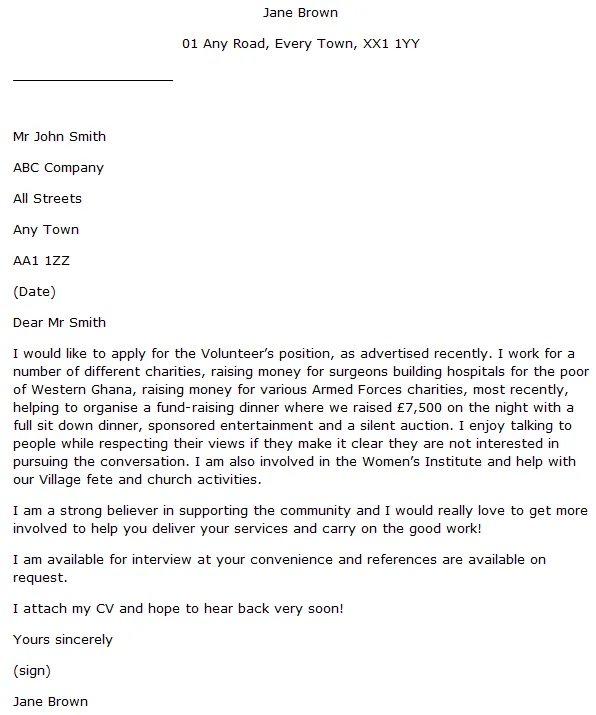
What is a Volunteer Cover Letter?
A volunteer cover letter is a formal document you submit along with your volunteer application or resume, expressing your interest in a specific volunteer opportunity. It serves as an introduction, showcasing your skills, experience, and passion for the cause. Unlike a resume, which provides a factual overview of your qualifications, a cover letter allows you to articulate your enthusiasm, explain why you are a good fit, and highlight how your contributions can benefit the organization. It is your chance to make a positive first impression and demonstrate your genuine interest in making a difference through volunteering.
Why is a Volunteer Cover Letter Important?
A well-crafted volunteer cover letter is crucial for several reasons. Firstly, it sets you apart from other applicants, especially in competitive volunteer roles where many candidates may have similar qualifications. It provides an opportunity to personalize your application and show the organization why you are particularly interested in their mission. Secondly, it allows you to expand on your resume, providing context and examples of your skills and experiences. You can highlight how your past experiences align with the volunteer opportunity’s requirements and the organization’s values. Thirdly, it demonstrates your professionalism and attention to detail, which are essential qualities for any volunteer role.
Key Components of a Volunteer Cover Letter

A strong volunteer cover letter has several key components that contribute to its overall effectiveness. These elements work together to present you as a qualified and enthusiastic candidate. Understanding these components will help you create a compelling cover letter that captures the attention of the organization and increases your chances of being selected for the volunteer role.
Header Information
The header of your volunteer cover letter should include your contact information. This ensures that the organization can easily reach you if they are interested in moving forward with your application. Including your name, address, phone number, and email address is standard practice for creating a professional header.
Your Contact Information
At the top of your cover letter, include your full name, address, phone number, and email address. Ensure that the email address you provide is professional and appropriate. This information helps the organization reach you quickly and efficiently.
Date

Below your contact information, include the current date. This helps the organization keep track of when you submitted your application and creates a sense of timeliness and organization.
Recipient’s Contact Information
Include the recipient’s name, title, and organization’s address. If you know the hiring manager’s name, use it; otherwise, you can use a general salutation like ‘Dear Volunteer Coordinator.’
The Salutation
Start your cover letter with a formal salutation, such as ‘Dear Mr./Ms. [Last Name]’ if you know the recipient’s name. If you do not know the name, use ‘Dear Volunteer Coordinator’ or ‘To Whom It May Concern.’ This sets a professional tone from the start.
Body Paragraph 1: Expressing Interest and Purpose

In your first paragraph, clearly state the volunteer opportunity you are applying for and where you found the listing. Express your enthusiasm for the organization and its mission. Briefly mention why you are interested in volunteering and what motivates you to contribute your time and skills. This paragraph sets the stage for the rest of the letter and provides the reader with essential context.
Body Paragraph 2: Highlighting Relevant Skills and Experience
Use the second paragraph to highlight your relevant skills and experiences that align with the volunteer role’s requirements. Provide specific examples of how your skills and experiences demonstrate your ability to succeed in the role. Mention any relevant training, previous volunteer work, or professional experiences that make you a strong candidate. Quantify your accomplishments whenever possible to show your impact.
Body Paragraph 3: Demonstrating Passion and Commitment
In your third paragraph, express your passion for the organization’s mission and your commitment to volunteering. Explain why you are drawn to their cause and how you hope to contribute to their goals. Mention any personal connections or experiences that make you particularly passionate about the cause. Show that you are dedicated and eager to make a positive impact.
The Closing

The closing paragraph is a summary and call to action. Thank the reader for considering your application, reiterate your interest in the volunteer role, and express your eagerness to discuss your qualifications further. Provide your contact information again, making it easy for the organization to reach you.
Formal Closing and Signature
Conclude your cover letter with a formal closing such as ‘Sincerely,’ or ‘Yours truly,’ followed by your handwritten signature (if submitting a physical copy) and your typed full name.
Tips for Formatting Your Volunteer Cover Letter
Formatting your volunteer cover letter correctly is essential for making a professional and positive impression. Proper formatting improves readability and helps the organization quickly understand your qualifications and interest. Using a clear and organized format is critical for making sure your cover letter is seen as a professional document.
Font and Font Size

Choose a professional and easy-to-read font, such as Times New Roman, Arial, or Calibri. Use a font size of 11 or 12 points for the body of your letter. Ensure the font is consistent throughout the entire document to create a polished appearance. Choose a font that is clear and does not distract from the content.
Margins and Spacing
Set standard 1-inch margins on all sides of your cover letter. Use single spacing within paragraphs and double spacing between paragraphs. This formatting ensures that your letter is well-organized and easy to read. Proper spacing improves the letter’s visual appeal, making it easier for the reader to absorb the information.
Proofreading and Editing
Proofread your cover letter carefully for any typos, grammatical errors, or spelling mistakes. Have someone else review your letter as well, as a fresh pair of eyes can often catch errors you may have missed. A well-proofread cover letter demonstrates your attention to detail and professionalism.
Tailoring Your Cover Letter to the Opportunity

Customizing your cover letter for each volunteer opportunity is crucial for demonstrating genuine interest and relevance. Tailoring your letter shows the organization that you have taken the time to understand their mission and the specific requirements of the role. Generic letters are less likely to make a positive impression.
Researching the Organization
Before writing your cover letter, research the organization. Visit their website, read their mission statement, and understand their values and goals. This knowledge will help you tailor your letter to reflect your understanding of their work and show how your skills and experience align with their needs. Researching the organization will show that you care and you are prepared to perform.
Identifying Key Requirements
Carefully review the volunteer opportunity description and identify the key requirements and qualifications. Make a list of the skills, experiences, and personal qualities the organization is seeking. Use this list to tailor your cover letter and highlight the relevant information. Focus on addressing the key needs of the organization.
Highlighting Relevant Skills and Experience

In your cover letter, highlight the skills and experiences that directly relate to the volunteer role. Use specific examples to show how you have demonstrated these skills in the past. Quantify your accomplishments whenever possible to provide concrete evidence of your abilities. This approach makes your letter more persuasive and impactful.
Common Mistakes to Avoid
Avoiding common mistakes can significantly improve the quality of your volunteer cover letter and increase your chances of success. Be aware of these common pitfalls and take steps to prevent them. This can help you create a cover letter that showcases your strengths and enthusiasm.
Generic Cover Letters
Avoid using a generic cover letter that is not tailored to the specific volunteer opportunity. A generic letter shows that you have not taken the time to understand the organization or the role’s requirements. Customize your cover letter for each application by highlighting relevant skills and experiences and demonstrating your understanding of the organization’s mission.
Typos and Grammatical Errors
Always proofread your cover letter carefully to eliminate typos and grammatical errors. Mistakes can detract from your credibility and make a negative impression. Use spell-check and grammar-check tools, and ask someone else to review your letter for errors before submitting it. Proofreading is an easy way to improve your application.
Not Proofreading Your Letter
Failing to proofread your cover letter is a common mistake that can easily be avoided. Take the time to review your letter for any errors in spelling, grammar, and punctuation. A polished cover letter shows that you are attentive to detail and committed to presenting yourself professionally. Proofreading is critical and can make the difference between getting a volunteer opportunity or not.
Volunteer Cover Letter Templates and Examples
Using templates and examples can help you create a well-structured and effective volunteer cover letter. These resources provide a starting point and guidance for formatting, content, and tone. They can also help you tailor your letter to different types of volunteer roles. Finding and using a template is a great way to start.
Template 1: General Volunteer Position
This template is suitable for general volunteer positions where specific skills are not required. It focuses on expressing your interest in the organization and highlighting your willingness to contribute. It should include details about your general skills. Customize the template to reflect your skills and experiences. Modify the general template so it matches the position.
Template 2: Specific Skill-Based Volunteer Role
Use this template when applying for a volunteer position that requires specific skills, such as writing, social media management, or event planning. In this template, emphasize how your skills and experience align with the job requirements and provide specific examples of your past accomplishments. Use it when the listing has specific skills requirements.
Template 3: Student Volunteer Application
This template is designed for students applying for volunteer positions. It allows you to highlight your academic achievements, extracurricular activities, and any relevant skills or experiences. Focus on any school programs and extra curricular activities. Be sure to emphasize how volunteering will help you grow.
Review and Submission of Your Cover Letter
After writing your volunteer cover letter, carefully review and prepare it for submission. Pay attention to readability, clarity, and format. Following these steps will improve your application and increase your chances of securing the role.
Ensuring Readability and Clarity
Make sure your cover letter is easy to read and understand. Use clear and concise language, avoiding jargon or overly complex sentences. Break up long paragraphs into shorter ones to improve readability. Ensure the format is clean and visually appealing.
Submitting Your Cover Letter
Follow the organization’s instructions for submitting your cover letter. Some organizations may require you to submit your letter online, while others may prefer email or postal mail. Ensure you submit your letter in the specified format and include all required documents. Always double-check the instructions before submitting your application to guarantee your application is correctly received.